Don't look now, but the geopolitical universe just flipped on its axis. Four months after the United States and Israel jointly launched a high-stakes war against Iran, President Donald Trump has signed a memorandum of understanding with Tehran to halt the conflict. The naval blockade on Iranian ports is lifting, and the Strait of Hormuz is trickling back to life.
If you feel a sudden wave of deja vu, you aren't alone. Discover more on a related topic: this related article.
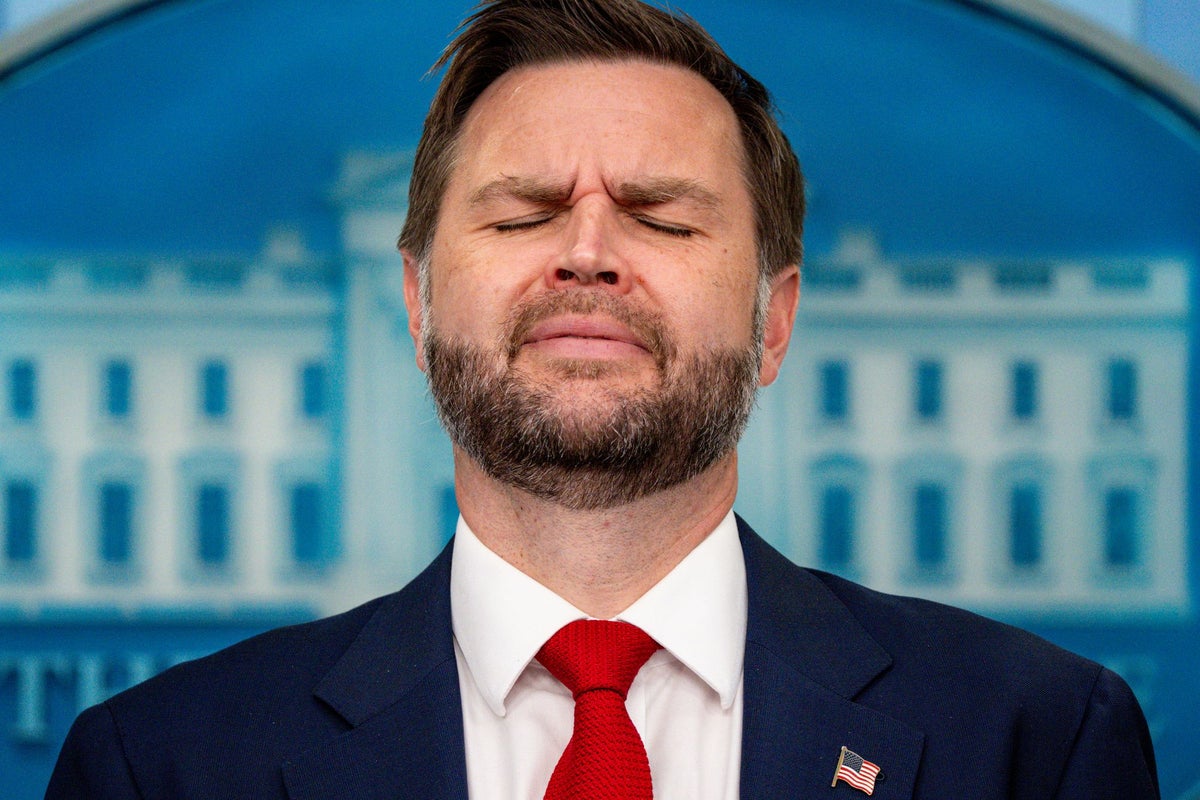
The biggest shock isn't the deal itself. It's who is selling it. Vice President JD Vance has stepped up as the administration’s chief defender of the agreement. Watching a populist, America-First conservative travel the airwaves to champion a diplomatic pact with Tehran is surreal. It's especially weird when you remember that Trump built his initial foreign policy brand on shredding Barack Obama’s 2015 Iran nuclear deal, calling it the worst negotiation in history.
Predictably, the political arena is melting down. War hawks within the Republican party are furious. Israeli officials are panicking behind closed doors. Some conservative commentators are even calling Vance "Hillbilly Obama." Additional reporting by NBC News explores related views on the subject.
But if you actually look at the strategic chess board, the frantic backlash misses the mark completely. This isn't a repeat of 2015. The reality on the ground has changed, and Vance’s aggressive defense reveals exactly how the administration expects to use its leverage.
The Reality of the New Deal
To understand why the current panic is overblown, you have to look at what this agreement actually does. This isn't a final, permanent treaty. It is a framework that kicks off a 60-day technical negotiation period.
The immediate terms are straightforward. The U.S. Navy is ending its ironclad blockade of the region, allowing ships back into Iranian ports. In exchange, Iran has opened the Strait of Hormuz to maritime traffic. Over 12 million barrels of oil passed through the waterway on Wednesday night alone. For a global economy battered by energy spikes and supply chain bottlenecks, that's a massive breath of fresh air.
The nuclear components are where critics are losing their minds, but the skepticism ignores key facts. Under the agreement, international nuclear inspectors from the International Atomic Energy Agency (IAEA) are returning to Iran immediately. Tehran has agreed to dilute its remaining stockpile of highly enriched uranium under strict international supervision.
Critics like Senator Ted Cruz and conservative host Erick Erickson have labeled the arrangement an "American surrender." They argue that Trump is giving Iran economic lifelines, including a potential $300 billion economic rehabilitation fund, before getting permanent nuclear guarantees.
That view ignores the basic mechanics of how this framework functions. Vance has hammered home a single point during his media blitz. The U.S. hasn't given away its cards.
The administration isn't relying on trust. They are relying on a shattered Iranian economy and a heavily degraded Iranian military. If Tehran fails to hit its benchmarks during the 60-day talks, the economic pressure returns instantly. Defense Secretary Pete Hegseth made this explicitly clear at a NATO meeting in Brussels, warning that the Department of War is fully prepared to reinstate the naval blockade if Iran steps out of line.
The Weird Fight with Israel
The most uncomfortable moment of this rollout happened during an hour-long White House press briefing. Vance openly lashed out at the Israeli government for pushing back against the diplomatic track.
The deal includes language establishing a ceasefire that covers both Iran and Lebanon, demanding a halt to missile strikes in Southern Lebanon. Israeli leadership is terrified that this clause leaves their northern border exposed to a resurgent Hezbollah. Prime Minister Benjamin Netanyahu has stayed publicly quiet, but his far-right cabinet partners, Itamar Ben-Gvir and Bezalel Smotrich, have slammed the agreement.
Vance didn't hold back. He openly warned Israel to "wake up and smell the reality" of their global isolation.
“If I was in the cabinet of the Israeli government, I might not be attacking the only powerful ally that I have anywhere left in the entire world,” Vance said.
It was a jarring statement from a Republican vice president. The GOP has spent decades positioning itself as the uncompromising defender of Israeli military policy. Yet here was Vance, telling a key ally that they rely too heavily on raw military force. You can't just kill your way out of every regional dilemma.
The administration’s frustration stems from a simple mathematical reality. Israel is a nation of nine million people. It relies on the U.S. for two-thirds of its defense weapons. Washington wants to prevent a localized conflict from spinning into a permanent, multi-year regional war that drains American blood and treasure. By drawing a hard line, Vance is reminding Jerusalem that American foreign policy is ultimately driven by American interests, not Israeli ones.
Why Vance is Taking the Heat
It is no secret that Donald Trump hates taking the blame when things go sideways. Before leaving for the G7 summit, Trump joked with reporters about Vance's role as the public face of the deal.
“This way, if it works out, I’m going to take the credit,” Trump said. “If it doesn’t work out, I’m blaming JD.”
Behind the humor lies a calculated political gamble. Vance was reportedly the most skeptical voice in the administration when the U.S. initially launched military strikes against Iran earlier this year. He has consistently opposed prolonged foreign entanglements. Taking ownership of the peace process allows him to lean into his isolationist, populist roots.
For Vance, the stakes couldn't be higher. He remains the front-runner for the 2028 Republican presidential nomination. If this framework successfully de-escalates the Middle East, lowers global energy prices, and brings American forces home, his position as Trump's heir apparent will be ironclad. If Iran cheats, breaks the ceasefire, or hides its uranium under the rubble of its bombed facilities, the political blowback will fall squarely on his shoulders.
The comparison to the Obama-era diplomacy is lazy. Obama negotiated from a position of academic hope, believing integration would moderate Tehran. The Trump administration is negotiating after spending months dropping bombs on Iranian assets. They aren't offering a blank check. They are offering an off-ramp to an adversary that has its back against the wall.
The next 60 days will determine whether this framework morphs into a historic peace agreement or dissolves back into open warfare. If you want to track where this situation is heading, ignore the partisan noise and watch the implementation steps.
Monitor the verification reports coming out of the IAEA regarding the downblending of Iran's uranium stockpile. Keep an eye on daily shipping volumes through the Strait of Hormuz to see if traffic genuinely stabilizes. Finally, watch the northern border of Israel. If Hezbollah breaks the ceasefire, the entire diplomatic framework will collapse before the 60-day clock runs out.