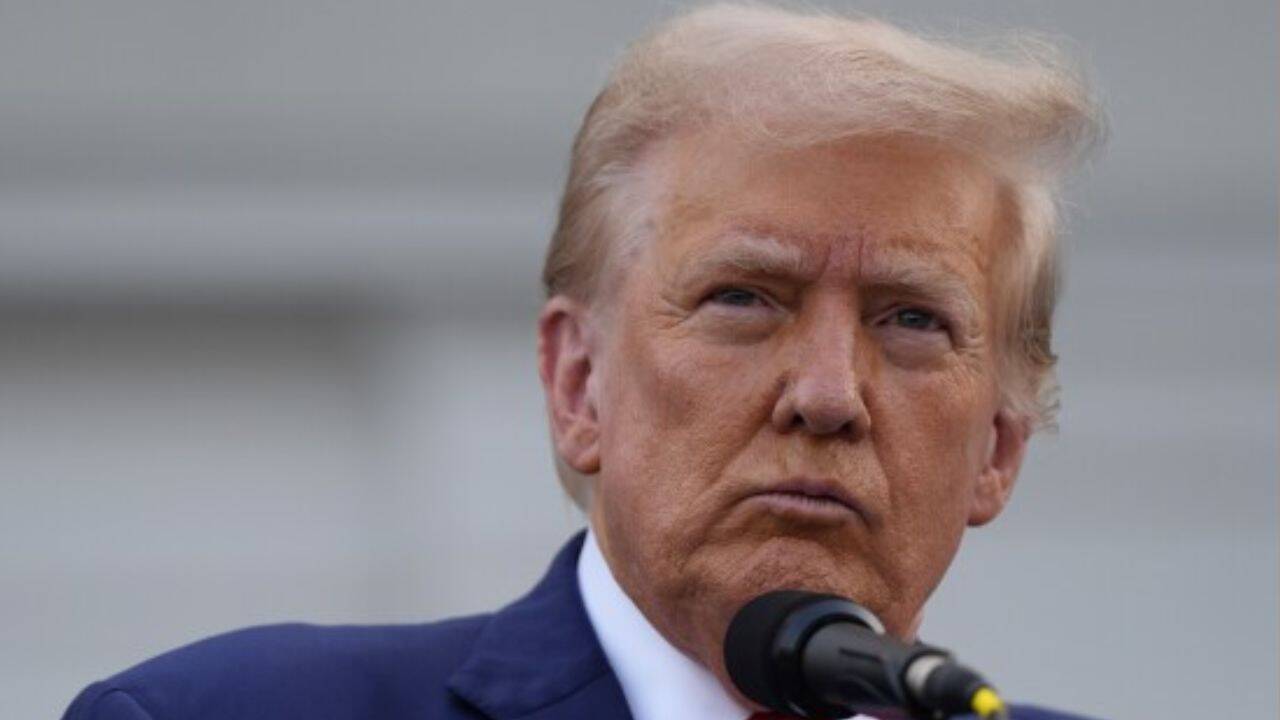
Every mainstream pundit spent yesterday clutching their pearls over headlines claiming Donald Trump wants to slap his surname onto an adjacent body of water. The media circus predictably treated it as another superficial sideshow, a cartoonish exercise in supreme ego. They missed the entire point.
Beneath the predictable outrage lies a masterclass in modern attention economics and territorial framing. You might also find this related coverage insightful: How a Twenty Thousand Dollar Sale Exposes the Rot in Texas Property Law.
Let us stop pretending that geographic nomenclature has ever been an objective, pristine science. We hand out names of dead monarchs, forgotten explorers, and conquering generals to vast swathes of the globe based entirely on who won the last war or sailed the furthest. The map is a monument to past power. When a modern populist floats the idea of rebranding a maritime frontier, critics scream about institutional norms as if those norms weren't just consensus agreements hammered out by yesterday's victors.
The Attention Monopoly
Look at the mechanics of the modern news cycle. If a politician issues a standard white paper on maritime trade tariffs or port infrastructure updates, it gets buried on page fourteen of a trade journal. Nobody reads it. Zero leverage is gained. As extensively documented in latest coverage by Reuters, the effects are widespread.
Rename an ocean, however, and you instantly dominate every digital front page globally for seventy-two hours.
You control the debate. You force international diplomats, think-tank fellows, and late-night hosts to spend precious airtime arguing about your premise. This is not policy malpractice; this is high-altitude marketing. The critics think they are mocking a delusion, while the strategist is successfully hijacking the global attention span for free.
I have watched corporate executives spend millions on PR campaigns that achieved a fraction of the organic mindshare generated by a single provocative headline. They mistake dignity for effectiveness. Dignity does not win leverage in a crowded media ecosystem. Disruption does.
The Cartography Myth
We treat maps as gospel. We forget that borders and titles shift the moment power dynamics alter. The names on your school globe are temporary placeholders, subject to the whims of whoever holds the pen next.
When a dominant political figure challenges a geographic label, they are poking at a deeper truth: sovereignty is performance. The ocean does not care what you call it. Water molecules remain indifferent to syllables. But the humans managing international trade routes, naval patrols, and economic zones care deeply about perception.
By injecting absurdity into the stagnant pool of diplomatic naming conventions, you test the rigidity of the establishment. If they overreact—and they always overreact—you expose their hyper-fixation on surface-level symbolism over substantive power metrics. If they ignore you, you push the envelope further.
The Real Cost of Polite Conformity
The establishment wants everyone to operate within strict, pre-approved lanes. Use the standard vocabulary. Respect the traditional framing. Keep your ambitions neatly tucked inside the bureaucratic margins.
That system protects the status quo, and the status quo is failing.
When you look past the breathless reporting, the real lesson here has nothing to do with hydrography. It is about the absolute necessity of breaking framing control. If you accept the opponent's definitions, you have already lost the argument. Trump understands that rewriting the conversation starts with attacking the symbols people take for granted.
Stop whining about the audacity. Start studying the mechanics.
The map is up for grabs. It always has been.