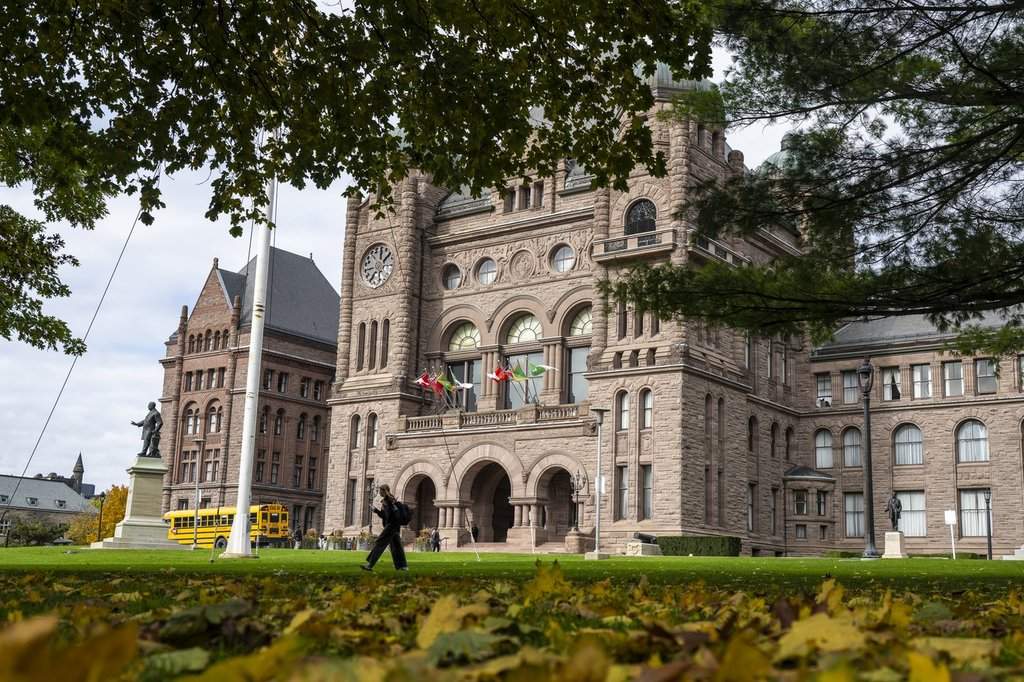
Ontario is letting civil servants work from home during the FIFA World Cup to "ease traffic congestion."
Let that sink in.
The official narrative positions this as a forward-thinking, agile management move. It is framed as a win-win: public servants avoid gridlock, the city of Toronto breathes a sigh of relief, and essential services keep humming along.
It is a comforting story. It is also completely wrong.
This policy does not solve traffic, nor does it protect productivity. Instead, it exposes a deeper, structural rot in how public sector work is measured, managed, and executed. Giving provincial employees permission to log in from their living rooms because a soccer match is happening down the street is a public relations stunt masking a management failure.
We are asking the wrong questions about remote work, public infrastructure, and operational output. The real issue is not whether an analyst can review spreadsheets while Canada plays its opening match. The real issue is that the government just admitted its physical offices are completely non-essential to its daily operations, while simultaneously proving it has no mechanism to measure what those workers actually produce.
The Congestion Myth
The provincial strategy rests on a flawed premise: removing a few thousand civil servants from the Don Valley Parkway and the Gardiner Expressway will magically fix Toronto's systemic transit failures.
It will not.
Traffic gridlock during massive international events is an infrastructure problem, not a commuter volume problem. TomTom congestion indexes consistently rank Toronto among the worst cities in North America for travel times, regardless of whether public servants are at their desks or on their couches.
When you tell a specific class of workers to stay home to "save the roads," you are engaging in theater. You are shifting the burden of a broken transit network onto a temporary policy patch.
More importantly, look at the logical disconnect. If remote work is an effective tool to mitigate gridlock and maintain output during a massive international tournament, why is it restricted to game days? If it boosts efficiency, it should be permanent. If it hurts efficiency, it should not be allowed just because people want to watch a match.
By treating remote work as a logistical escape hatch rather than a core operational strategy, management looks hypocritical. They are admitting that presence in the office is arbitrary.
The Output Illusion
I have spent years analyzing operational structures and advising organizations on performance metrics. I have seen leadership teams pour millions into workspace design and monitoring software, all while ignoring the only metric that matters: actual, verifiable output.
In the public sector, the metrics are broken. Government management relies heavily on "presenteeism"—the outdated belief that a body in a chair equals work completed. When that body moves to a home office, management panics because they lack the tools, data, and culture to measure what that person actually accomplishes.
Consider the reality of game-day remote work. A major match is broadcasting live. The employee is at home. The temptation to dual-screen is high.
The lazy consensus says, "Trust your employees, they will get the job done."
The data says otherwise.
Organizational behavior studies, including research published in the Journal of Economic Perspectives, reveal that fully remote work environments can lead to a 10% to 20% decline in productivity when monitoring systems are weak and tasks are poorly defined. This is not because workers are inherently lazy. It is because the structural accountability disappears.
When you layer a massive global sporting event on top of a loose monitoring environment, output plummets. Pretending otherwise is organizational delusion.
The True Cost of Voluntary Blindness
There is a downside to my contrarian view. A strict focus on rigid, output-based monitoring can harm morale if implemented poorly. It can create an environment of surveillance that alienates high performers.
But the alternative—the current status quo—is worse. The current approach relies on voluntary blindness. Management pretends people are working at full capacity, and employees pretend they are not watching the match.
This undermines the credibility of public institutions. When taxpayers see civil servants granted special remote privileges for a sporting event—privileges not extended to healthcare workers, transit operators, or private sector service employees—it creates deep resentment. It cements the perception that the public service is a protected class insulated from reality.
Stop Asking if Remote Work Works
The public debate is stuck in a loop.
- "Is remote work better for mental health?"
- "Does it save money on real estate?"
- "Does it reduce emissions?"
These are the wrong questions. The right question is: What is the unit of work, and did you deliver it?
If a government agency cannot define the exact output required of a bureaucrat on a Tuesday afternoon, then it does not matter if that bureaucrat is sitting in a cubicle in Queen's Park or on a sofa in Mississauga.
If the output is defined, tracked, and tied to consequences, then the World Cup is irrelevant. The worker could be on Mars; if the quota is met, the system functions.
The Ontario government's policy is a confession that they cannot measure output. They are managing by permission slips and calendar exceptions. They are treating remote work as a perk to be handed out, rather than an operational reality that demands rigorous, data-driven oversight.
Dismantling the Excuses
Let us answer the common arguments directly, without the corporate filter.
Does remote work during major events keep people safe and reduce stress?
It reduces stress for the individual worker who avoids a commute, yes. But it does nothing for the operational efficiency of the province. A government's primary duty is the effective administration of public services, not the optimization of personal schedules around soccer broadcasts.
Can workers stay focused while a global tournament happens simultaneously?
Some can. Most do not. Human nature does not change because you sign a remote work agreement. Without strict, task-based milestones due by the end of the shift, game days become paid holidays under a different name.
Isn't this just a modern approach to workplace flexibility?
No. True flexibility is permanent, measurable, and outcome-oriented. This is temporary appeasement. It is a reactive move by a leadership group that does not know how to handle modern workforce dynamics, so they compromise by letting people stay home when the traffic looks bad.
The Management Playbook is Broken
The private sector is learning this lesson the hard way. Tech giants and financial institutions that rushed into radical remote models are quietly walking them back, not because they hate flexibility, but because their middle managers failed to build systems that track results without physical supervision.
The public sector is even further behind. It lacks the market pressures that force private firms to adapt or die. As a result, policies like the Ontario World Cup remote exemption are created in a vacuum, completely detached from operational reality.
We must stop treating the office as a sacred temple and stop treating remote work as a reward. Both are simply locations. If your management structure cannot handle a location change without risking a total collapse in focus, your management structure is defective.
The FIFA policy is not a masterstroke of modern governance. It is an admission of defeat. It proves the system values compliance over competence, presence over production, and optics over outcomes.
Stop pretending this is about traffic. It is about a system that does not know how to measure its own worth, running away from a problem it created, using a soccer tournament as an alibi.