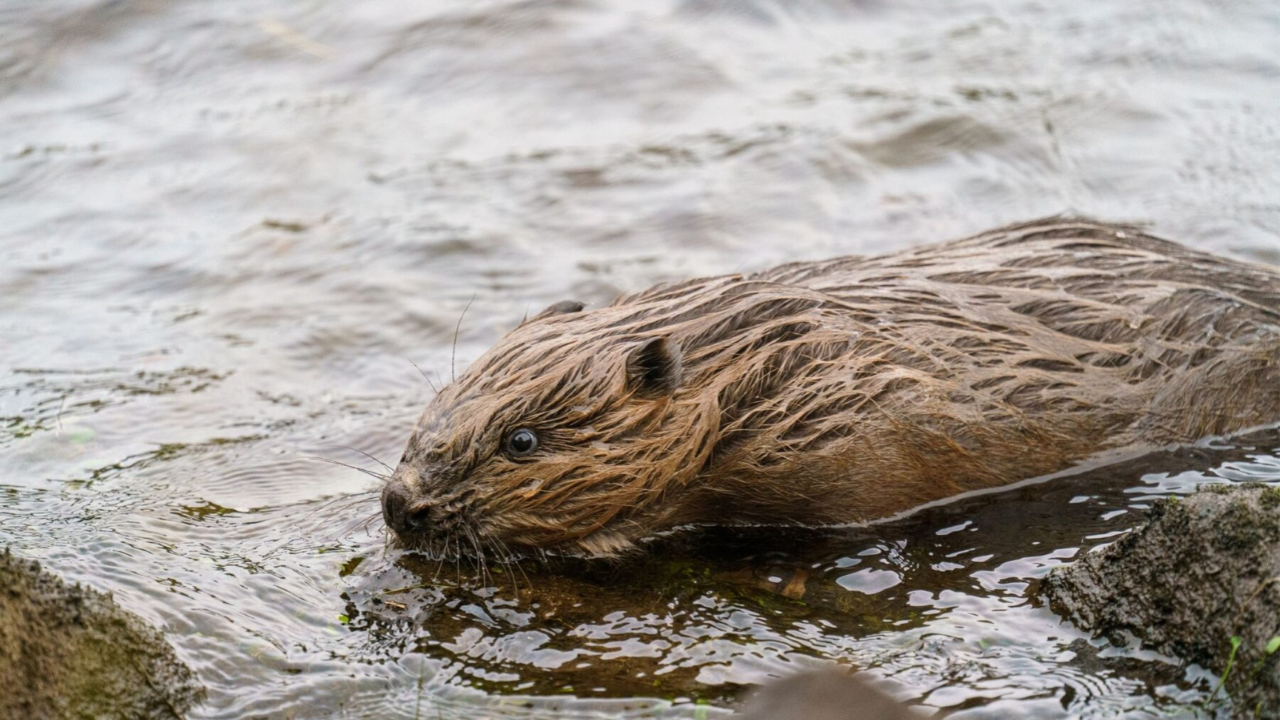
Celebratory headlines are flooding conservation feeds because 15 beaver family groups have been cleared for release into the Loch Ness catchment. Everyone loves a furry ecosystem engineer returning after a 500-year exile. Press releases paint a picture of instant biodiversity miracles, natural flood management, and carbon sequestration rolled into one buck-toothed package.
They are selling a fairy tale.
The lazy consensus in modern European conservation treats Castor fiber like a biological Swiss Army knife. Drop them in a river, step back, and watch nature heal itself. That works brilliantly in lowland agricultural catchments, sluggish chalk streams, and shallow valley bottoms. Loch Ness is none of those things. It is a massive, steep-sided, glacially carved fault trench holding more fresh water than all the lakes in England and Wales combined. Dumping 15 family groups into the surrounding tributaries without confronting the sheer physical violence of Highland hydrology is not ecological restoration. It is expensive political theater.
The Myth of the Universal Ecosystem Engineer
To understand why the Loch Ness release is being oversold, we have to look at what beavers actually do versus what urban conservationists think they do.
Beavers are allogenic ecosystem engineers. Unlike trees, which alter environments simply by growing, beavers physically remodel wood and mud to change water depth. Their biological imperative is simple. They cannot run fast on land, so they need deep water to escape predators like wolves and bears—predators that, notably, are still missing from the Scottish Highlands. When a beaver builds a dam, it is not trying to save the planet from climate change. It is building a moat.
In flat topography, a three-foot dam backs up water across acres of floodplain. Water velocity drops. Sediment settles. Hyporheic exchange—the mixing of surface water and shallow groundwater—skyrockets, cooling summer water temperatures and creating nursery habitats for juvenile fish.
Now apply that exact mechanical process to the steep, high-gradient burns feeding Loch Ness, such as the Rivers Moriston, Enrick, or Foyers.
When you drop a beaver dam into a high-gradient mountain stream with a bedrock substrate and flash-flood hydrology, you do not get a sprawling wetland. You get a tiny, high-energy plunge pool that blows out the first time a November Atlantic storm dumps four inches of rain onto saturated peatland.
I have watched conservation trusts burn through hundreds of thousands of pounds on Highland river restoration projects that ignored basic geomorphology. They install woody debris, plant riparian saplings, and celebrate on LinkedIn, only for the first winter spate to strip the entire valley down to bare cobbles and wash their timber investments straight into the North Sea. Beavers face the exact same physical constraints. You cannot out-engineer gravity with birch twigs and mud.
What the Press Releases Refuse to Discuss
The approval by NatureScot for these 15 family groups relies heavily on lessons learned from the Tay and Knapdale trials. Those trials proved that beavers survive in Scotland and boost local species richness. They also proved something the promotional brochures bury in the footnotes: beavers do not stay where you put them, and they do not build dams where you want them to.
In deep water bodies like Loch Ness itself—or the lower, slower reaches of the River Ness and the Caledonian Canal—beavers will not build dams at all. Why would they? The water is already 700 feet deep. Instead, they become bank-dwelling burrowers.
Here is the operational reality that gets glossed over:
- Infrastructure Sabotage: Bank-dwelling beavers excavate massive subterranean tunnel systems, often starting underwater and angling upward into the soil bank. When they do this along earthen flood embankments, road verges, or the historic banks of the Caledonian Canal, they compromise structural integrity from the inside out. You do not know the bank is hollow until a tractor or a maintenance vehicle collapses through the turf.
- The Salmonid Bottleneck: Proponents argue that beaver ponds help Atlantic salmon and sea trout. In wide, braided rivers, that holds true. In narrow, steep Highland tributaries, a poorly placed dam during low autumn flows becomes an impassable physical wall for migrating adult salmon trying to reach their spawning redds. Researchers like Dr. Robert Needham and teams at the University of Southampton have documented that while salmonids generally navigate dams during high flows, drought conditions turn those dams into hard barriers.
- Selective Foraging Destruction: Beavers are generalist herbivores with a strong preference for specific broadleaf trees—willow, aspen, birch, and hazel. The Highlands are already suffering from an acute shortage of native riparian woodland due to centuries of overgrazing by red deer and sheep. Releasing 15 family groups into fragmented woodland corridors without massive, prior deer-fencing and regeneration programs is like putting starving goats in a bonsai garden. They will ring-bark and fell the exact mature aspen stands that conservationists have spent decades trying to protect.
Dismantling the Rewilding Echo Chamber
If you search for information on this release, you will inevitably hit the standard public questions. The answers given by mainstream outlets are almost universally sanitized. Let us strip the spin off them.
Are beavers dangerous to humans or pets?
No. They are strict herbivores and fiercely nocturnal. Unless your spaniel corners an adult male in a collapsed burrow, there is zero physical threat. The danger is not to your dog; it is to your local council's infrastructure budget when a culvert gets plugged and floods a single-track Highland road.
Will beavers stop flooding in Inverness?
Not a chance. Anyone claiming 15 family groups in the upper catchment will attenuate peak flood flows down in Inverness does not understand basic hydrology. Natural flood management through beaver dams works on frequent, low-magnitude flood events in small catchments. During a 1-in-50-year storm event, the storage capacity of beaver ponds is overwhelmed in minutes. Once a dam is overtopped, water flows over it at the exact same rate it enters. They are speed bumps, not reservoirs.
Do beavers eat fish?
Never. This is an ancient myth that refuses to die among older angling syndicates. Beavers eat bark, shoots, aquatic plants, and grasses. If an angler hates beavers, it is not because the beaver is eating the trout; it is because the beaver felled a 40-year-old alder tree directly across the angler's favorite casting pool.
The Tayside Precedent Is a Warning, Not a Blueprint
To see how this plays out in five years, look south to Tayside.
Beavers were illegally released or escaped into the River Tay catchment in the mid-2000s. By the time the Scottish Government granted them European Protected Species status in 2019, the population had exploded into prime agricultural land. What followed was a bitter, expensive civil war between conservationists and farmers.
Because beavers became protected, farmers could no longer legally shoot them or destroy their dams without a license. When beavers flooded prime potato fields in Strathmore, the bureaucratic friction was immense. The result? Under NatureScot licensing, hundreds of beavers had to be legally culled anyway because translocation capacity could not keep up with reproduction rates.
Let us be brutally honest about where these 15 Loch Ness family groups are coming from. Many of them are problem animals trapped out of Tayside to save them from being shot.
Moving a nuisance animal from an agricultural valley to a rugged Highland loch solves a political headache for NatureScot in Perthshire. It gets them off the lethal control ledger. But pretending that dumping relocated Tayside beavers into Loch Ness is a pristine ecological masterstroke ignores the fact that these animals are conditioned to flat, fertile landscapes. Many of them will immediately abandon the steep, rocky burns of the Great Glen, swim down the Caledonian Canal, and set up shop in the fertile, flat agricultural floodplains around Beauly and the Moray Firth—recreating the exact Tayside conflict 100 miles further north.
The Case for Controlled Chaos
Does this mean beavers do not belong in Scotland? Of course not. They are a native species that was hunted to extinction for pelts and castoreum in the 16th century. Their absence left a massive trophic hole in British freshwater ecosystems.
The nuance the mainstream press misses is that rewilding without structural preparation is negligence.
If you want beavers to thrive in the Loch Ness catchment without triggering an immediate backlash from crofters, foresters, and the Highland Council, you have to stop treating their release as the finish line. It is the starting gun for intensive landscape management.
1. Pre-Emptive Buffer Zones
You cannot put beavers into a landscape where farmland and forestry run right up to the water's edge. Every single watercourse in the Ness catchment needs a mandatory, ungrazed 20-meter riparian buffer zone. If you give beavers a wide corridor of sacrificial willow and birch to chew on and flood, they will stay off the productive pasture and away from commercial timber. Without that buffer, conflict is mathematically guaranteed.
2. Automated Flow Devices Before the Floods Hit
Waiting for a beaver to block a road culvert and then applying for a license to tear the dam down is a waste of taxpayer money. Beavers are triggered by the sound of running water. If you tear down a dam, they will rebuild it by Tuesday. The proven engineering solution—pioneered in North America by groups like the Beaver Institute—is installing Pond Levelers (such as Clemson levelers or flexible PVC bypass pipes) and Exclusion Fencing around culverts before the animals arrive. You let the beaver build the dam, while a hidden pipe controls the maximum water height, keeping roads dry and letting the beaver keep its pond.
3. Honest Financial Compensation
Right now, conservation charities capture the PR glory of the release, while private landowners and local councils absorb the financial cost of damaged drainage tiles, flooded grazing land, and felled trees. If society wants the biodiversity benefits of beavers, society has to pay for the friction. We need a friction-free, rapid-payout compensation scheme for rural land managers, funded directly out of the environmental grants that celebrate these releases.
The Uncomfortable Truth About Highland Ecology
The deepest flaw in the Loch Ness beaver narrative is the assumption that the Highlands are a wild, natural paradise waiting for one last puzzle piece.
The Scottish Highlands are an ecological desert. Centuries of deforestation, sheep farming, muirburn for grouse shooting, and inflated deer populations have stripped the mountains down to wet rock and heather. Dropping 15 family groups of beavers into a degraded catchment without fixing the overarching land-use crisis is like putting a fresh coat of paint on a house with a collapsed foundation.
Beavers need trees to survive. Right now, red deer eat almost every natural tree seedling in the Great Glen before it reaches knee height. Unless those 15 beaver families are accompanied by aggressive deer culling and massive native woodland regeneration, the beavers will strip the remaining riverside birch woods within a decade and then starve, migrate out to the coastal farms, or die in winter spates.
Conservation needs less romance and more engineering. Stop celebrating the press release and start auditing the watershed.


