The Theatre of "Seizure"
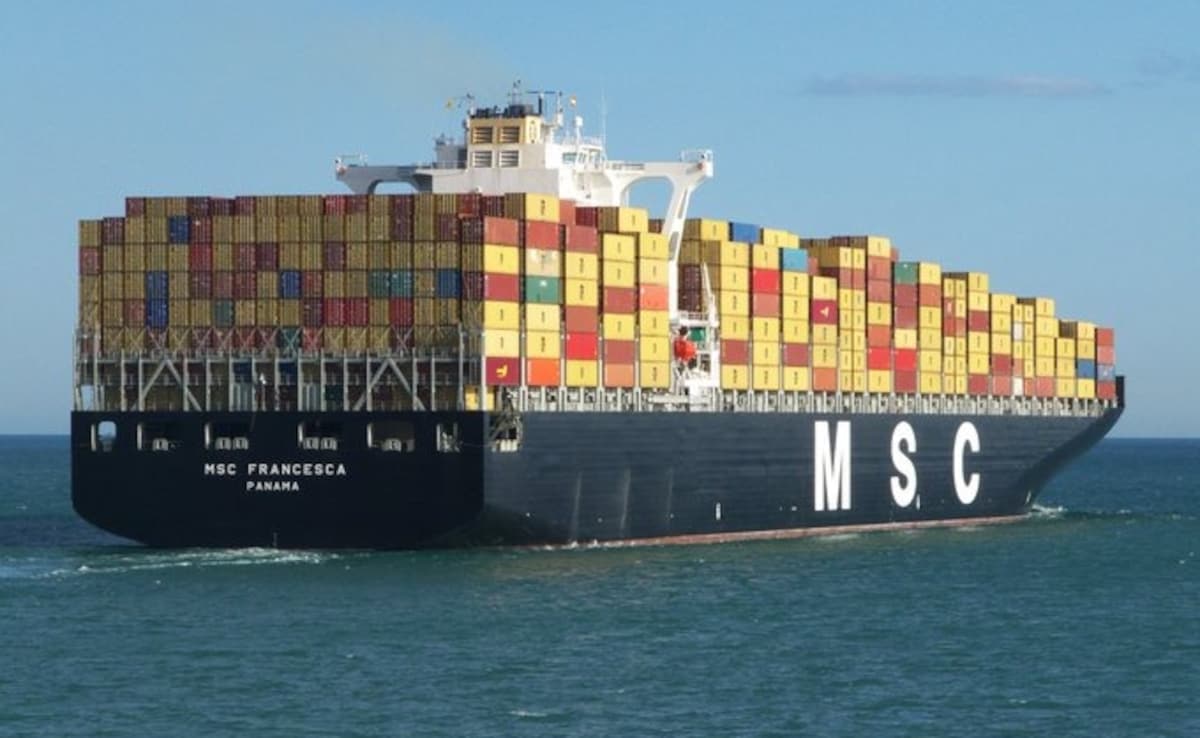
The mainstream media is currently hyperventilating over reports of ships being diverted to Iranian waters. They frame it as a sudden, shocking escalation—a "stalemate" between superpowers. They are wrong. This isn't a stalemate; it’s a choreographed display of obsolescence.
When you see headlines about a vessel being "taken," the lazy consensus is to view it as a failure of patrolling or a breach of international law. The reality is far more uncomfortable. We are witnessing the total collapse of the 20th-century naval protection model. We are pretending that $2 billion destroyers can stop $20,000 asymmetrical tactics, and then we act surprised when the math doesn't work out.
The capture of commercial vessels in the Strait of Hormuz or the Red Sea isn't a military maneuver. It’s a stress test for a global supply chain that is built on the delusional hope that "safety" is a constant. It isn't. Safety is an expensive, temporary luxury that we have stopped paying for.
The Efficiency Trap
For decades, the shipping industry has chased "lean" operations. They’ve cut crews to the bone, registered ships under flags of convenience to dodge taxes, and relied on the U.S. Navy to provide free security. This is the ultimate "corporate welfare" setup.
Now, the bill is coming due.
When a ship is "seized," the media asks: "Where was the Navy?"
The better question is: "Why was a $100 million asset sailing through a known combat zone with a skeleton crew and zero kinetic defense?"
I’ve seen logistics giants gamble with billions in cargo just to save $50,000 on private maritime security teams. They count on the "outrage cycle" to force government intervention. They use your tax dollars to bail out their risk management failures. This isn't a geopolitical crisis; it’s a bad insurance policy being cashed in at the expense of global stability.
The Drone Symmetrical Paradox
We need to talk about the tech gap, and no, it’s not the one you think.
The U.S. and its allies are currently firing million-dollar interceptor missiles at "lawnmower" drones. This is a mathematical certainty for defeat. You cannot win an attritional war when your defensive costs outpace the enemy's offensive costs by a factor of 100 to 1.
The "stalemate" reported by the press is actually a slow-motion bankruptcy. Iran and its proxies aren't trying to win a naval battle; they are trying to make the cost of transit so high that the Western insurance market collapses.
The Geography of Vulnerability
The Strait of Hormuz is a 21-mile-wide neck of water. At any given moment, a significant percentage of the world's petroleum passes through it. The "shock" that Iran can reach out and touch a tanker is a manufactured surprise. They have been building a "mosquito fleet" of fast-attack craft and coastal batteries for thirty years.
While Western navies built massive, elegant platforms designed for deep-ocean combat against the Soviet Union, the regional actors built thousands of small, cheap, expendable threats.
The result? We brought a sniper rifle to a swarm-of-bees fight.
The Myth of Global Norms
Stop talking about "International Law." It doesn't exist in the middle of a boarding action.
The competitor reports focus on the violation of norms. Norms are for people who have everything to lose. For a state under heavy sanctions or a non-state actor with a grievance, "norms" are just the rules the winners wrote to keep the losers quiet.
If a ship is being diverted to Bandar Abbas, the legal argument about its position in international waters is irrelevant. The only thing that matters is the kinetic reality on the deck. If there isn't a team of armed professionals there to say "no," then the ship belongs to whoever has the ladder and the AK-47.
The Problem With Modern Deterrence
Deterrence only works if the other side believes you are willing to burn the house down to save the furniture.
Currently, the Western response is a series of "strong condemnations" and the occasional symbolic strike on an empty warehouse. This isn't deterrence; it’s an invitation. It signals that the threshold for a real, devastating response is so high that you can practically steal a city block before anyone fires a shot that matters.
Re-Engineering the Maritime Response
If we actually wanted to solve this, we wouldn't send more carriers. We would change the fundamental nature of commercial transit.
- Hardened Merchant Fleets: Any ship entering a High-Risk Area (HRA) should be required to have non-lethal and lethal defensive suites integrated into the hull. No more "sitting ducks."
- The Decentralization of Cargo: We rely on "Mega-Max" vessels that carry 20,000 containers. One seizure of a ship like that can cripple a regional economy. We need smaller, faster, more numerous vessels. If you lose one, it’s a rounding error, not a catastrophe.
- Automated Interdiction: We have the tech to create "drone corridors" where automated sentries handle the low-level threats that currently tie up multi-billion dollar destroyers.
The reason we don't do this? It’s expensive. It requires the private sector to take responsibility for its own risk. They would much rather have a "crisis" that the Navy has to fix for free.
The Hidden Winners
Who benefits from these headlines?
Follow the money. When a ship is seized, insurance premiums for the entire region spike. Not just for that ship—for every ship. The "War Risk" surcharges generate billions for Lloyd’s of London and other syndicates.
Furthermore, the volatility drives up oil prices. Every time a tanker is diverted, the "fear premium" adds a few dollars to every barrel. The very entities supposedly "threatened" by this instability often see their balance sheets improve as the price of their inventory skyrockets.
Stop Asking if the US is Failing
The question isn't whether the U.S. can "stop" these attacks. The U.S. could turn the entire coastline into glass tomorrow if it had the political will.
The real question is: Why are we still pretending that the 1945 world order is functional?
We are living in an era of "Geopolitical Arbitrage." Small players are exploiting the massive overhead and slow reaction times of large players. They are taking small bites out of the system because they know the giant is too bogged down in bureaucracy and "optics" to swat them.
The report of two ships being taken isn't a news story. It’s a symptom of a terminal illness in global trade. We’ve built a world that is too efficient to be resilient. We’ve traded security for margins, and now we’re acting shocked that the wolves are at the door.
If you’re waiting for a "diplomatic solution" to the stalemate, you’re going to be waiting forever. Diplomacy only works when the alternative is so terrifying that both sides would rather talk. Right now, one side thinks the status quo is a joke, and they’re proving it one boarding party at a time.
Get used to the sight of diverted tankers. It’s not an anomaly. It’s the new business model.