Route 86 cuts through the southern Arizona desert like a long, asphalt scar.
At midnight, the world out here is reduced to what your headlights can reach. The air smells of dry dust, creosote, and the metallic tang of heat radiating off the pavement. For miles, there is nothing but saguaro cacti standing like silent sentinels under a dome of stars. Then, suddenly, a flash of red and blue.
For decades, this has been the defining friction of the American borderlands. A flash of light. A siren. A sudden, adrenaline-spiked command to pull over.
But the flashing lights are fading.
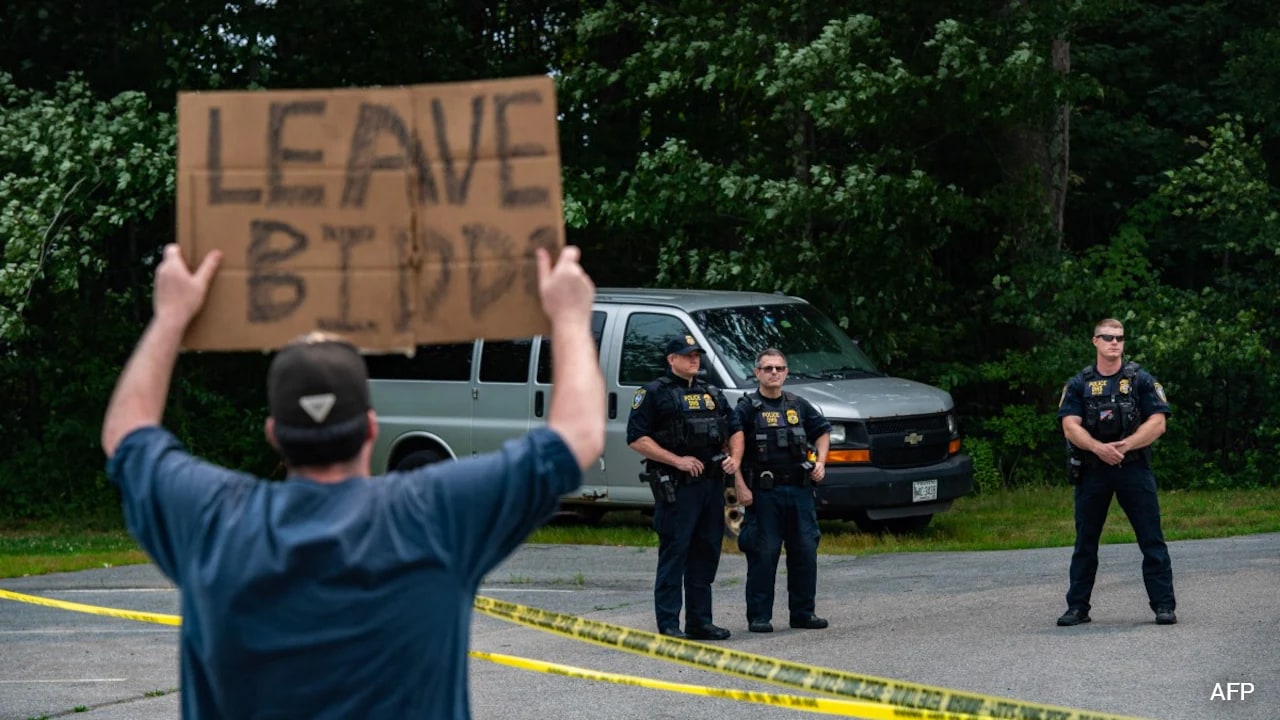
Following two tragic, fatal shootings during routine vehicle stops, the United States government quietly pulled the plug on a controversial practice. Border Patrol agents are no longer permitted to conduct immigration-related traffic stops under the same broad, roving-patrol authorities that once allowed them to police hundreds of miles of public highways.
To understand why this shift is monumental, we have to step away from the sterile language of policy memos and stand on the gravel shoulder of a desert highway. We have to look at what happens when the pressure of national sovereignty collides with the fragile reality of human lives.
The Dust and the Speedometer
Consider a hypothetical driver. Let us call him Mateo.
Mateo is a legal resident who has lived in Tucson for fifteen years. He drives a beat-up Ford F-150. Every morning at four, he makes the drive south to a construction site near Sierra Vista. He knows the road. He knows every dip, every curve, and every place where the Border Patrol parked their white-and-green Chevy Tahoes in the shadow of the mesquite trees.
One morning, Mateo sees the headlights behind him close the gap too fast.
His heart rate spikes. It is an involuntary, biological reaction. He has done nothing wrong. His paperwork is in his glove box. Yet, in the borderlands, a traffic stop is never just a traffic stop. It is an interrogation. It is a test of belonging.
Now, consider the agent behind the wheel of the chase vehicle. Let us call him Miller.
Miller is thirty-two, exhausted, and hyper-vigilant. He has spent his shift staring into the dark, looking for the telltale signs of human smuggling: a riding-low rear suspension, a driver who avoids eye contact, or conversely, a driver who stares too rigidly ahead. He is operating under "roving patrol" rules. Under these guidelines, established by decades of legal precedent, agents do not need the "probable cause" required by local police. They only need "reasonable suspicion"—a fluid, frustratingly subjective standard.
Miller turns on his lights. Mateo pulls over.
In ninety-nine cases out of a hundred, this interaction ends with a tense conversation, a flash of an ID, and a mutual sigh of relief. But the margin for error is razor-thin. When you mix high-speed chases, language barriers, immense heat, and the constant, ambient fear of cartel violence, the math eventually turns tragic.
Then, the gunshots ring out.
Two Lives, Lost in the Margin
The policy did not change because of a sudden burst of bureaucratic benevolence. It changed because of blood on the asphalt.
Two specific incidents broke the camel's back. In both cases, routine encounters escalated into lethal violence within a span of seconds.
In the first incident, an agent attempted to stop a vehicle suspected of carrying undocumented migrants. The driver panics. The accelerator goes down. Dust rises in a blinding cloud. In the chaos of the pursuit, the vehicle spun out. The agent, believing the driver was attempting to use the vehicle as a weapon, fired through the windshield.
A life ended.
Months later, it happened again. Another dusty road. Another split-second decision. Another pull-over that ended not with handcuffs, but with yellow crime scene tape fluttering in the desert wind.
These were not isolated anomalies. They were the predictable results of a system that asked Border Patrol agents to act as highway patrol officers without the structural guardrails that govern local police departments.
Statistics tell a sobering story. For years, civil rights organizations have tracked the fallout of roving patrols. The data revealed a pattern of high-speed chases that regularly ended in catastrophic crashes, injuries to bystanders, and deaths. The "100-mile border zone"—a legal designation that grants federal agents extraordinary powers within a hundred miles of any land or maritime border—had become a zone of perpetual anxiety for millions of American citizens and immigrants alike.
But statistics do not bleed. People do.
The pressure built. Local sheriffs, civil rights lawyers, and community advocates pointed out the obvious: the human cost of these traffic stops had far outstripped their utility as an enforcement tool.
The Legal Fiction of "Reasonable Suspicion"
To comprehend how we arrived at this point, we must look at the legal framework that built the modern border.
The Fourth Amendment protects people from unreasonable searches and seizures. Normally, a police officer cannot pull you over unless they see you commit a traffic violation, like speeding or running a red light.
But the border is different.
In 1975, the Supreme Court ruled in United States v. Brignoni-Ponce that Border Patrol agents on roving patrols could stop vehicles if they had "reasonable suspicion" that the vehicle contained undocumented migrants.
What constitutes reasonable suspicion? The court listed several factors:
- The characteristics of the area.
- Information about recent border crossings.
- The driver's behavior, such as erratic driving or obvious attempts to evade.
- The appearance of the vehicle (e.g., heavily loaded).
- The appearance of the persons in the vehicle, including their ethnic characteristics (though race alone could not be the sole factor).
In practice, this list became a blank check.
If a driver looked too clean-cut, they were trying to blend in. If they looked disheveled, they were suspicious. If they drove too fast, they were fleeing. If they drove too slow, they were scouting.
It was a legal trap. For residents of border towns, driving while Hispanic became an invitation to be detained on the side of the highway while drug-sniffing dogs circled their family sedans. The tension between the local population and federal law enforcement grew toxic.
The New Reality on the Ground
The halt of these traffic stops is a dramatic pivot.
Under the new directive, Border Patrol agents are prohibited from conducting stops based solely on roving patrol authority. They cannot simply pull a car over because they have a "hunch" that the occupants are undocumented.
Instead, the focus is shifting back to the actual border line and established, stationary checkpoints.
If an agent wants to stop a vehicle on an open highway, they must coordinate with local law enforcement who have clear probable cause, or they must possess specific, actionable intelligence regarding a felony in progress. The days of the fishing expedition are over.
For the agents, this change brings a mix of frustration and quiet relief.
Many agents argue that roving patrols were one of the most effective tools for intercepting smugglers who had bypassed the physical border wall. They feel hamstrung, stripped of a weapon in their enforcement arsenal. They worry that smuggling organizations will exploit this new policy, using public highways as open transit corridors.
But other agents acknowledge the dark reality of the job.
No agent wants to pull their trigger. No agent wants to live with the memory of a face behind a shattered windshield. By removing the pressure to engage in high-speed highway pursuits, the policy protects the lives of the agents just as much as it protects the public.
For the communities that line the southern border, the silence on the highways is palpable.
The constant presence of idling white SUVs on the shoulders of state routes has diminished. Parents feel a little less anxious when their teenagers drive home from high school football games on two-lane roads. The feeling of being occupied territory is slowly, subtly beginning to lift.
The Road Unseen
The policy shift is a victory for human rights advocates, a challenge for border security hardliners, and a sigh of relief for the people who call the desert home.
But the fundamental question remains unanswered. How do we balance the security of a nation's borders with the basic dignity and safety of the people who live within them?
There are no easy answers. The border is a place of compromise, where grand political theories are ground down by the harsh reality of the desert.
As the sun rises over the Huachuca Mountains, the asphalt on Route 86 begins to bake again. The trucks roll past. The dust swirls. Somewhere in the distance, a white-and-green SUV sits parked near a dry wash, its engine idling.
The agent inside watches the traffic go by. He watches the sedans, the minivans, the work trucks.
He watches. But he stays parked.