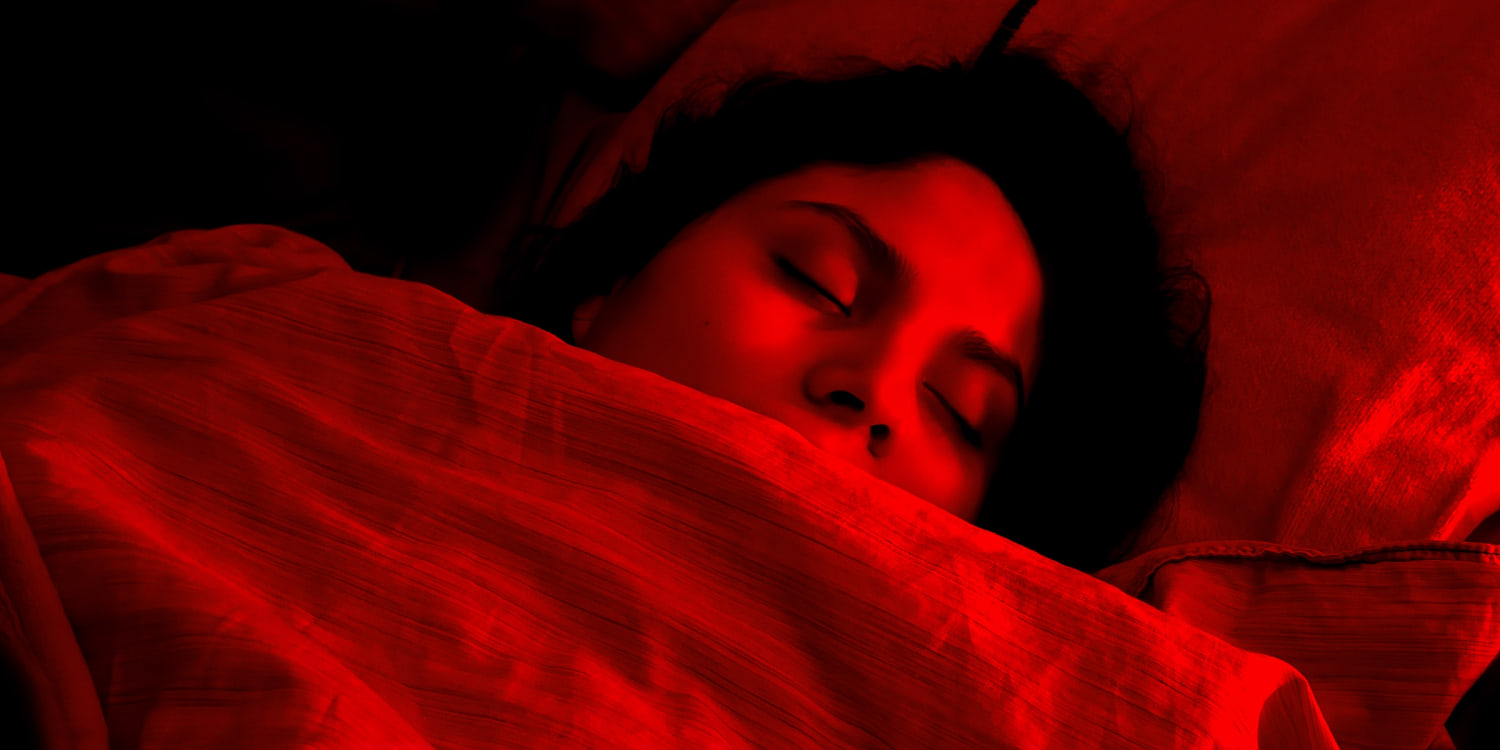
Staring into a glowing crimson panel before bed will not fix a broken sleep drive. It rarely cures insomnia. And it certainly will not rescue you from staying up until two in the morning scrolling feeds under cool overhead LEDs.
That is the lazy consensus floating across wellness blogs right now. A typical piece asks whether red light helps you sleep, rounds up a few cautious quotes, and concludes that red light is a gentle, drug-free way to wind down because it does not suppress melatonin the way blue light does.
Polite. Safe. Shallow.
People read that and think red light acts like a sleeping pill with wavelengths. It does not. Worse, treating red light as a sleep cure lets people dodge the unglamorous mechanics that actually govern sleep architecture: circadian phase timing, homeostatic sleep pressure, light exposure across the full 24-hour day, and evening thermal regulation.
I have watched wellness brands and consumer hardware startups burn millions of dollars pitching bedside red lamps and wearable sleep masks as shortcuts to deep rest. Over and over, the same story plays out. Someone buys a $400 panel, sits in front of it for fifteen minutes at 10:30 p.m., feels mildly relaxed because they finally put their phone down for a quarter-hour, and credits the photons. Meanwhile, their sleep latency barely budges, or they wake up wired at 3:00 a.m. wondering why the "science" failed them.
To understand where red light actually fits—and where the marketing goes off the rails—we have to separate photobiomodulation from circadian photobiology. Wellness copy mashes them together into a single glowing blur. They are not the same thing.
The Lazy Consensus Around Red Light and Sleep
The standard argument goes like this: blue-enriched light around 450–480 nanometers stimulates intrinsically photosensitive retinal ganglion cells (ipRGCs) containing melanopsin, which signals the suprachiasmatic nucleus (SCN) in the hypothalamus that it is daytime and suppresses melatonin secretion. Red light sits at longer wavelengths—typically around 630 to 700 nanometers (with near-infrared stretching past 800 nanometers)—where melanopsin sensitivity drops off sharply. Therefore, the story goes, red light is "sleep-friendly" and helps you drift off.
There is a kernel of truth in that mechanism, buried under a mountain of wishful thinking.
Not suppressing melatonin is not the same thing as inducing sleep. Melatonin is best understood as a signal of biological darkness—a marker of circadian timing ("dim light melatonin onset," or DLMO)—rather than a heavy sedative that knocks a hyperaroused nervous system unconscious. A person can have normal nocturnal melatonin and still lie awake for ninety minutes because cortisol is elevated, core body temperature has not dropped enough, adenosine pressure is low from a late-afternoon nap, or they are conditioned to associate their bed with stress.
Even the "no circadian effect" claim has nuance that generic roundups gloss over. While long-wavelength red light requires much higher irradiance than short-wavelength blue light to drive strong melanopsin responses, bright, prolonged, or close-range red light is not biologically invisible to every pathway. In laboratory settings, high-intensity red light can still influence alertness or circadian markers depending on intensity, duration, pupil size, and prior light history. Calling it pure "sleep light" oversimplifies how human photoreceptors behave outside a neat textbook chart.
What People Actually Mean When They Ask "Can Red Light Help You Sleep?"
Search queries around red light and sleep usually hide one of three very different problems:
- Delayed sleep phase: "I cannot fall asleep until 1:00 a.m., even when I try to go to bed at 11:00 p.m."
- Sleep maintenance insomnia: "I fall asleep fine, then wake up at 3:00 a.m. and cannot get back to sleep."
- Poor perceived recovery: "I am in bed for eight hours, yet I wake up feeling heavy or unrefreshed."
Red light does not treat the root causes of those three problems in any direct, reliable way. If your circadian clock is phase-delayed because you get dim indoor light all morning and blast bright screens until midnight, swapping a desk lamp for a red bulb at 10:00 p.m. is like putting a band-aid on a leaking radiator. You are addressing a minor downstream irritant while ignoring the system pressure.
A small number of studies—including a frequently cited 2012 paper in the Journal of Athletic Training looking at female basketball players exposed to red light therapy—reported improvements in subjective sleep quality and serum melatonin levels. Those findings are interesting. They are also preliminary, often modest in sample size, sometimes unblinded or lacking rigorous sham controls, and far from proof that any consumer red panel will cure chronic sleep trouble. When a multi-billion-dollar hardware category builds its main pitch on small, early-stage studies and extrapolated mechanisms, skepticism is not cynicism. It is basic due diligence.
Circadian Biology vs. Photobiomodulation: Stop Confusing the Two
If you want sharp thinking on light and human physiology, draw a thick line between these two concepts:
- Circadian photobiology asks how light timing, spectrum, intensity, and duration entrain the central circadian pacemaker and regulate hormones, alertness, and sleep-wake timing. Here, the star player is retinal light exposure—especially bright light earlier in the day and genuine dimness at night.
- Photobiomodulation (PBM) asks how red and near-infrared wavelengths interact with cellular chromophores—classically cytochrome c oxidase in mitochondrial electron transport chains, alongside broader redox, nitric oxide, and cellular signaling pathways—to influence tissue metabolism, inflammation, or recovery.
Here is where insiders roll their eyes at the sleep hype. Most photobiomodulation research was never designed around curing primary insomnia. It focuses on wound healing, joint pain, muscle recovery, dermatology, or neurological and metabolic pathways. Even within PBM, dosing matters enormously: wavelength, fluence (energy density), irradiance (power density), treatment time, and distance from the skin change biological outcomes. Pointing a generic LED array at your face for ten minutes because "mitochondria like red light" does not automatically translate into deeper slow-wave sleep or consolidated REM cycles.
Imagine a scenario where a software engineer works until 11:30 p.m. under 4000K overhead lighting, drinks an espresso at 3:00 p.m., skips morning daylight, and then sits in front of a 660 nm red light panel for twelve minutes before climbing under a heavy duvet in a 74°F bedroom. She falls asleep twenty minutes faster on night one because she stepped away from her code editor and sat quietly. By week two, her sleep onset drifts back to midnight. The red light did not fail a law of physics; it was asked to solve a circadian, thermal, and adenosine problem it was never built to fix.
What Heavy Hitters in Sleep and Circadian Science Actually Emphasize
Look at the researchers who have shaped modern sleep and circadian science—figures like Charles Czeisler on human circadian rhythms and light, Samer Hattar on melanopsin and ipRGC pathways, Satchin Panda on circadian timing and light/dark cycles, and Matthew Walker on sleep architecture and sleep pressure. When you read their work closely, the hierarchy of sleep regulation is remarkably consistent.
Light is a timing signal, not a sedative.
Morning bright light—ideally outdoor daylight, which delivers thousands of lux even on overcast days compared to a few hundred lux indoors—anchors your circadian rhythm early, sets a clearer timer for evening melatonin rise, and supports daytime alertness so sleep pressure builds cleanly toward night. Evening light management works best when you dim everything, rather than trying to out-engineer bright rooms with a single colored accessory. Dim amber or red-shifted night lighting in hallways or bathrooms has a clear, practical role: it lets you see well enough not to trip at 2:00 a.m. without blasting bright short-wavelength light into your eyes and alerting your brain.
Meanwhile, two heavyweights sit right beside circadian timing:
- Sleep drive (adenosine accumulation): Wakefulness builds sleep pressure. Long daytime naps, irregular wake times, and late caffeine blunt that pressure and make falling asleep feel like forcing a square peg into a round hole.
- Thermoregulation: Falling asleep and staying in deep sleep depend on a drop in core body temperature and heat dissipation through extremities like hands and feet. A warm bath or shower an hour or two before bed—followed by stepping into a cooler room—often moves the needle far more noticeably than any colored light bulb.
Researchers like Michael Grandner and sleep clinicians working with Cognitive Behavioral Therapy for Insomnia (CBT-I) consistently show that behavioral and environmental fundamentals—consistent wake times, stimulus control (not lying awake fighting the clock in bed), managing evening cognitive arousal, and light/temperature hygiene—carry the heaviest evidence for lasting sleep improvement. Hardware is optional. Habits are foundational.
Where the Contrarian Take Can Burn You
Going contrarian against red light hype feels great until you swing too far the other way and throw out useful tools for the wrong reasons. Here are the real downsides of taking a hard anti-hype stance:
- Throwing out a low-risk wind-down cue: If using a dim red light in the evening helps someone establish a predictable "screens off, phone in another room" boundary, the behavioral ritual itself has real value—even if the wavelength deserves less credit than the screen curfew.
- Confusing sleep cure with practical night navigation: A low-glare red or warm amber nightlight is genuinely useful for middle-of-the-night bathroom trips or checking on a child without turning on harsh overhead lights that wake you up fully. Calling red light therapy "hype" for sleep disorders should not make people turn on a bright kitchen light at 3:00 a.m.
- Over-relying on willpower instead of environment: Telling tired people to "just fix their habits" without giving low-friction environmental tweaks can sound dismissive. Dimming lights, cooling the bedroom, and getting morning outside light are simple levers, yet people still struggle with consistency when schedules are chaotic.
- Ignoring legitimate non-sleep uses: Skepticism about red light as a sleep cure should not blur into blanket dismissal of photobiomodulation research in other contexts where dosing and endpoints are better matched. Keep the critique sharp and specific.
A Smarter, No-Nonsense Playbook for Better Sleep
If you already own a red light device, do not throw it out of spite—just stop expecting miracles from it. Use it deliberately or put it somewhere it actually makes sense.
- Audit your morning and daytime light first. Get outside within an hour of waking whenever possible, even for ten to twenty minutes, before worrying about exotic evening wavelengths. Your evening wind-down starts at sunrise.
- Dim your whole evening environment, not just one corner. Lower overhead lights after dusk, shift screens to warm/dim settings, and cut bright stimulation in the final hour before bed. Darkness is the signal; a bright red spotlight in a dark room is still light.
- Keep red light strictly for low-glare utility or a screen-free buffer. If you like a dim red lamp while reading a physical book or navigating the house at night, keep brightness low and distance sensible so it does not act as an alerting beacon.
- Fix temperature and wake-time consistency before buying more gear. Pick a wake time you can hold within a narrow window seven days a week, keep the bedroom cool, avoid late caffeine, and use evidence-backed behavioral strategies if insomnia persists.
- Measure outcomes over weeks, not single nights. Track how quickly you fall asleep, how often you wake up, and how you feel mid-morning over two to three weeks. If a tool or habit does not improve real sleep continuity or daytime function, drop it.
Stop asking whether a glowing red panel can trick your brain into sleep. Fix your light across the whole day, cool your room, protect your wind-down from screens, and let real biology do the heavy lifting.