The knuckles on the steering wheel are white.
Meet Elias. He is thirty-four, caffeinated, and precisely seven minutes late for a meeting that could determine the next three years of his career. To Elias, every other driver on the suburban arterial road is a sentient obstacle, a rhythmic failure of timing. He sees a gap in the left lane, floors the accelerator, and feels the brief, visceral surge of the engine. He whips past a dented silver sedan crawling at the speed limit. For three glorious seconds, Elias is winning. He is the master of his own arrival time. Recently making waves in related news: The Agony of the Unexpected Gift.
Then, the light turns amber.
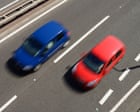
Elias slams on the brakes. He comes to a vibrating halt at the thick white line of the intersection. He waits. Six seconds later, a familiar shape pulls up in the lane beside him. It is the dented silver sedan. The driver, an elderly woman with a floral sun visor, isn't sweating. she isn't checking her watch. She simply glides to a stop next to him, having expended half the fuel and none of the adrenaline. Additional details into this topic are covered by Apartment Therapy.
This is the Voorhees Law of Traffic in its purest, most infuriating form. It is the mathematical proof that, in the urban ecosystem, the tortoise doesn’t just beat the hare—the tortoise makes the hare look like an idiot.
The Geometry of the Bottleneck
We live under the illusion that speed is a linear path to progress. If Point A and Point B are ten miles apart, we assume that traveling at sixty miles per hour will get us there twice as fast as thirty. On a salt flat in Utah, that is a fact. In a modern city, it is a delusion.
Traffic is not a stream; it is a series of pulses. Think of a city’s road network as a giant, communal hourglass. No matter how wide the glass is at the top, the sand can only move as fast as the narrow neck allows. In our world, the neck of the hourglass is the red light.
Traffic engineers often speak of "green waves," those rare, cinematic moments where every light opens like a door as you approach. But these are designed for specific speeds, usually the limit. When Elias speeds, he isn't just breaking the law; he is breaking the synchronization. He is arriving at the "neck" before the gate has opened. He is essentially running full tilt into a closed door, while the silver sedan walks toward the door just as it happens to swing wide.
The Invisible Elasticity of the Pack
To understand why the "slow" car always catches up, we have to look at the fluid dynamics of a traffic jam. When a car accelerates rapidly to overtake another, it creates a pocket of vacuum in its wake. But more importantly, it encounters the "density wave" of the next intersection.
Imagine a slinkey stretched out across a table. If you push one end suddenly, a wave of compression travels down the coils. Traffic works the same way. When the light turns green, the first car moves, then the second, then the third. This "startup lost time" creates a lag. If you are the speeding driver, you are simply rushing to join the back of a compression wave that hasn't started moving yet.
The math is heartless. Let’s say you’re traveling on a three-mile stretch of road with four traffic lights. Even if you drive 15 mph over the limit, the probability of hitting at least one red light is nearly 90 percent in a high-density area. Because the timing of these lights is often fixed or sensor-based to manage the heaviest flow, the time you "gained" by overtaking that "slow" car is neutralized the moment your tires stop rotating at the next red. You haven't gained time. You have only traded peace of mind for a front-row seat to a wait.
The Psychological Toll of the Illusion
Why do we keep doing it? Why does Elias feel the need to weave through traffic like a needle through silk when the outcome is statistically predetermined?
The answer lies in our perception of agency. When we are stuck behind a slower vehicle, we feel a loss of control. We feel "stuck." By overtaking, we regain the sensation of power. Psychologists call this the "illusion of control." We would rather be doing something—even if it is counterproductive—than sitting still. The act of passing provides a dopamine hit, a temporary feeling of victory that blinds us to the reality that the silver sedan is still right there in our rearview mirror.
Consider the cost of that three-second lead. Rapid acceleration increases fuel consumption by up to 40 percent in stop-and-go traffic. It wears down brake pads. It spikes cortisol levels, leading to a "road rage" headspace that lingers long after we’ve stepped out of the car. We are burning money and health to reach a red light marginally sooner than the person we deemed "too slow."
The Ghost of the Overtaken
There is a specific kind of cosmic humility in being the driver who gets overtaken.
Picture Sarah. She is the driver of that silver sedan. She knows the rhythm of her commute. She knows that if she maintains a steady 35 mph, she will hit the synchronized lights perfectly. When Elias roars past her, she doesn't feel the need to compete. She knows something Elias doesn't: the road is a closed system.
In Sarah’s world, the road is a partner. In Elias’s, it is an adversary. The Voorhees Law suggests that in any urban environment, the average speed of all vehicles tends to converge toward a mean determined by the frequency of interruptions (lights, crosswalks, turns). No matter how hard you push against the mean, the mean pushes back.
The "slow" car isn't actually slow. It is efficient. It is calibrated to the reality of the infrastructure. When that silver sedan pulls up next to the sports car at the light, it is a silent, metallic "I told you so."
Breaking the Cycle of the Lead Foot
If we accept that the red light is the great equalizer, the way we drive changes. The goal is no longer to be "first." The goal is to minimize "braking events."
If you see a red light a quarter-mile ahead, there is no reason to maintain your speed. By easing off the gas and coasting, you allow the traffic at that light to begin moving before you even arrive. Often, you can time it so that you never have to come to a complete stop at all. This is "gliding," and it is the secret language of the professional driver.
While Elias is stop-starting, lurching his passengers' heads back and forth, Sarah is maintaining a constant, gentle momentum. She arrives at her destination with a lower heart rate and a full tank of gas.
The next time you feel that itch to pivot into the left lane, to floor it past the person doing the limit, remember the silver sedan. Remember that the city is not a racetrack; it is a clock. You can try to run faster than the hands of the clock move, but you will always find yourself waiting for the next minute to strike.
Elias finally reaches his meeting. He is sweating. He is frustrated. He spends the first five minutes of the presentation trying to catch his breath and slow his racing heart.
Two floors down, the woman from the silver sedan is walking into the same building. She is on time. She is calm. She doesn't even remember the black car that sped past her three miles back.
The light is always going to turn red. The only choice we have is how much of ourselves we want to burn while waiting for it to turn green.