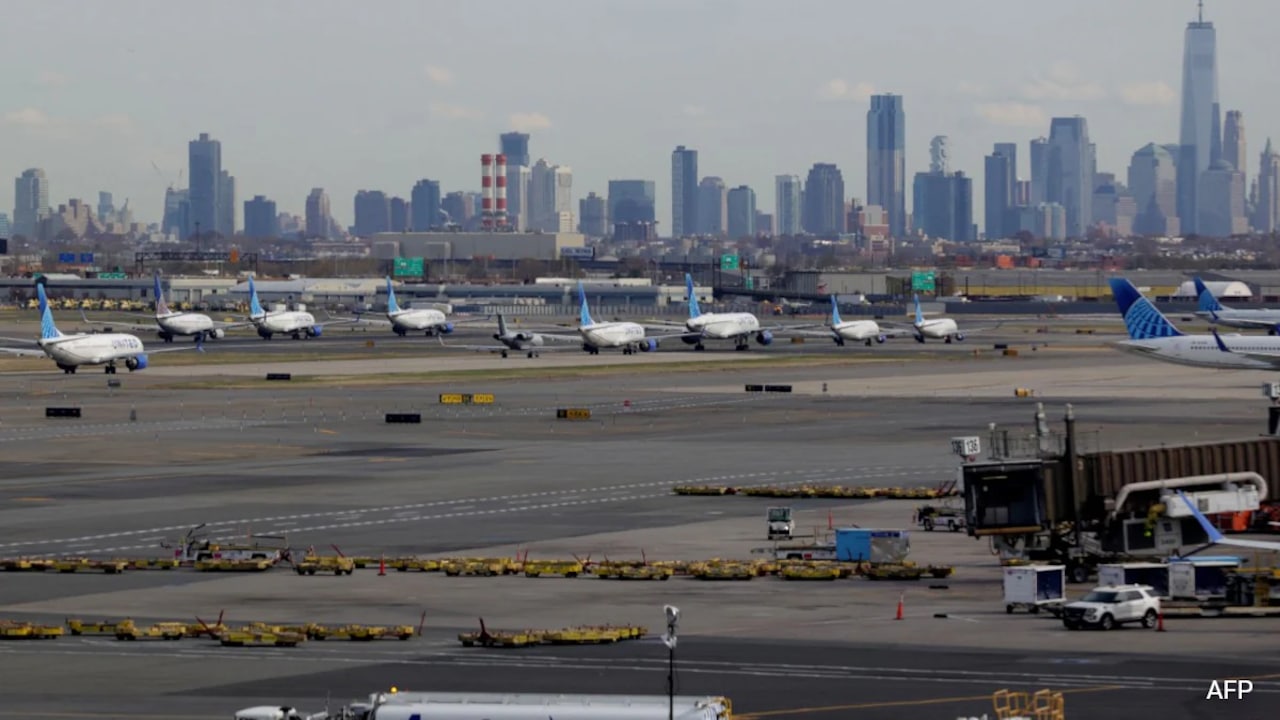
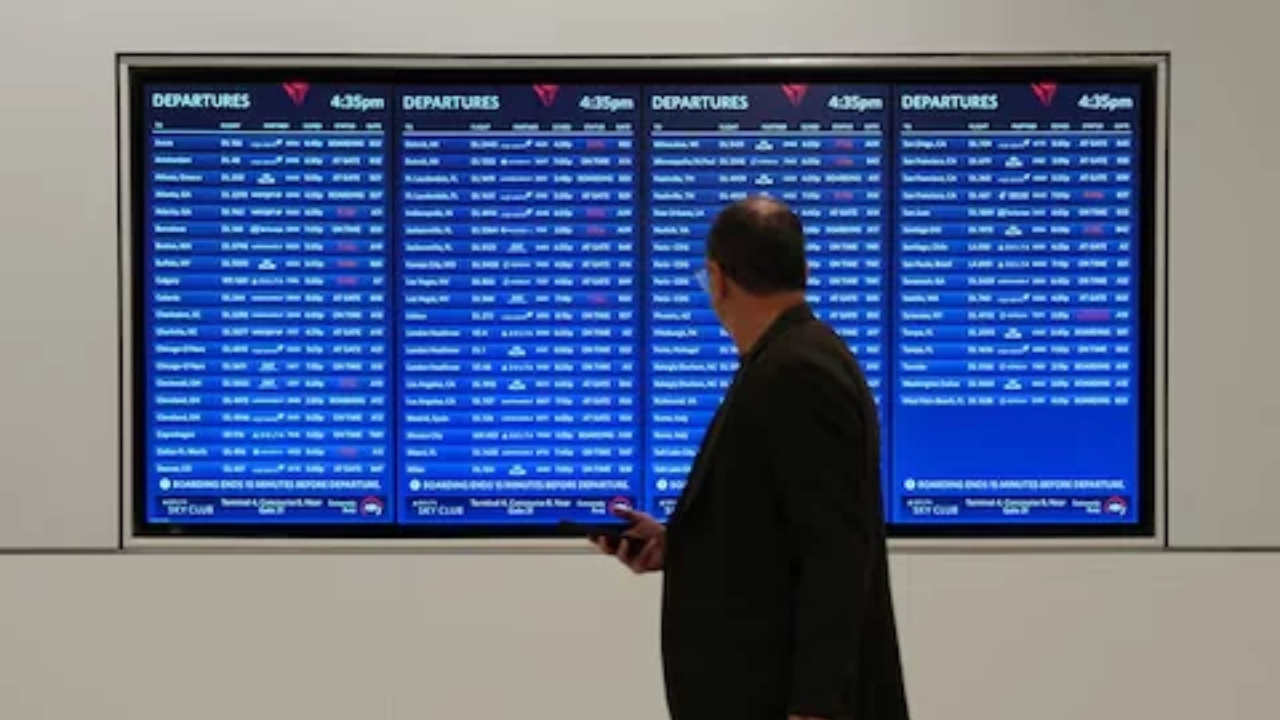
You're sitting at Gate B14 with a lukewarm coffee, staring at the departure board, and suddenly every single flight turns red. No weather rolling in. No mechanical failure on your plane. Just a sudden, nationwide halt because an air traffic communications outage just pulled the emergency brake on American aviation.
When flights get grounded across the US after a communications failure, it feels chaotic from the terminal floor. Behind the scenes, though, it's the exact opposite. A nationwide ground stop is a deliberate, heavily rehearsed safety reflex designed to keep thousands of aircraft from flying blind in the busiest airspace on the planet.
Most travelers assume planes fly on GPS and autopilot from gate to gate, so losing a ground-based radio or data link shouldn't matter much. That's completely wrong. Commercial aviation runs on continuous, redundant verification between the flight deck and the ground, and the moment that link frays, the Federal Aviation Administration (FAA) stops adding new traffic to the sky.
Why a Communications Failure Triggers a Nationwide Ground Stop
Airspace isn't an open highway. It's a three-dimensional grid of invisible corridors, altitude blocks, and strict separation minimums managed by human controllers across regional facilities.
When an air traffic communications outage hits—whether it's a severed fiber-optic trunk line, a corrupted flight-plan database, or a failure in the voice switching network—controllers lose their ability to safely sequence departures. Planes already in the air are never left stranded without guidance; they remain under positive control using backup frequencies, satellite links, and onboard collision avoidance systems.
The real danger is launching more aircraft into sectors where controllers are suddenly forced to manage traffic manually.
The Domino Effect of Manual Separation
Under normal conditions, automated systems track every transponder ping, update weather routing, and hand off flights seamlessly from one regional center to the next. If a core communications link drops, controllers have to revert to old-school procedures. They increase the physical distance required between jets, verify positions via backup VHF frequencies, and coordinate handoffs over landline phones.
Capacity drops overnight. An airspace sector that comfortably handles forty jets an hour might suddenly only handle twelve.
To prevent airborne gridlock—where planes run low on fuel circling overcrowded hubs—the FAA Air Traffic Control System Command Center issues a ground stop. Every plane still on the tarmac stays put. It's frustrating, expensive, and disruptive, yet it prevents a technical glitch from turning into a mid-air crisis.
The Aging Infrastructure Behind US Airspace Disruptions
If you've flown regularly over the last few years, these headlines probably feel familiar. You're not imagining things.
The US National Airspace System is an engineering marvel, yet large parts of its backbone rely on legacy architecture built decades ago. While cockpit technology has leaped forward with satellite-based navigation under the FAA's NextGen program, the ground networks connecting towers, Terminal Radar Approach Control (TRACON) facilities, and Air Route Traffic Control Centers still depend on aging telecommunications infrastructure.
Single Points of Failure in a Complex Grid
Aviation experts and the Government Accountability Office (GAO) have repeatedly warned about aging FAA systems that are expensive to maintain and vulnerable to cascading failures.
Consider what happened during the January 2023 Notice to Air Missions (NOTAM) outage. A single damaged database file caused by a contractor error brought domestic departures to a complete standstill for the first time since September 11, 2001. Thousands of flights were delayed or canceled before engineers could reboot the primary and backup systems.
In other instances, localized telecom outages—like a cut fiber line feeding a major regional center in Florida, Indianapolis, or Newark—have forced cascading ground stops up and down the East Coast. Because US airline networks operate on tightly timed hub-and-spoke schedules, a communications hiccup in one busy corridor ripples across the entire country within ninety minutes.
- Voice Switching Control Systems: Some facilities still operate equipment installed in the 1990s, requiring specialized parts that are increasingly hard to source.
- Telecom Routing: Even when backup lines exist, physical routing overlaps can mean a single construction accident or hardware failure knocks out both primary and secondary circuits simultaneously.
- Data Synchronization: Modern flight operations require pre-departure safety alerts, runway closures, and airspace restrictions to sync across airline dispatchers and FAA servers in real time.
What Pilots and Controllers Actually Do During an Outage
Hollywood loves depicting air traffic control outages as rooms full of people screaming at dark radar screens. Reality is much quieter, far more methodical, and heavily governed by federal aviation regulations.
If you're cruising at 35,000 feet when a regional center loses its primary radio frequencies, your pilots don't panic. They immediately run a specific lost-communications checklist.
First, they check backup radios and switch to the international emergency frequency, 121.5 MHz, which every commercial aircraft and military facility monitors constantly. Many long-haul and modern domestic jets also carry Controller-Pilot Data Link Communications (CPDLC), allowing them to exchange text-based clearances with controllers even when voice channels are completely dead.
Navigating Without Ground Contact
If total two-way radio failure occurs—an extraordinarily rare event—pilots follow strict rules laid out under 14 CFR § 91.185. They continue flying their last assigned route and altitude, maintaining predictable behavior so controllers watching them on primary radar can clear other traffic out of their path.
Meanwhile, onboard Traffic Alert and Collision Avoidance Systems (TCAS) operate independently of ground stations. TCAS transponders talk directly to nearby aircraft, issuing automated climb or descend commands if two planes ever get too close.
The system is built with layers upon layers of redundancy. Grounding departures isn't an admission that airborne planes are unsafe; it's how the system protects that safety margin while technicians isolate the fault.
Why Airlines Take Hours to Recover After the FAA Lifts a Ground Stop
Here is the part that drives stranded passengers crazy. The FAA announces the communications outage is resolved at 10:00 AM, yet your noon flight gets canceled at 2:00 PM under clear blue skies.
Fixing the technical glitch is only half the battle. Untangling the operational knot takes much longer.
Crew Timeouts and Federal Rest Rules
Commercial pilots and flight attendants are strictly governed by FAA fatigue regulations, specifically FAR Part 117 for flight crews. The clock starts ticking the moment a crew reports for duty, not when the plane pushes back from the gate.
If your crew sits on the tarmac for three hours waiting for an air traffic communications outage to clear, they might legally "time out" before they can finish their scheduled legs. Once a crew hits their maximum duty limit, they cannot legally fly the plane—even if you're twenty minutes from takeoff. Airlines then have to scramble reserve crews, who may be sitting in a different city altogether.
Aircraft Out of Position
Airlines schedule planes like intricate domino chains. The Boeing 737 flying you from Chicago to Dallas is scheduled to turn around forty-five minutes later and fly from Dallas to Miami, then Miami to Boston.
When a ground stop freezes that first leg, every subsequent flight assigned to that tail number collapses. Gate space clogs up because arriving planes can't pull into gates still occupied by delayed departures. Baggage handlers, catering trucks, and refueling crews fall behind schedule across dozens of airports simultaneously.
What You Should Do the Moment a Ground Stop Hits
Standing in a customer service line with three hundred angry travelers is the worst move you can make during a nationwide aviation disruption. By the time you reach the podium, every decent rebooking option is already gone.
Act the second you see alerts about an FAA ground stop or widespread airspace delays.
Move Faster Than the Crowd
- Open the airline app immediately. Modern airline apps push self-service rebooking options the moment a delay crosses a certain threshold, often waiving change fees automatically. Grab a confirmed seat on a later flight or a routing through an unaffected hub before the inventory disappears.
- Call the international support line. While thousands of domestic callers jam the main US customer service number, international reservation desks (such as the airline's UK, Canadian, or Australian support lines) connect to the exact same booking system with a fraction of the wait time.
- Check alternative airports. If a communications outage paralyzes a major hub like Atlanta, Newark, or Chicago O'Hare, look at secondary airports within driving distance. Switching from Newark to Philadelphia, or from Chicago O'Hare to Milwaukee, can get you moving hours faster.
- Know your DOT refund rights. Under US Department of Transportation rules, if your flight is canceled or significantly delayed and you choose not to travel, the airline owes you a full refund to your original form of payment—not just a travel voucher—regardless of the ticket type you bought.
Understand Compensation Limits
Don't expect airlines to hand out hotel vouchers and meal stipends automatically during an FAA communications outage. Because air traffic control infrastructure is managed by the federal government rather than individual carriers, airlines classify these disruptions as events outside their control—similar to severe weather.
Check the credit card you used to book the flight instead. Many mid-tier and premium travel cards include trip delay insurance that kicks in after a six- to twelve-hour delay, covering hotels, meals, and ground transportation regardless of whether the airline or the FAA caused the mess. Keep every itemized receipt, screenshot the FAA ground stop notice from the official NAS Status portal at nasstatus.faa.gov, and file your claim as soon as you get home.