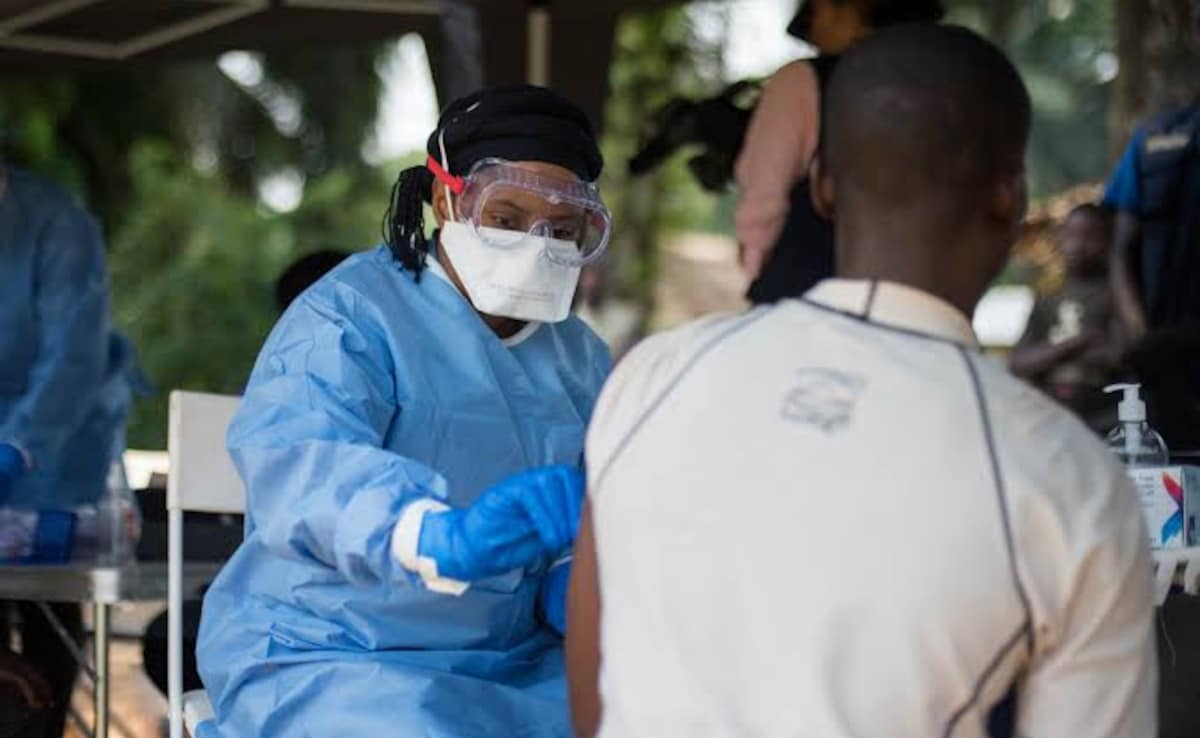
Governments love blanket travel bans because they look like decisive action. When an infectious disease headline hits the wires, bureaucrats immediately pull the lever on nationwide travel advisories. We saw it when India issued sweeping warnings against travel to the Democratic Republic of the Congo (DRC) and Uganda during regional health scares. The underlying assumption is simple: a whole country is a monolith of contagion, and isolation equals safety.
This assumption is fundamentally flawed. It misallocates risk, devastates local economies, and actually impairs global health security. Building on this theme, you can also read: Why Wealthy Travelers Are Ditching Summer and Booking Fallcations.
Geography is the first casualty of panic. The DRC covers over two million square kilometers. It is roughly the size of Western Europe. Treating an isolated outbreak in North Kivu or Equateur province as a reason to avoid the entire country is the geopolitical equivalent of banning travel to Spain because of a localized health crisis in Berlin. Uganda faces similar blanket treatment, where localized border containment is flattened by international headlines into a nationwide danger zone.
The False Security of Geofencing a Virus
Microbiology does not respect lines drawn on a map. When a government issues an advisory telling citizens to avoid an entire nation, it creates a dangerous illusion of domestic safety. It trains travelers to look at passports rather than behaviors and specific vectors. Analysts at Condé Nast Traveler have shared their thoughts on this matter.
The World Health Organization (WHO) has repeatedly stated that restricting the movement of people and trade during public health emergencies is generally ineffective. Instead of stopping transmission, broad bans drive undocumented border crossings underground. When formal channels close, informal ones open. Screening protocols, contact tracing, and health monitoring disappear when travelers are forced to bypass official entry points to avoid quarantine or legal penalties.
I have spent years analyzing how international logistics and border controls react under pressure. When the hammer falls on a country’s travel status, the immediate casualty is transparency. Local authorities become incentivized to underreport cases to protect their economy from international blacklisting. By punishing transparency with economic isolation, global travel advisories actively undermine the surveillance networks required to catch outbreaks before they go global.
The Economic Body Count
We need to talk about the collateral damage of risk aversion. Tourism and cross-border trade are not luxury line items for East and Central African nations; they are foundational pillars of regional stability.
When international advisories scare off business travelers, humanitarian workers, and eco-tourists, conservation funding dries up. Ranger patrols in national parks lose financing, which leads to an immediate spike in poaching. Supply chains for critical goods break down.
Consider the irony: a travel ban meant to protect public health deprives local health systems of foreign exchange revenue, medical supply logistics, and international technical talent. The advisory effectively starves the very infrastructure tasked with containing the disease in the first place.
Dismantling the Panic Premise
The public constantly asks: "Is it safe to visit Africa during an outbreak?"
The question itself is structurally broken. Africa is a continent of 54 distinct nations. Even narrowing the question to the DRC or Uganda reveals a deep misunderstanding of how modern infectious disease management works.
If you look at epidemiological data from organizations like the Africa Centres for Disease Control and Prevention (Africa CDC), transmission risk is heavily concentrated in specific communities, usually linked to traditional burial practices, bushmeat consumption, or specific healthcare facilities lacking personal protective equipment (PPE).
For a business traveler staying in a commercial hub like Kampala or Kinshasa, practicing standard hygiene protocols, and avoiding active containment zones, the statistical probability of contracting a hemorrhagic fever is statistically negligible. You are far more likely to be injured in a traffic accident on the way to the airport.
How to Calculate Real Risk
True risk management requires a surgical approach, not a sledgehammer. If you must operate in regions experiencing public health notices, stop reading generalized government alerts and start analyzing operational realities.
- Map the Epicenter: Pinpoint the exact health zone of the outbreak. Measure the logistical distance, infrastructure barriers, and transport links between that zone and your destination.
- Audit Your Supply Chain: Ensure your local partners have independent access to clean water, reliable power, and private medical evacuation protocols.
- Evaluate Local Infrastructure: Assess whether local administrative focus has shifted entirely to containment, which might cause bureaucratic delays unrelated to the disease itself.
The downside to this nuanced approach is obvious: it requires effort. It forces organizations to think critically rather than outsourcing their duty of care to a generic government website. It means accepting that risk is a spectrum, not a binary toggle switch between "safe" and "dangerous."
The next time a headline screams about a national travel advisory, look at a map. Look at the data. Stop letting bureaucratic cover-your-back policies dictate your global operations. Real resilience belongs to those who measure proximity, not politics.
:max_bytes(150000):strip_icc()/GettyImages-700832601-5bb602c0c9e77c002609fe08.jpg)