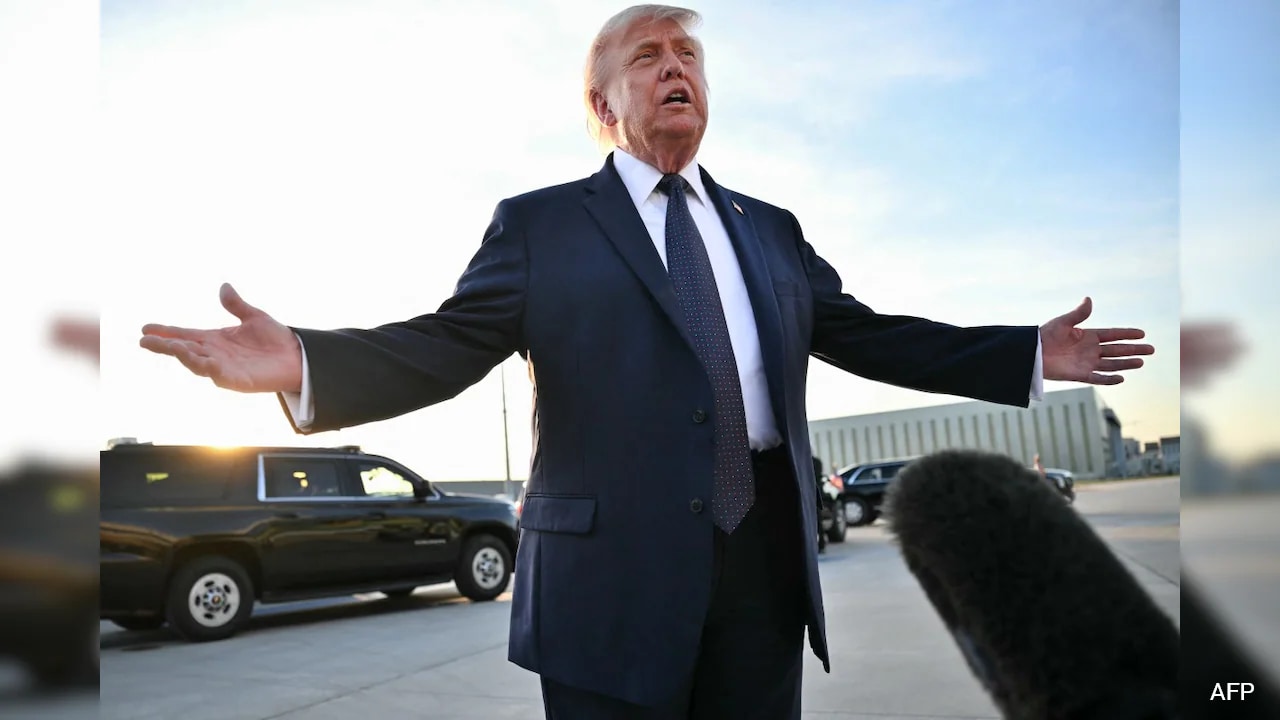
Donald Trump has crossed his own red line, quietly signing an interim Memorandum of Understanding (MoU) with Iran that trades immediate economic concessions for a fragile peace in the Strait of Hormuz. Confronted by critics within his own party who view the deal as an unforced capitulation, Trump defended the move at the G7 summit in France with a characteristic pivot. He claimed the imminent unfreezing of billions of dollars in Iranian assets is not an act of weakness, but a structural necessity to protect the global supremacy of the American dollar. "It's not our money, it's their money," Trump told reporters, warning that permanently seizing foreign assets would destroy international trust in the greenback and drive investors away from the U.S. financial system forever.
The official narrative frames this as a masterclass in macroeconomic stewardship, a calculated move to preserve the dollar as the world's reserve currency while averting a catastrophic global energy crisis triggered by the monthslong naval war in the Gulf. Read more on a related issue: this related article.
But the reality inside the negotiating rooms tells a different story.
Interviews with diplomatic sources, treasury officials, and intelligence analysts reveal that Trump’s sudden respect for property rights is a convenient rhetorical shield. In truth, the administration has backed itself into a corner. Facing a bruising oil price spike ahead of the November midterm elections, a mostly blocked shipping lane that handles twenty percent of the world's petroleum, and an adversary that successfully demonstrated regional deterrence, the White House chose short-term political survival over long-term strategic leverage. Additional reporting by The New York Times highlights comparable views on the subject.
The Versailles Backroom and the Twenty Four Billion Dollar Leverage Play
The diplomatic breakthrough did not happen on state television. It was finalized during a private dinner at the Palace of Versailles between Trump and French President Emmanuel Macron. The resulting framework ends military operations across all fronts, including Lebanon, lifts the U.S. naval blockade of Iranian ports, and initiates a sixty day clock to negotiate a comprehensive final settlement.
The primary sticking point has always been cash. Iran entered the talks demanding immediate, unconditional access to its restricted oil revenues locked in foreign bank accounts across South Korea, Iraq, Japan, and India due to decades of Washington-imposed sanctions. Tehran's negotiators held a powerful hand: the ability to keep the Strait of Hormuz closed, choking global energy markets and paralyzing western economies.
Iranian state-affiliated media quickly leaked details boasting that the U.S. had agreed to release twenty-four billion dollars in frozen assets during the negotiation window. The White House panicked. Senior administration officials spent the subsequent hours holding background briefings to reverse the optics, insisting that no funds will be given upfront and that any asset release is strictly contingent on "demonstrable good behavior" and verifiable nuclear dilution.
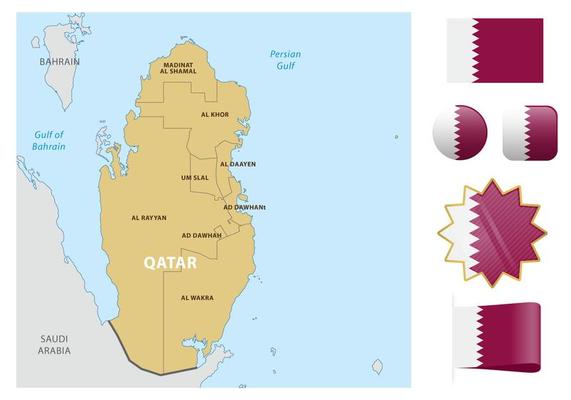
However, the text of the memorandum itself reveals a significant American concession. While the timing of the release remains a subject of fierce bureaucratic infighting, the U.S. has formally committed to making Iran’s frozen funds fully available for use by beneficiaries designated by the Central Bank of Iran. To make the pill easier to swallow for the American public, regional intermediaries like Qatar have proposed complex compromise packages: shuffling billions through tightly controlled escrow accounts earmarked strictly for humanitarian goods, mirroring the infrastructure of the controversial 2023 prisoner swap.
Yet, any veteran observer of middle eastern sanctions knows this distinction is largely a legal fiction. Money is fungible. Unfreezing six billion or twenty-four billion dollars for food and medicine instantly frees up an identical amount within Iran's domestic budget. Tehran can then reallocate those domestic funds toward conventional missile development and regional proxy forces—the exact non-nuclear threats that Trump promised his "maximum pressure" campaign would permanently neutralize.
Weaponizing the Greenback and the Threat of De-Dollarization
To deflect from these geopolitical concessions, the president has anchored his defense in the high-stakes realm of international finance. Trump's warning that weaponizing the dollar too aggressively will cause global investors to lose faith in U.S. banks touches on a genuine, systemic vulnerability.
When the United States freezes the sovereign assets of a foreign central bank, it sends a chilling message to every non-western government in the world. Beijing, New Delhi, and Riyadh watch these maneuvers closely. If Washington can arbitrarily lock a nation out of the SWIFT banking system and freeze its reserves over a geopolitical conflict, the safest move for emerging powers is to diversify away from the dollar entirely.
By framing the unfreezing of Iranian assets as an act of monetary self-preservation, Trump attempts to turn a tactical retreat into a strategic defense of the American financial empire. He is right that the absolute hegemony of the dollar depends on the perception that the U.S. financial system is a neutral, rules-based custodian of global wealth.
The defense is clever. But it ignores the immediate chronological reality of the crisis. The administration did not suddenly become concerned with dollar credibility after years of aggressively using secondary sanctions as a primary foreign policy tool. They became concerned when global oil prices surged, threatening a domestic political backlash.
The Reconstruction Illusion and the Missing Leverage
The most audacious clause in the newly minted memorandum is a pledge by the United States and its regional partners to develop a three-hundred-billion-dollar fund for the reconstruction and economic development of Iran.
State Department officials have scrambled to clarify that American taxpayers will not be cutting a check to Tehran. Instead, the provision is designed as a framework to issue sanctions waivers, allowing wealthy Gulf states like Saudi Arabia and the United Arab Emirates, alongside private western corporations, to invest heavily in Iranian infrastructure and power plants.
The strategic gamble is obvious: bind Iran's economy to regional stability by offering a massive financial carrot. If Tehran returns to hostilities, the investment dries up.
This strategy contains a fatal flaw. By granting massive economic relief and unlocking frozen assets early in the process, the administration is voluntarily surrendering its strongest leverage before the true, difficult negotiations even begin.
The second phase of the talks is scheduled to tackle the core security issues: the permanent dismantling of Iran's nuclear enrichment capabilities, the restriction of its ballistic missile program, and its funding of militant groups across the Middle East.
History offers a grim precedent here. Once a revolutionary regime receives an influx of hard currency and watches its primary economic chokeholds dismantled, its incentive to make painful, sovereign concessions evaporates.
The administration insists it retains the ultimate hammer: the threat to walk away and unleash the full weight of the U.S. military if a final deal collapses. But having just spent months scrambling to escape a regional maritime war that threatened the global economy, the threat of a return to total conflict rings hollow. Tehran knows it. Washington knows it. The sixty day countdown has begun, and the White House has already paid the entry fee.
The current diplomatic landscape is visually defined by the tense realities of the region's shipping lanes, where months of conflict have left an indelible mark on the international community.
For an in-depth breakdown of the financial mechanisms behind these frozen accounts and how previous administrations managed the sanctions architecture, look at this detailed analysis of Iran's overseas assets which illustrates the complex banking networks involved.