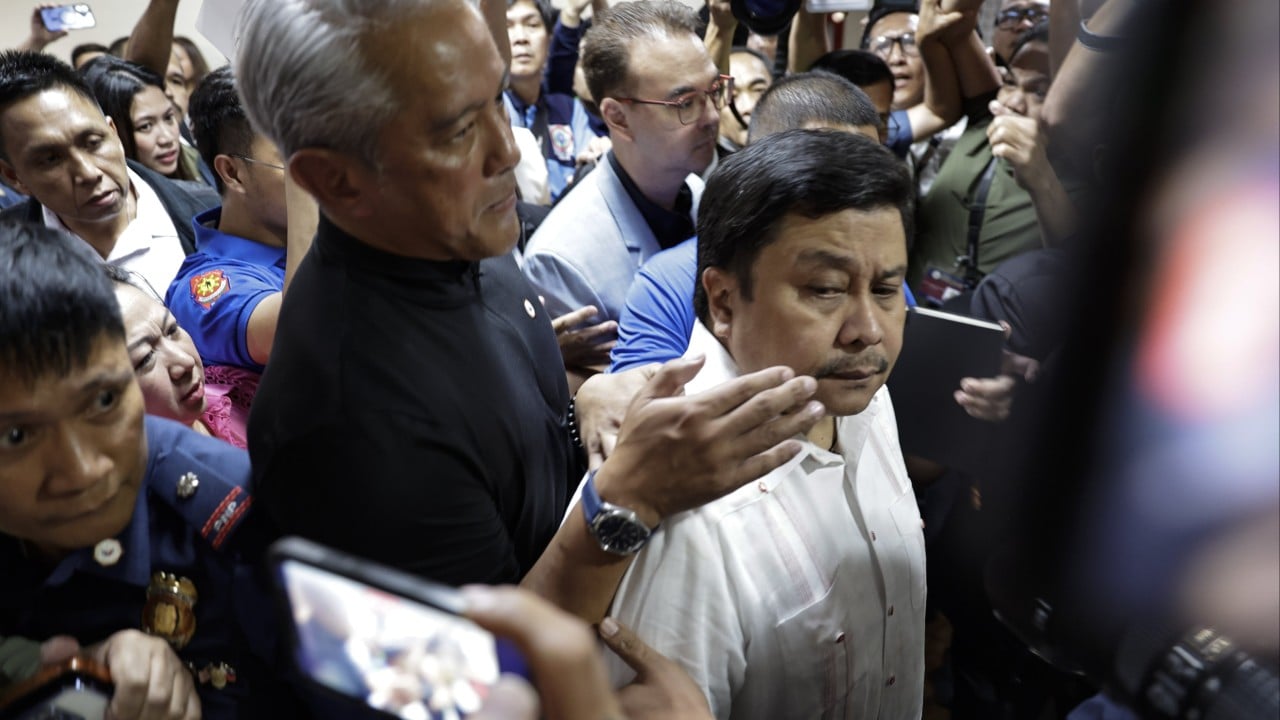
Philippine Senator Jinggoy Estrada has surrendered to law enforcement authorities following a non-bailable arrest warrant on charges of plunder. The anti-graft court, Sandiganbayan, issued the warrant after prosecutors accused Estrada of pocketing 570 million pesos ($9.3 million) in kickbacks from fraudulent flood-control projects. This development follows a separate, bailable graft charge just days prior, for which Estrada briefly secured temporary freedom. Now detained without bail alongside co-accused former Public Works Secretary Manuel Bonoan, Estrada's arrest marks a critical fracturing of the nation’s legislative body. It exposes a deeper, transactional war for total control over the political future of the Philippines.
The Mechanism of the Plunder Charge
To understand why Estrada is behind bars without the immediate hope of bail, one must look at the specific statutory mechanisms of Philippine anti-graft law. Under Republic Act No. 7080, plunder is defined as the accumulation of ill-gotten wealth by a public officer in an aggregate amount of at least 50 million pesos through a combination or series of overt or criminal acts.
Because the threshold is set at 50 million pesos, Estrada's alleged 570 million peso kickback clears the bar more than tenfold. In the Philippine judicial system, when the evidence of guilt is strong, plunder remains one of the few non-bailable offenses on the books.
The case hinges heavily on internal whistleblowing. A former government public works engineer provided the paper trail detailing how funds earmarked for critical typhoon and flood mitigation were diverted into private bank accounts.
Infrastructure as a Political Cash Cow
Infrastructure projects in the Philippines are rarely just about concrete and steel. They are the lifeblood of patronage politics. The country remains one of the most disaster-prone archipelagos on earth, routinely battered by typhoons that submerge vast swaths of Manila and low-lying provinces.
When flood-control funds disappear, the human cost is immediate. Yet, for corrupt actors, these projects represent the perfect vehicle for embezzlement. A hypothetical example illustrates the process:
A local department approves a 100 million peso budget for a dike. Through collusion with a contractor, only 40% of the materials are actually delivered or used, resulting in a substandard structure that washes away in the next storm. The remaining 60% is split between the contractor and the politicians who facilitated the budget allocation, masked as legitimate consulting or subcontracting fees.
Because the physical evidence of the fraud is often literally washed away by natural disasters, proving the crime requires forensic accounting and internal whistleblowers willing to break ranks.
The Broad Political Bloodfeud
Estrada’s arrest cannot be viewed in a vacuum. It is the latest escalation in an all-out political war between the country’s dominant dynasties. Before being taken into custody at the Senate chamber by Interior Secretary Jonvic Remulla, Estrada openly alleged that his legal troubles were politically motivated.
He is firmly aligned with the faction of former President Rodrigo Duterte and his daughter, Vice President Sara Duterte. The Dutertes were once indispensable electoral allies of current President Ferdinand Marcos Jr., forming a formidable coalition in the 2022 elections. That coalition has completely disintegrated.
Marcos and the Dutertes are now locked in a bitter struggle for survival and dominance ahead of upcoming mid-term and presidential elections. By dismantling the Duterte faction's legislative block, the current administration consolidates power over the state apparatus. Estrada’s defiance is an attempt to frame his detention not as a consequence of systemic greed, but as the victimization of an independent political voice.
A Sidelined Senate
The arrest leaves the 24-member Philippine Senate severely crippled and politically altered. Estrada is not the only senator missing from the floor due to severe legal jeopardy.
Senator Ronald "Bato" dela Rosa, the former national police chief who led Rodrigo Duterte’s bloody war on drugs, has gone into hiding. His flight followed an arrest warrant from the International Criminal Court (ICC) for alleged crimes against humanity. With Rodrigo Duterte himself already detained in the Netherlands awaiting a November trial, the old guard of Davao-based power is facing unprecedented institutional dismantling.
With two key pro-Duterte votes neutralized, the legislative balance of power swings heavily toward the Marcos administration. This shift allows for easier passage of controversial economic reforms, treaty ratifications, and budget allocations that previously faced fierce resistance from the Duterte loyalists.
The Cycle of Dynasty and Detention
For the Estrada family, detention is familiar territory. Showbiz and statecraft have long been intertwined in their trajectory. Jinggoy Estrada, an actor before entering politics, is the son of former President Joseph Estrada.
The elder Estrada was ousted in a popular uprising in 2001 and subsequently convicted of plunder, only to be pardoned and later elected mayor of Manila. Jinggoy himself has faced previous corruption detentions, navigating the revolving door of Philippine justice with a resilience unique to the country’s political elite.
This cyclical pattern highlights the limits of the country's anti-graft efforts. High-profile arrests offer public spectacles of accountability, yet the structural realities of dynastic wealth and judicial delays ensure that true systemic reform remains elusive. Case files drag on for decades, witnesses disappear, and political tides inevitably turn, often bringing the detained back into the halls of power.
The immediate execution of the warrant without special privileges, as emphasized by Interior Secretary Remulla, is a calculated message of dominance from the executive branch. The administration wants to show it can touch anyone. Whether this serves as a genuine deterrent against the theft of public infrastructure funds or merely consolidates a new monopoly on patronage will be demonstrated by how the public works budget is spent when the next heavy rains hit Manila.