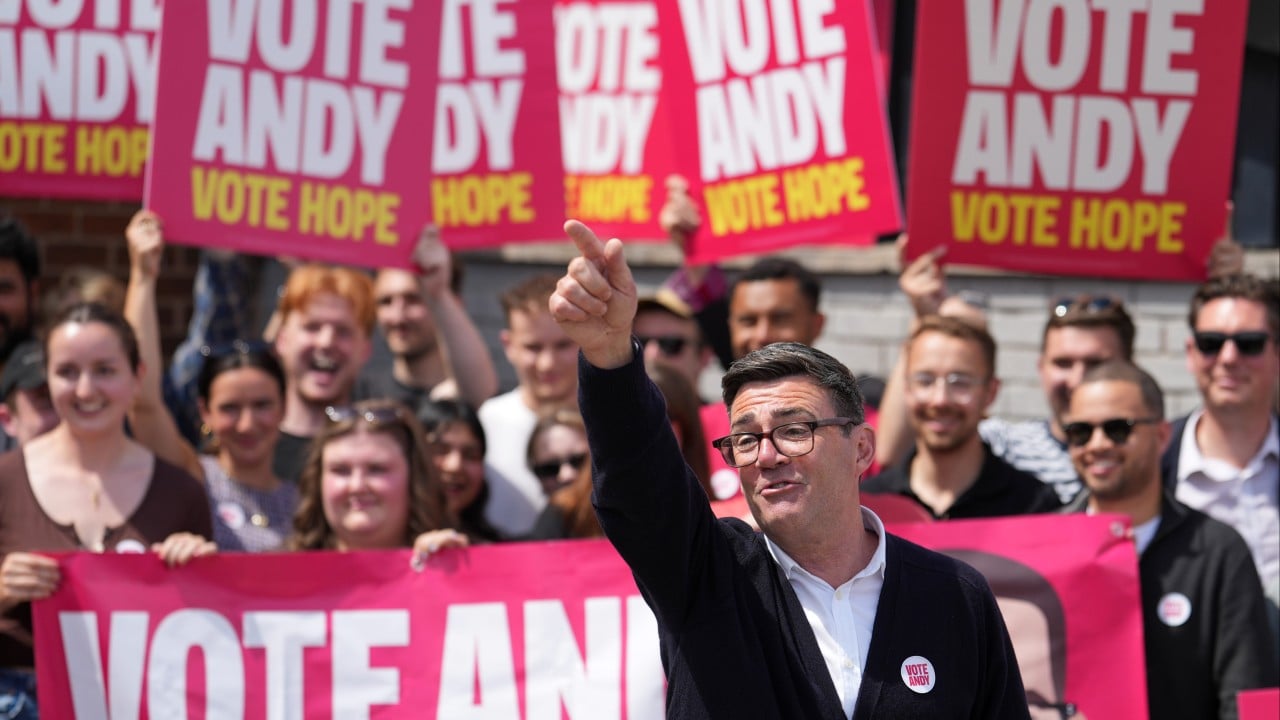
Andy Burnham has secured a commanding return to Westminster, winning the Makerfield by-election with 54.8 percent of the vote and delivering a direct challenge to Keir Starmer’s premiership. This victory transforms the internal friction of the Labour Party into an open battle for Downing Street. While the official narrative from Number 10 frames this as a victory for the government against the hard right, the reality on the ground reveals a deep crisis of confidence in Starmer's management. The Prime Minister is struggling to hold his party together because his core legislative and diplomatic strategies have alienated both his parliamentary colleagues and traditional voters.
By defeating Reform UK’s Robert Kenyon by over 9,000 votes, the outgoing Mayor of Greater Manchester has demonstrated that an alternative political strategy can successfully counter right-wing populism. Burnham managed to assemble a broad coalition of voters that completely erased the traditional presence of smaller parties in the region. The Conservative, Liberal Democrat, and Green candidates combined took a mere 3 percent of the vote, a collapse from the 22 percent they held in the same area two years prior. This shift indicates that voters are not necessarily abandoning the center-left; they are seeking a completely different style of leadership.
The Failure of Westminster Insularity
The underlying cause of Starmer’s current vulnerability is not just poor polling. It stems from an intentional strategy to centralize authority within a tiny circle of London-based advisers. This approach has decoupled the leadership from the economic realities of post-industrial towns. For two years, the government has prioritized top-down economic metrics while public services have continued to deteriorate. Local councils across the north of England face bankruptcy, yet Whitehall’s response has been to demand further fiscal restraint.
Burnham’s campaign directly targeted this vulnerability. He campaigned on a platform termed "Manchesterism," which advocates for the radical devolution of spending powers and regional control over transport and housing. By framing Westminster as an obstacle to regional prosperity, Burnham tapped into a deep well of provincial resentment. His victory speech, delivered to cheering supporters at the Life Centre in Wigan, made it clear that he views his new seat not as a standard legislative position, but as a mandate to restructure the British state.
The structural problem for Starmer is that his parliamentary majority is wide but shallow. Many of the Labour lawmakers elected during the 2024 landslide win their seats with thin margins. They are acutely aware that their political survival depends on delivering tangible improvements to local infrastructure before the next general election. When the Prime Minister scales back investment commitments or delays key infrastructure projects, he actively endangers the seats of his own backbenchers. This fear has created an environment where a figure like Burnham can easily gather allies.
The Diplomatic Missteps and Internal Rebellion
Beyond economic policy, specific management decisions have accelerated the breakdown of discipline within the cabinet. The decision to appoint Peter Mandelson as the British ambassador to Washington sparked immediate backlash across multiple factions of the party. Lawmakers viewed the appointment of a controversial figure from the New Labour era as a sign that Starmer was insulated from modern political realities and indifferent to public opinion regarding ethical standards.
This decision alienated key figures who had previously been loyal to the leadership. Health Secretary Wes Streeting has already signaled his willingness to participate in a leadership challenge, indicating that the rebellion is no longer confined to the traditional left wing of the party. Streeting’s maneuvers suggest a coordinated effort among senior ministers to prepare for a transition of power if Starmer’s position becomes completely untenable.
The mechanism for a challenge is clear under party rules. A challenger requires the signatures of 20 percent of Labour lawmakers, a threshold that currently stands at 81 individuals. Given the level of anxiety among backbenchers representing northern and midland constituencies, assembling this number is no longer a remote possibility. Burnham’s team is already organizing meetings with key union leaders and parliamentary factions to secure the necessary organizational backing before making a formal move.
The Electoral Math of the Challenge
The challenge facing the Prime Minister is illustrated by comparing the recent by-election results with national voting trends.
| Party | 2024 General Election Vote Share in Makerfield | 2026 By-Election Vote Share | Net Change |
|---|---|---|---|
| Labour (Burnham) | 48.2% | 54.8% | +6.6% |
| Reform UK | 28.1% | 34.5% | +6.4% |
| Restore Britain | 0.0% | 6.8% | +6.8% |
| Conservative | 14.5% | 2.2% | -12.3% |
| Others | 9.2% | 1.7% | -7.5% |
This data shows that while Reform UK continues to grow, Burnham grew faster by absorbing nearly the entire moderate conservative and progressive vote. Starmer's current national strategy relies on appealing to traditional conservative voters through fiscal orthodoxy. However, the Makerfield result suggests that a populist economic message focusing on local investment is far more effective at squeezing the conservative vote while simultaneously keeping the right-wing populists at bay.
Senior party strategists are observing this data with alarm. If the Prime Minister’s approach cannot prevent the growth of Reform UK in industrial heartlands, then dozens of Labour seats remain at risk. Burnham’s ability to win a clear majority over both right-wing parties combined gives him a powerful argument when speaking to colleagues who are worried about their political futures.
The Mechanics of the Impending Transition
The immediate timeline depends on whether the Prime Minister attempts to fight a protracted internal campaign or negotiates an exit. Allies of Burnham have indicated a preference for an orderly transition rather than an open conflict that could destabilize the currency and the government’s legislative agenda. Culture Secretary Lisa Nandy and other senior figures are urging both men to hold direct discussions to establish a clear timetable for a leadership selection process.
However, Starmer has publicly insisted that he will resist any attempt to force him out of office, citing his mandate from the 2024 election. This stance sets up a dangerous standoff. If the Prime Minister refuses to compromise, senior ministers may begin resigning in rapid succession, a tactic that successfully ended the premierships of both Boris Johnson and Theresa May. A coordinated wave of resignations would leave the government unable to function, forcing a rapid intervention by the National Executive Committee.
The conflict is fundamentally about the distribution of power within the state. Starmer represents the traditional view that the central government must maintain strict control over national resources to ensure stability. Burnham represents a growing consensus that the traditional model has failed the regions outside of London. By returning to Parliament, the former mayor has ensured that this debate will be settled on the floor of the House of Commons.