Europe is sweating through a historic, continent-wide climate emergency that its entire physical economy was explicitly designed to ignore. While mainstream reports treat the region's current heatwave as a temporary labor crisis or a series of unfortunate hot days, the reality is a structural market failure. Labor productivity falls sharply by roughly 3 percent for every single degree a workspace rises between 30 and 35 degrees Celsius. When temperatures climb past 38 degrees, workplace accident risks spike by 10 to 15 percent. This is no longer just a story about uncomfortable conditions; it is a rapid, costly unraveling of European industry.
The fundamental breakdown stems from an architectural and regulatory blueprint built for an entirely different century. Europe remains the fastest-warming continent on earth, yet its commercial real estate, manufacturing plants, and labor frameworks are structurally incapable of handling the shift. Only about 19 percent of European buildings are equipped with cooling systems, compared to over 90 percent in the United States. For decades, the continent built factories and offices to trap warmth, assuming winters were the only threat. That assumption is now costing billions of euros in lost output and putting millions of workers in direct physical danger.
The Nonlinear Cost of Heat Stress
Corporate balance sheets are feeling the immediate strain of what economists call the nonlinear transmission of heat stress. Below 30 degrees Celsius, most modern industrial operations run smoothly. Once that critical threshold is crossed, efficiency does not just decline gradually; it falls off a cliff. The human body under heavy exertion begins prioritizing thermoregulation over mechanical output, resulting in profound physical fatigue and impaired judgment.
+--------------------------------------------------------+
|  THE IMPACT OF TEMPERATURE ON INDUSTRIAL WORKERS         |
+--------------------------------------------------------+
|  Temperature Range  |  Productivity Hit |  Accident Risk |
+---------------------+-------------------+----------------+
|  Below 30°C         |  Baseline         |  Normal        |
|  30°C - 35°C        |  -3% per degree   |  +5% to 7%     |
|  Above 38°C         |  Severe drop      |  +10% to 15%   |
+---------------------+-------------------+----------------+
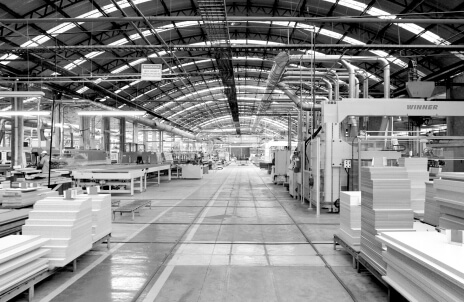
This dynamic extends far beyond outdoor construction sites and agricultural fields. Heavy indoor industries are facing severe operational bottlenecks. In factories, glassworks, and metal fabrication plants, ambient temperatures routinely exceed the outdoor baseline by 5 to 10 degrees due to machinery heat output.
When required to wear mandatory personal protective equipment, workers in these poorly ventilated spaces experience rapid exhaustion and breathing difficulties. The standard corporate response has been to issue generic warnings or supply extra water bottles, a band-aid solution that ignores the physiological limits of human endurance.
The Grid and Transport Bottlenecks
The operational crisis inside the factory gates is compounded by a simultaneous failure of public infrastructure. The very systems required to move goods and power industries are buckling under the thermal load.
- Power Sector Contraction: Electricity prices are climbing across the continent as air conditioning units run constantly. At the same time, high ambient temperatures are forcing thermal and nuclear power plants to scale back operations because the river water used to cool them has become too hot to legally or safely discharge.
- Logistics Delays: Rail networks are facing systemic slowdowns. Steel tracks absorb ambient heat and can easily reach temperatures 20 degrees higher than the surrounding air, causing rails to expand, sag, and buckle. Train operators have been forced to implement strict speed restrictions, delaying raw material shipments and supply chains.
- Urban Heat Traps: In major metropolitan centers, dense, historic building stock acts as a massive thermal battery. Dark asphalt and zinc rooftops absorb solar radiation during the day and radiate it back out at night. This prevents nighttime cooling, which is essential for workers to physically recover before their next shift.
The Legal Vacuum and Precarity
The absence of unified, binding regulatory standards leaves businesses and labor unions in a state of constant friction. Current European Union occupational health laws address thermal comfort only through vague, non-binding guidelines. There is no harmonized, continent-wide maximum working temperature, leaving protection dependent on a inconsistent patchwork of national regulations and corporate discretion.
This regulatory void disproportionately penalizes the most vulnerable segments of the workforce. Seasonal agricultural laborers, subcontracted logistics staff, and gig-economy delivery couriers are rarely in a position to demand adequate rest cycles or refuse unsafe assignments.
In many jurisdictions, taking an extra break to avoid heat stroke means losing hourly wages. Some private insurance firms have stepped in to offer parametric heat insurance to compensate for lost income during extreme weather, a clear sign that state-level social safety nets are failing to adapt.
Unions are pushing hard for an EU-wide legislative framework that establishes mandatory maximum exposure limits based on scientific metrics like the Wet Bulb Globe Temperature, which accounts for both humidity and ambient heat.
However, many employer federations resist these hard caps, arguing that uniform limits fail to account for the unique operational realities of different industrial sectors. Until this legislative impasse is resolved, European industry will continue to operate under a cloud of unpredictability, treating every summer as an unmanageable logistics crisis rather than a predictable, structural certainty.
The financial reality is already clear. If recent temperature trends continue through the end of the decade, the collective gross domestic product losses for major European economies will be measured in hundreds of billions of euros.
The companies that survive this transition will not be those that simply advise their staff to stay hydrated. Survival requires a deep capital investment in building retrofits, automated cooling systems, and entirely redesigned shifts. The climate has permanently shifted, and the infrastructure supporting the European economy must change with it.