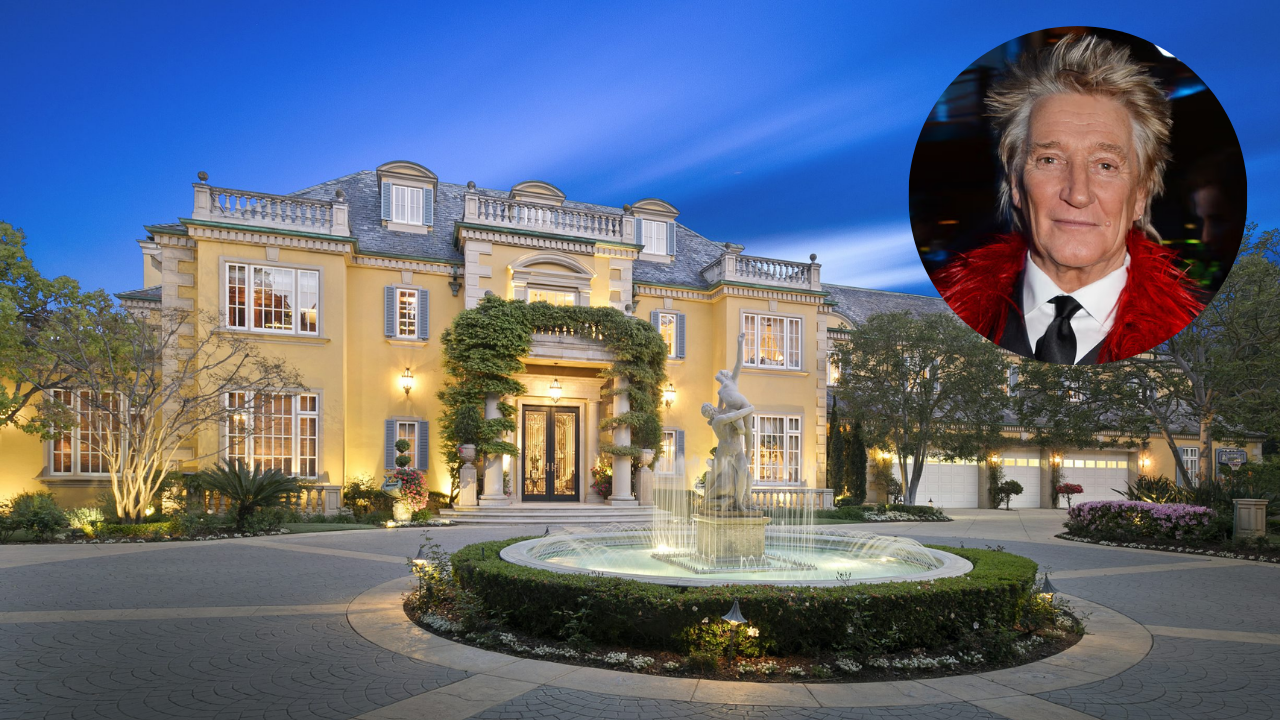
When an ultra-high-end property hits the market with an astronomical price tag, the conventional wisdom dictates a straightforward path. A celebrity owner lists an expansive compound, an international billionaire or tech titan writes an enormous check, and the keys change hands in a single, quiet transaction. But the real estate market at the very top of the food chain has evolved past the point where single buyers can easily absorb massive, hyper-personalized compounds. Proof of this structural shift arrived when a sprawling Southern California estate carrying ties to rock legend Rod Stewart achieved an $86 million sale by breaking the golden rule of luxury sales: it divided.
For years, media coverage focused entirely on the sheer theatricality of these mega-mansions. Grand dual staircases, custom bars, and professional-grade soccer pitches make for compelling headlines. Yet the mechanics of liquidating a sprawling multi-acre footprint in ultra-exclusive enclaves reveal a starkly different economic reality. Mega-compounds are becoming too large and too expensive for a single buyer pool, forcing sellers, developers, and brokers to adopt creative asset-splitting strategies to secure liquidity.
The Liquidity Trap of Mega-Compounds
Properties spanning multiple acres in prime Los Angeles territory face a unique economic ceiling. Building costs have skyrocketed, carrying charges for property taxes, insurance, and maintenance run into the hundreds of thousands of dollars annually, and the pool of potential buyers with liquid capital of that magnitude remains remarkably small. When a compound sits on the market for extended periods, the holding costs begin to erode potential profits.
Instead of waiting indefinitely for a unicorn buyer willing to acquire an entire multi-acre sanctuary lock, stock, and barrel, modern high-end transactions increasingly mimic commercial land development. Dividing a massive parcel into distinct, marketable portions allows sellers to tap into separate buyer pools. One buyer might want the historical main residence, while another prefers a blank canvas or a separate wing for development.
This approach changes the math of luxury transactions. By slicing a single estate into dual deals totaling $86 million, the transaction sidesteps the traditional valuation bottlenecks that plague single-owner mega-properties. It proves that raw square footage, once the ultimate flex in celebrity real estate, can occasionally become a liability if it cannot be liquidated efficiently.
Beyond the Celebrity Provenance
It is easy to attribute the success of these high-profile sales to the star power of past residents. Names like Rod Stewart carry undeniable weight, evoking an era of rock-and-roll excess and old-school Beverly Hills glamour. Yet sophisticated buyers do not pay eight figures for historical association alone. They look at replacement cost, zoning, land scarcity, and privacy.
In premier zip codes, land value dictates the floor of any transaction. As available acreage dwindles, the underlying dirt becomes the primary asset, while the physical structures sitting on top are treated as variables subject to future renovation or complete redesign. When an estate is parceled out, the buyers are typically purchasing the location security and the exclusivity of the neighborhood rather than the specific interior design choices of a previous celebrity owner.
The market has shifted away from hyper-customized, maximalist styling toward flexibility. Buyers acquiring pieces of these legendary compounds often plan to strip away the theatricality, replacing ornate finishes with contemporary minimalism. The celebrity provenance acts as an initial hook, but the structural and financial fundamentals close the deal.
What the Eight-Figure Split Signals for the Future
The success of multi-part estate sales points toward a broader transformation in how ultra-prime real estate will be packaged moving forward. Developers and high-net-worth owners are learning that future-proofing a luxury asset means building it with eventual division in mind. Compounds with independent access points, separate utility structures, and distinct parcel boundaries hold a clear advantage in a volatile economic climate.
As interest rates fluctuate and global wealth centers experience shifting regulatory pressures, liquidity reigns supreme. The era of holding onto a sprawling, undivided family compound for decades without a clear exit strategy is giving way to a more pragmatic, asset-management mindset. Even the most iconic properties must ultimately answer to the laws of supply, demand, and capital efficiency.
When the dust settles on these record-breaking transactions, the takeaway for the industry is clear. Prestige opens the door, but structural adaptability secures the exit. The million-dollar view remains priceless, but how it gets sold is changing forever.