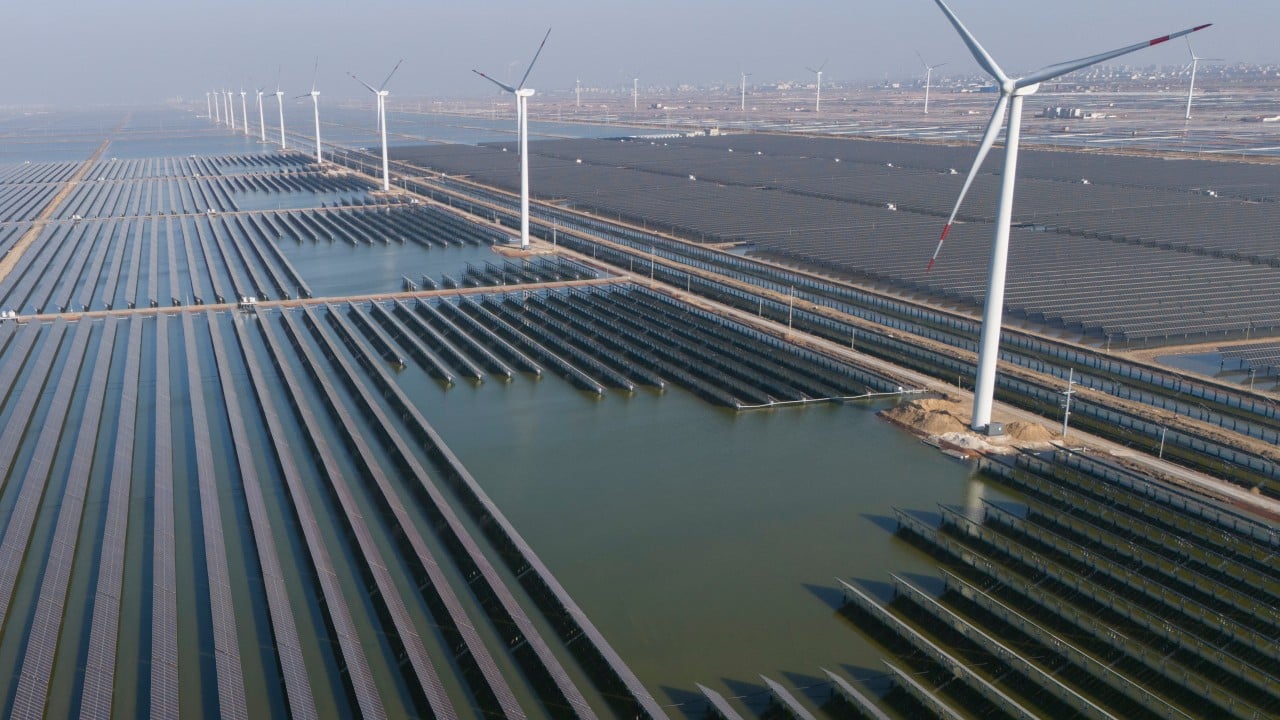
China has officially rolled out its 15th Five-Year Plan for renewable energy, targeting a massive 3,500 gigawatts of total renewable capacity and aiming for wind and solar to generate 30 percent of the nation's electricity by 2030. On paper, these numbers dwarf the combined ambitions of North America and Europe. Yet beneath the headline figures issued by the National Development and Reform Commission and the National Energy Administration lies a fundamental admission: raw capacity is no longer China's primary bottleneck. The real crisis facing Beijing is grid integration, market reform, and the physical reality of replacing fossil baseload with variable electron flows.
For two decades, the playbook in Beijing was straightforward. Build gigawatt-scale solar parks in the western deserts, erect massive wind farms across the northern steppes, and worry about transmission later. That approach produced eye-popping installation stats, but it also created severe operational headaches. State Grid and China Southern Power Grid found themselves struggling to wheel power across four time zones without tripping regional power pools. For a deeper dive into this area, we recommend: this related article.
The newly unveiled plan for the 2026 to 2030 period marks an essential pivot from brute-force expansion toward system stability. Beijing wants 2,800 gigawatts of combined wind and solar capacity in operation by the end of the decade. Generating 4 trillion kilowatt-hours of green power annually requires far more than spinning turbines and silicon wafers. It demands a total rewrite of how China manages its power architecture.
The Illusion of Raw Capacity
Capacity targets are easy to announce. Grid physics is far less forgiving. For additional details on the matter, comprehensive coverage can be read at USA Today.
When a country installs thousands of solar arrays, peak production occurs precisely when industrial demand in urban centers often dips or shifts. In western provinces like Xinjiang, Qinghai, and Inner Mongolia, midday curtailment rates have periodically spiked when local networks simply could not absorb the massive surge of electrons. Meanwhile, manufacturing hubs along the eastern seaboard in Guangdong, Zhejiang, and Jiangsu remain hungry for power during evening peaks, long after the sun sets over the Gobi Desert.
Building ultra-high voltage direct current lines was supposed to bridge this geographical divide. High-voltage corridors were constructed at a breakneck pace, stretching across thousands of miles. Yet an uncomfortable truth remained hidden behind the steel pylons: long-distance transmission lines require stable voltage references at both ends. Intermittent solar and wind cannot provide the dynamic inertia that heavy spinning turbines in coal plants naturally supply. Consequently, grid operators frequently throttled renewable transmissions, running parallel coal plants at low efficiency just to keep the voltage steady.
The 15th Five-Year Plan explicitly addresses this flaw by shifting the primary metric from mere capacity to what policy writers term "reliable substitution". Under the new directive, wind and solar installations must prove they can replace fossil generators during peak demand periods without crashing local networks. The document mandates that wind and solar systems must deliver at least an eight percent guaranteed capacity firming baseline nationally, with evening peak participation exceeding 20 percent.
That single requirement alters the economics of every clean energy project moving forward. Developers can no longer simply dump cheap panels on cheap land. They must now bundle generation assets with local firming capacity, battery units, or direct industrial off-takers.
The Massive Storage Mandate and Its Hidden Pitfalls
To enforce this transition, Beijing is demanding more than 300 gigawatts of new flexible peak-shaving capacity across the national energy fleet over the next five years. Pumped storage hydropower is set to expand to 160 gigawatts. Electrochemical storage projects are being ordered at virtually every transmission node.
Target Metric                                2030 Target
------------------------------------------------------------
Total Renewable Installed Capacity           3,500 GW
Combined Wind and Solar Capacity             2,800 GW
Wind & Solar Share of Total Generation       30%
New Reliable Peak-Shaving Capacity           >300 GW
Pumped Storage Hydropower Capacity           160 GW
Non-Electricity Renewable Utilization        150 Mtce
Battery deployment at this scale introduces structural economic tensions. Lithium-ion chemical batteries work well for short-duration smoothing over two to four hours, but they remain prohibitively expensive for multi-day seasonal balancing. When cold snaps hit northern provinces or heatwaves paralyze the south, air conditioning and heating loads remain elevated for weeks, not hours. Short-duration battery banks drain quickly, leaving grid operators reliant on backstop reserves.
Pumped hydro offers duration, but geographical realities limit its deployment. You cannot build a pumped storage facility without specific topographies featuring two large water reservoirs at distinctly different elevations. The most promising locations in central and southern China are already developed or hemmed in by ecological protections, water scarcity, and complex local resettlement requirements.
Consider a hypothetical scenario where a major eastern industrial park attempts to run entirely on long-distance green energy during a prolonged winter calm. If wind generation across Inner Mongolia drops by 80 percent for four consecutive days—a common meteorological event—the regional grid must draw upon local reserves. If battery storage exhausts its charge within four hours and local pumped hydro drains in twelve, the system faces immediate rolling blackouts unless local coal turbines fire up.
This reality explains why China continues to approve permits for coal-fired power stations even while building the world's largest renewable fleet. Officials view those coal assets not as primary energy suppliers, but as expensive insurance policies against grid collapse.
Industrial Decarbonization Meets Market Friction
Electricity generation represents only part of the energy transition equation. Heavy industry—steel manufacturing, chemical processing, cement production, and aluminum smelting—accounts for a massive portion of total energy consumption. You cannot run a blast furnace or a chemical cracker purely on intermittent green electrons.
The 15th Five-Year Plan tackles this by mandating a 1.5-fold increase in non-power applications for renewable energy compared to 2025 levels, aiming for 150 million tonnes of standard coal equivalent in direct thermal and chemical use. Green hydrogen, industrial-scale solar thermal systems, and direct renewable heating form the core of this secondary push.
The commercial friction here is sharp. Producing green hydrogen through water electrolysis currently costs significantly more per kilogram than producing grey hydrogen from coal gasification or natural gas reforming. State-owned enterprise executives are caught in a difficult bind. NDRC mandates require them to hit aggressive green hydrogen quotas, but regional state asset regulators continue to evaluate corporate performance on net profitability and capital efficiency.
When policy compliance clashes directly with corporate income statements, compliance often becomes a box-checking exercise. Hydrogen plants get constructed adjacent to remote wind facilities, run at fractional capacity to satisfy local inspectors, and struggle to secure economic transport to industrial off-takers thousands of miles away.
Power pricing structures complicate matters further. For decades, Chinese industrial electricity tariffs were strictly regulated by provincial bureaus, shielding factories from volatile spot power prices. Moving to a high-penetration renewable grid requires real-time, spot-market pricing where electricity can cost zero during sunny afternoons and spike drastically during evening peaks.
Progress toward wholesale power spot market deregulation remains spotty across different provinces. Local governments in manufacturing regions frequently resist passing peak price signals directly to industrial plants, fearing higher electricity bills might push factory owners to relocate production to cheaper jurisdictions or overseas. Without dynamic price signals, industrial consumers lack the financial incentive to shift heavy power usage to periods of peak solar and wind availability.
The Geopolitical Pressure Cooker
The foreign dimension of China's renewable expansion adds another layer of complexity. Over the past decade, Chinese manufacturers established overwhelming dominant positions across global supply chains for solar ingots, wafers, cells, lithium batteries, and wind turbine components.
That dominance triggered aggressive trade resistance across Western capitals. Tariff barriers, anti-circumvention investigations, and supply chain tracing regulations in the United States and Europe have increasingly restricted direct exports of Chinese clean tech products.
As foreign export markets face growing restrictions, domestic absorption becomes critical. China's massive domestic construction targets in the 15th Five-Year Plan serve a double purpose: driving decarbonization while providing an indispensable home demand sink for massive domestic equipment manufacturing overcapacity.
If domestic grid constraints prevent state utilities from absorbing new solar and wind projects, equipment manufacturers face immediate margin compression and painful industry consolidation. The central government cannot afford widespread bankruptcies in a clean tech sector that has been a major engine of national economic growth and job creation.
Offshore wind expansion offers one potential escape hatch from inland transmission bottlenecks. The plan calls for 100 gigawatts of newly commenced offshore wind capacity, positioning massive turbine clusters directly off the coast of major eastern demand centers. Placing generation close to urban consumption eliminates the need for cross-country ultra-high voltage lines, but marine environments present harsh technical challenges, including typhoons, saltwater corrosion, and high seabed leasing costs.
Systemic Reality Outpaces Simple Metrics
The 15th Five-Year Plan demonstrates that China's energy planners understand the core trade-offs ahead. They are deliberately moving away from vanity metrics focused strictly on gigawatts installed, shifting instead toward complex engineering metrics: dynamic voltage support, real-time spot market settlements, direct green hydrogen integration, and reliable substitution ratios.
Executing this shift without causing localized power shortages or crippling industrial profit margins remains an extraordinary administrative challenge. Adding 300 gigawatts of firming capacity while maintaining a 30 percent grid penetration target for wind and solar requires re-engineering physical equipment, corporate incentives, and provincial financial structures simultaneously.
The coming five years will test whether top-down industrial planning can solve complex real-time thermodynamic and economic problems. If Beijing succeeds, it will establish a template for operating a massive, heavy-industry power grid on majority-renewable generation. If execution stumbles against the physical limits of energy storage and regional protectionism, the cost will be measured in curtailed energy, stranded capital assets, and an enduring operational reliance on coal backstops.


