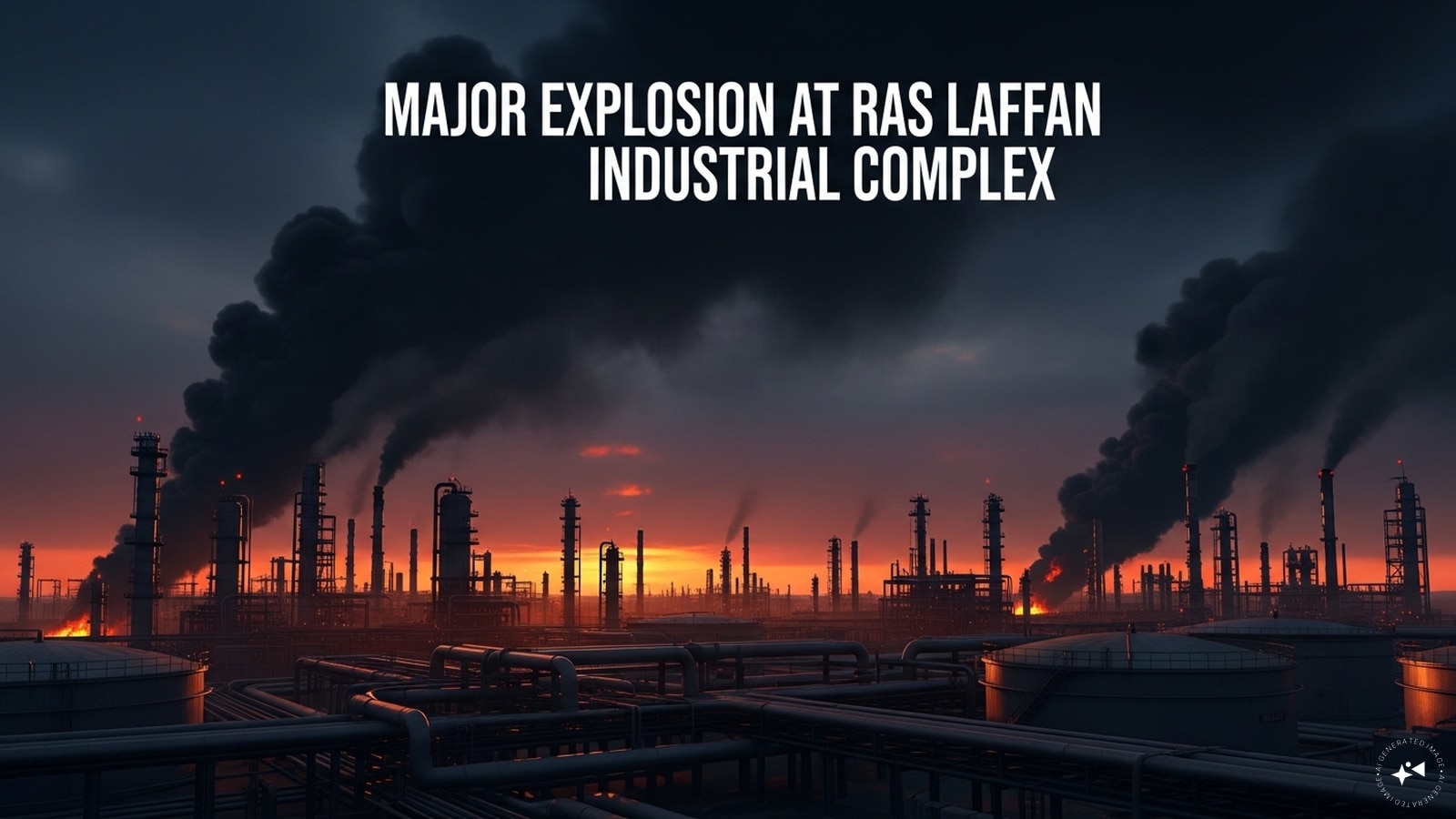
A loud boom rattled Doha on Sunday night. For a moment, anyone tracking global energy markets held their breath. State-owned giant QatarEnergy quickly stepped up to clear the air, confirming that an "operational incident" during a facility startup triggered an explosion and subsequent fire at the Barzan gas plant within Ras Laffan Industrial City.
Qatar's Interior Ministry reported that several people were injured in the blast, though thankfully, emergency services ruled out any hazardous gas leaks threatening public safety. The fire is completely under control now.
But don't let the sanitized corporate phrasing fool you. Calling a sudden night sky explosion an "operational incident" downplays just how delicate the world's most critical natural gas hub really is right now. This wasn't just a random plant hiccup. It's a reminder of how thin the line is between smooth operations and absolute chaos in the global energy supply chain.
Breaking Down the Barzan Plant Failure
The Barzan facility isn't just another piece of metal in the desert. It is specifically tasked with sustaining Qatar's domestic gas network. When you operate massive processing trains that handle volatile, highly compressed hydrocarbons, the startup phase is easily the most dangerous part of the entire lifecycle.
Pressure surges, thermal shocks, or minor valve failures during startup can transform a routine technical sequence into an internal explosion within seconds. Qatari authorities pointed to a "technical accident" or operational malfunction as the root cause. Anyone who has ever managed midstream or downstream infrastructure knows exactly what that means. It means something failed under pressure while putting systems back online.
Fortunately, Qatar's heavily funded civil defense and localized industrial emergency teams contained the blaze before it reached the broader liquefied natural gas (LNG) export infrastructure. A major export disruption was avoided this time, but the structural anxiety remains.
The Real Cost of Fragile Infrastructure
To truly understand why a localized fire in Qatar matters to someone sitting in a boardroom in London or Tokyo, you have to look at the regional baggage. Ras Laffan is the beating heart of global LNG. It sits in a neighborhood that has endured immense geopolitical friction, including recent military conflicts involving the US, Israel, and Iran that actively targeted regional energy corridors.
When a hub has already suffered past physical strains or forced operational shutdowns due to external threats, its systems are pushed to their absolute limits. Restarting complex gas processing plants after emergency stops or volatile operational shifts drastically increases the likelihood of mechanical failures.
[Typical Plant Startup Risks]
Mechanical Stress -> Thermal Shock -> Gasket/Valve Failure -> Ignition
The Barzan incident shows that even when a country isn't actively dodging external strikes, the internal operational wear-and-tear from navigating a crisis will eventually take its toll. You can't repeatedly cycle these heavy industrial facilities on and off without introducing subtle micro-fractures, logic controller bugs, or human error.
Shifting Focus to Strict Risk Mitigation
If you run operations in high-hazard environments, relying purely on rapid emergency response isn't enough anymore. Qatar's teams did their job perfectly by containing the fire, but the goal should be keeping the spark from happening in the first place.
First, companies must overhaul their transient operations protocols. Facilities are highly vulnerable during startups and shutdowns. Treating a startup as a routine checkbox item is a recipe for disaster. These phases require dedicated, slow-paced execution parameters and real-time acoustic monitoring to detect gas venting or early-stage structural stress before it leads to an actual ignition event.
Second, digital system validation needs an upgrade. A "technical malfunction" usually traces back to a physical component failing or an automated safety instrumented system failing to interpret a rapid spike in pressure. Regular digital twin simulations can help predict how aging valves or repeatedly cycled processing lines behave under sudden load changes.
Don't wait for your own operational incident to audit your facility's startup blind spots. Review your transient safety logs, double-check pressure safety valve tolerances, and ensure your control room operators are explicitly trained for anomalous pressure trends during a restart.