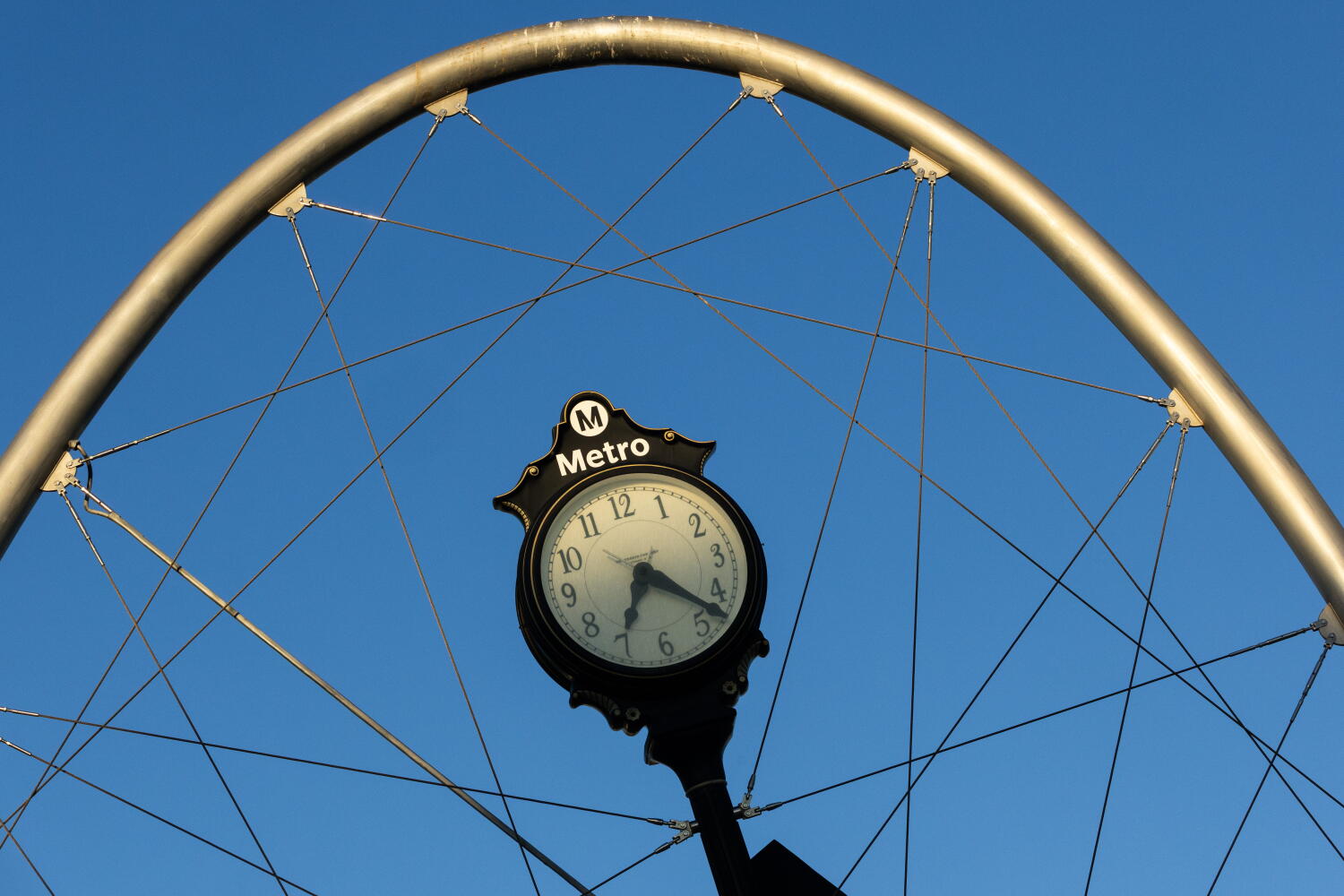
Two in the morning. The house is so quiet you can hear the refrigerator hum and the faint, rhythmic sigh of your partner asleep beside you. You roll over, half-awake, squinting at the glowing green digits on the nightstand. 1:58 a.m. A minute passes. Another. Suddenly, the clock jumps backward to 1:00 a.m.
On paper, it is a gift. Sixty bonus minutes tucked into the folds of a Sunday morning. A chance to linger under the duvet, to brew coffee without rushing, to claw back a sliver of time from a relentless week.
Except your body didn't get the memo.
Fall back. That is the rule in places that still observe daylight saving time. When the shift arrives—typically on the first Sunday of November in the United States, usually at 2:00 a.m. local time, turning clocks back an hour to return to standard time—the calendar bends to a human decree. Your circadian rhythm, a cluster of roughly twenty thousand neurons in the hypothalamus called the suprachiasmatic nucleus, does not care about decrees. It cares about light. It cares about darkness. It cares about predictability.
I have spent years watching smart, capable people act like zombies every November, blaming their sluggishness on autumn weather or a lingering cold when the real culprit was a single, quiet edit to the clock. I have stood in a kitchen at 5:30 p.m. on a Tuesday in early November, staring out at pitch-blackness while my brain insisted it was mid-afternoon, feeling a strange, hollow heaviness settle into my chest. That is the trick of falling back. People think losing an hour in the spring is the villain, and in many ways it is—springing forward robs sleep immediately and spikes certain acute risks right away. Yet falling back has its own slow, subtle toll. It pulls dusk forward like a curtain yanked shut too early, stretching evening shadows across hours that used to belong to daylight.
To make this less abstract, let's build a hypothetical scenario—a composite picture drawn from real human patterns rather than any single person. Picture Maya, a graphic designer and single mother of a six-year-old named Leo. Maya loves autumn for the crisp air and amber leaves, not for the sudden plunge into darkness before dinner. On the night clocks fall back, she sets her phone to update automatically, checks the wall clock in the hall, and nudges the analog clock above the stove back sixty minutes. At 2:00 a.m., the hour repeats. Sixty extra minutes of potential rest.
Yet on Sunday morning, Leo wakes at what feels like 5:00 a.m. to his internal clock, even though the dial says 6:00 a.m. His body is running on yesterday's schedule. Maya is exhausted before the day has even begun, negotiating a meltdown over oatmeal while trying to remember which clocks she already changed and which ones are lying to her. By Monday afternoon, the commute home happens in the dark. The walk from the parking lot feels longer. Her energy craters at 4:00 p.m., right when Leo needs homework help and dinner still needs to be cooked.
Nothing dramatic happens in a single moment. No alarm bells ring. That is what makes the shift so easy to dismiss—and so easy to misunderstand.
Why a Single Hour Feels Like Jet Lag Across a Continent
Ask most people what happens when daylight saving time ends, and they will tell you it is a non-event. You get an extra hour of sleep. End of story.
Sleep scientists and chronobiologists hear that and wince.
Consider what happens next: when you shift the clock by one hour, you are not adding time to the rotation of the Earth. You are shifting the social schedule relative to solar time. Even when the clock hands move backward, your internal biological clock—your circadian pacemaker—does not snap into alignment overnight. For many people, it takes days, sometimes weeks, for hormones like melatonin and cortisol to recalibrate to the new timing of light and dark.
Cortisol, often villainized as a stress hormone, is actually supposed to peak in the morning to help you wake up alert and clear-headed. Melatonin, the hormone of darkness, is supposed to rise in the evening as light fades, signaling to your body that sleep is approaching. When clocks fall back, morning light arrives earlier, which can actually feel pleasant on the drive to work or school. The catch comes later in the day. Sunset arrives an hour earlier than the day before. For brains wired to associate fading light with winding down, that early dusk can trigger premature fatigue, low mood, or a sense that the day has been cut short.
To grasp how a one-hour shift can throw off an entire system, let's use a metaphor. Think of your body as an orchestra playing a complex piece of music, and your circadian rhythm as the conductor. Sunlight is the tempo indicator. Every morning, bright light hits photoreceptors in your eyes—specialized cells distinct from the ones that let you read fine print—and tells the conductor the exact beat of the day. When we change the clocks, we don't change the music, and we don't change the conductor. We just tell the musicians to start reading from a different page while the conductor keeps waving at the old speed. For a few days, the violins come in early, the percussion drags, and the whole room sounds slightly out of tune.
Some people barely notice the dissonance. Night owls, in particular, sometimes breathe a sigh of relief in the fall because getting up when the clock says 7:00 a.m. feels slightly gentler on a body that prefers late nights. Early birds, on the other hand, may find themselves waking at dawn with nowhere to go, only to hit a wall of exhaustion by mid-evening.
Then there is the hidden friction of everyday life. Modern homes are full of timekeepers. The microwave has its own opinion. The car dashboard requires tapping through a clunky menu while parked in a driveway. A smart thermostat might follow one schedule while a wall clock in the den lags behind until mid-December. It sounds trivial—a minor domestic annoyance—until you are running late on a Tuesday because you trusted the wrong display.
The History We Inherited by Accident
How did we end up arguing twice a year over whether 2:00 a.m. is actually 1:00 a.m.?
History. War. Coal. Convenience. Confusion.
Ideas for shifting clocks to make better use of daylight circulated long before they became law—famously championed in whimsical form by Benjamin Franklin in 1784 and later argued earnestly by figures like British builder William Willett in the early twentieth century. The real catalyst, however, was industrial and wartime urgency. During World War I, nations looked for ways to conserve fuel and coal by shifting waking hours into daylight periods, reducing the need for artificial lighting in the evening.
In the United States, daylight saving time was adopted during World War I, repealed afterward, revived during World War II, and then left to a patchwork of local and state decisions for years. Imagine trying to catch a train or make a business call in the 1950s or early 1960s when one town observed daylight saving time, the town ten miles down the road did not, and they switched on different dates. Chaos was routine. Congress stepped in with the Uniform Time Act of 1966 to create standardization, though states still retained options, and the calendar dates themselves have been adjusted over the decades—most notably in 2005 under the Energy Policy Act (taking effect in 2007), which extended daylight saving time in the U.S. to start on the second Sunday in March and end on the first Sunday in November.
Meanwhile, parts of the world looked at the clock change and said no thank you. Arizona (aside from the Navajo Nation, which does observe it) and Hawaii do not observe daylight saving time. Across the globe, dozens of countries have abandoned seasonal clock changes altogether, concluding that whatever energy savings once existed in an era of incandescent bulbs and coal-fired plants are negligible or nonexistent today, while the disruption to human health and daily routines is very real.
Still, every autumn, millions of people across regions that observe the shift face the same familiar ritual. You set your clocks back. You gain an hour on the dial. You wonder why the afternoon vanished.
What the Clock Doesn't Tell You About Your Mood and Safety
Let's be honest about something most quick-hit articles gloss over: the emotional weather of early November is complicated.
Even if you don't have seasonal affective disorder—a form of depression tied to seasonal changes in light, often emerging in fall and winter—shorter days can press on your spirit. Leaving work or school in the dark makes the world feel smaller. It shrinks the window for an outdoor walk after work, a quick errand in natural light, or twenty minutes of sunshine on your face. Sunlight matters not just for vitamin D synthesis on skin exposed to sufficient UVB rays, but for serotonin regulation and mood stability. When evening darkness arrives at 4:45 or 5:00 p.m., many people feel an uninvited drop in motivation.
Driving patterns shift, too. Falling back trades dark mornings for dark evenings. Think about what happens during the late-afternoon and early-evening rush hour when dusk arrives an hour sooner. More pedestrians, cyclists, commuters, and kids heading to activities are out on the roads in low light or darkness while drivers are still adjusting to the sudden shift in visibility—and feeling the drag of fatigue.
I remember one November evening years ago, driving home after a long day, feeling a wave of bone-deep weariness hit me right as the sky turned slate gray. It wasn't even six o'clock. My eyes felt gritty, my reaction time felt duller than usual, and I caught myself gripping the steering wheel tighter just to stay sharp. It wasn't a crisis, just a reminder that human biology isn't a light switch you can flip without consequence.
And what about those who are genuinely confused by the rules? Every year, people ask the same simple questions at the last minute because nobody explains them clearly without jargon:
- When exactly does daylight saving time end? In the United States, it ends at 2:00 a.m. local time on the first Sunday in November (in 2026, that falls on November 1). At 2:00 a.m., clocks turn back one hour to 1:00 a.m., returning to standard time.
- Do I get an extra hour of sleep? On paper, yes, the clock repeats the hour from 1:00 a.m. to 2:00 a.m. In practice, many people wake earlier than planned, sleep lightly due to the shift, or lose sleep in the days leading up to and following the change.
- Which clocks change automatically? Most modern smartphones, tablets, computers, and smartwatches update automatically—provided automatic time zone settings are turned on and the device has network time sync. Analog clocks, wall clocks, ovens, microwaves, and older car clocks usually need manual adjustment.
- Why do we still do this if people complain about it? Because changing federal or national time laws requires legislative action, and lawmakers and experts have long debated whether permanent standard time or permanent daylight saving time is better—a debate that remains unresolved in many places.
Notice how straightforward those answers are when stripped of bureaucracy. Yet knowing the rule doesn't automatically make your body cooperate.
Returning to Maya—and Finding a Way Through the Shift
Let's check back in with our hypothetical character, Maya, on the Wednesday after the clock change.
She is still adjusting. Leo is still waking earlier than his old schedule, though his appetite and mood are starting to steady as his internal clock catches up. Maya hasn't solved the problem of 5:00 p.m. darkness—no individual can rewrite sunset times by sheer willpower—but she has stopped fighting her biology blindly and started working around it.
She shifts her own bedtime slightly earlier by fifteen or twenty minutes in the days around the change instead of trying to force a sudden leap. She gets outside for ten minutes of natural morning light whenever she can, helping anchor her circadian rhythm early in the day. She sets her analog clocks the night before so she isn't jolted by a jarring time jump on Sunday morning. And when that heavy, early-evening slump hits on a weekday, she names it for what it is: a biological response to sudden darkness and shifting rhythms, not a personal failing or proof that she's falling behind.
Vulnerability matters here. I won't pretend I have mastered every single clock change without a yawny Tuesday or a moment of annoyance when I glance at the stove and forget whether I already fixed it. Sometimes the transition goes smoothly. Sometimes it leaves me foggy and irritable for three days straight. The point isn't perfection; it's awareness. When you understand why your body feels slightly off kilter, you stop blaming yourself for needing a quieter evening or an earlier night.
The Hour We Borrow, the Rhythm We Keep
Think about what a clock actually is. It is a tool we invented to coordinate trains, shifts, school bells, and dinner tables. It is a brilliant invention, indispensable to modern life.
It is not the author of your biology.
When clocks fall back, the night gives you back sixty minutes on the dial while quietly taking an hour of daylight from your afternoon. You can reset every watch, phone, and dashboard in your life in ten minutes flat. Your body will take its own sweet time catching up, guided by the oldest clock there is: the slow, steady arc of light across the sky.
Watch the second hand sweep backward in your mind—not as a magic trick that gives you free time, nor as a curse that ruins your week, but as a small, recurring reminder of how closely our lives are woven into light, rest, and rhythm.