At 4:15 in the morning, the mist rolling off the English Channel tastes faintly of diesel and salt.
For Arthur Pendelton, a hypothetical third-generation haulier from Kent whose routes mirror the daily reality of thousands of British drivers, the morning ritual no longer begins with checking the weather in Calais. It begins with a thick plastic binder. Inside that binder sit veterinary health certificates, customs declarations, and rules-of-origin forms that look less like modern commerce and more like a nineteenth-century shipping manifest. Before the United Kingdom formally exited the European Union in January 2020, Arthur could drive a refrigerated lorry loaded with Scottish salmon from Dover to Paris with little more than a wave at the border and a thermos of lukewarm tea. Today, a single missing ink stamp can trap his cargo in a concrete holding pen outside Folkestone while the ice melts and the buyers in Rungis market cancel their contracts. For a more detailed analysis into this area, we suggest: this related article.
Friction. That is the word economists use when they want to make heartbreak sound sterile.
When diplomatic reporters write about an upcoming summit between London and Brussels, they tend to speak in the bloodless dialect of summits and communiqués. They tally up regulatory alignment, dynamic adherence, and Sanitary and Phytosanitary agreements. They treat the English Channel like a chessboard where prime ministers and European Commission presidents slide wooden pieces across neat squares. Yet down at sea level, where the ferries groan against rubber fenders and warehouse managers watch profit margins evaporate in real time, the distance between Dover and Calais has grown far wider than twenty-one miles of grey water. For broader information on the matter, extensive analysis can be read at NBC News.
Now, something is shifting in the cold air between the two coasts. As British ministers prepare to sit across the polished tables of Brussels for a formal UK-EU reset summit, the conversation is no longer about relitigating the referendum of 2016 or tearing up the Trade and Cooperation Agreement. Both sides have drawn thick red lines in the sand—no return to the single market, no resurrection of the customs union, no restoration of free movement. Instead, this gathering represents a quieter, harder-nosed reckoning. It is an attempt to sand down the sharpest edges of a divorce that left two next-door neighbors shouting over a ten-foot fence while their shared garden choked on weeds.
The Invisible Tax on Everyday Life
To understand why a diplomatic meeting in Brussels carries so much quiet urgency, you have to follow the paper trail. Since the Trade and Cooperation Agreement took effect in January 2021, trade between the United Kingdom and its largest trading partner has not collapsed, nor has it thrived. It has simply grown heavy. Every crate of British cheddar, every pallet of automotive components, and every touring orchestra's cello case now carries an invisible tax paid in hours, legal fees, and lost spontaneity.
Consider the numbers that haunt boardrooms from Birmingham to Brussels. According to data from the Office for Budget Responsibility, the post-Brexit trading arrangement is projected to reduce the United Kingdom’s long-run productivity by roughly four percent compared to remaining inside the bloc, with both exports and imports sitting around fifteen percent lower than they otherwise would have been. Small and medium-sized enterprises—the family-owned manufacturers and boutique food producers that lack the compliance departments of multinational banks—bore the brunt of this shock. Thousands simply stopped exporting to the continent altogether because the cost of proving their goods met European standards exceeded the profit on the invoice.
I remember standing inside a mid-sized engineering workshop in the West Midlands two winters after the transition period ended, watching the managing director spread thirty pages of customs paperwork across a greasy workbench. He pointed to a brass valve no larger than a walnut. For twenty years, his firm had shipped boxes of those valves to a pump manufacturer outside Munich without a second thought. Suddenly, he had to prove the exact metallurgical provenance of the raw alloy, pay an agent to file digital declarations on both sides of the Channel, and absorb a three-day delay whenever a customs portal glitched. His voice did not sound angry. It sounded exhausted, like a man trying to run a marathon in wet wool coat.
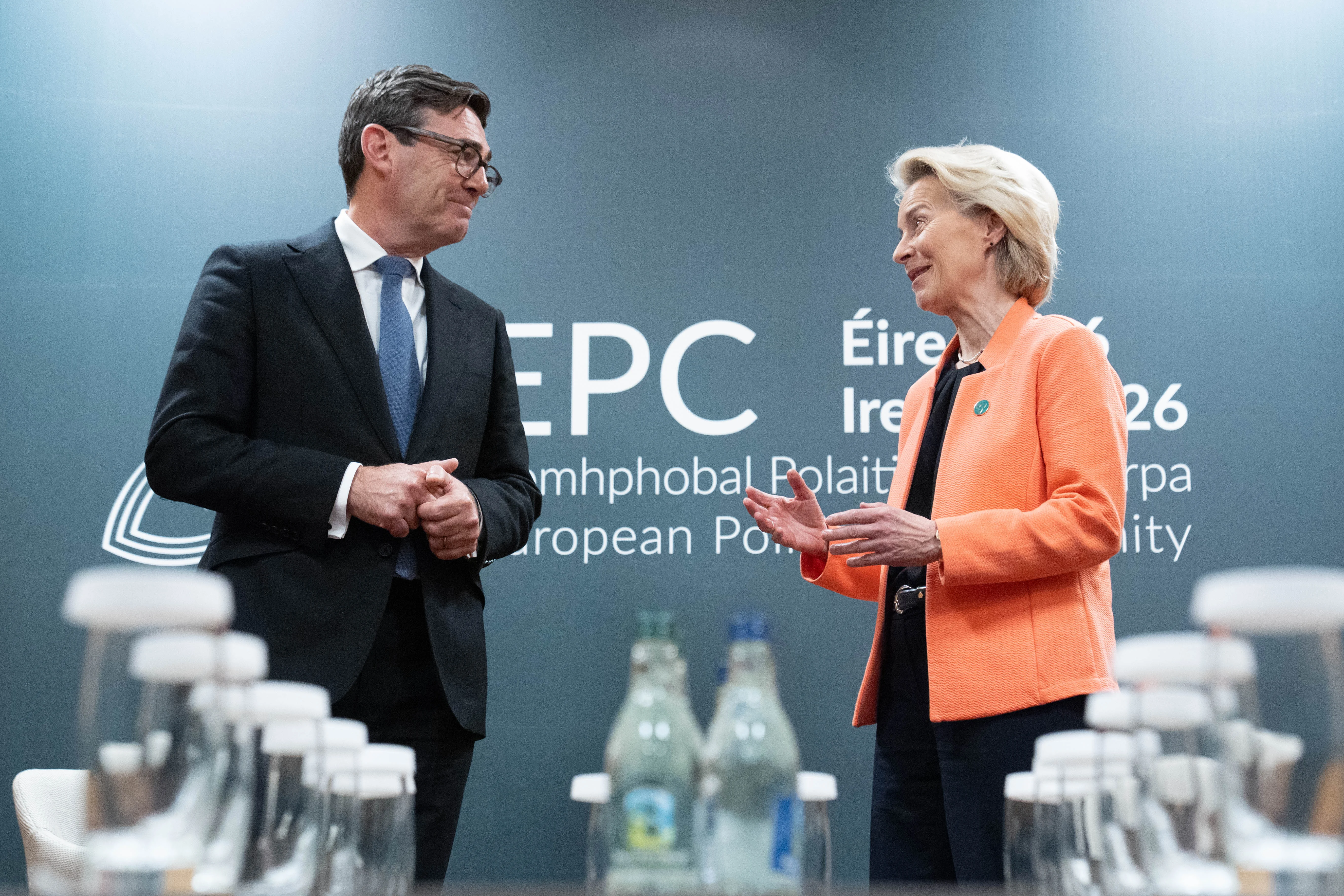
That exhaustion is the true backdrop of the UK-EU summit. Politics may run on slogans, yet economies run on predictability. When British Prime Minister Keir Starmer and European Commission President Ursula von der Leyen meet to chart a pragmatic reset, they are responding to a shared realization: neither London nor Brussels can afford chronic economic drag in a decade defined by sluggish growth, aggressive industrial subsidies from Washington and Beijing, and a war on Europe’s eastern flank.
A Veterinary Pact and the Price of a Sandwich
If you ask trade negotiators what sits at the very top of the summit agenda, they will utter three letters that rarely set pulses racing: SPS.
A Sanitary and Phytosanitary agreement sounds like something buried in the appendix of an agricultural textbook, yet it governs almost everything people put on their dinner tables. Because the United Kingdom left the European Union's regulatory orbit, every shipment of meat, dairy, fish, plants, and animal products crossing between Britain and the continent must undergo rigorous health checks and certification. For a British exporter sending sausages to Spain or seed potatoes to the Netherlands, a single veterinary signature can cost hundreds of pounds per consignment. When the United Kingdom finally phased in its own post-Brexit border checks on European imports through its Border Target Operating Model, European flower growers and cheesemakers felt the exact same pinch in reverse.
Think of the European single market like an apartment building where every tenant agrees to use the same fire alarms, the same electrical wiring, and the same plumbing codes. Because everyone trusts the building inspector, nobody has to x-ray their neighbor's suitcase every time they walk down the hallway. Once Britain moved out and declared it would write its own building codes—even when those codes remained nearly identical in practice—the concierge at the front door had no choice but to open every single bag.
A bespoke veterinary and food-standards pact, modeled loosely on the arrangement Switzerland maintains with Brussels, would allow the concierge to put the clipboard down. Under such a deal, the United Kingdom would agree to align dynamically with European Union rules on food safety, animal health, and plant standards. In return, the crushing burden of export health certificates and routine physical border inspections on agrifood products would largely vanish.
The political catch, of course, lies in the word dynamic. Dynamic alignment means Britain would accept future updates to European food and farming rules without having a seat at the table when those rules are drafted—a status critics in Westminster swiftly label "rule-taking." Yet for farmers in Devon and food processors in Lincolnshire, theoretical sovereignty tastes bitter when continental supermarkets replace British suppliers with Irish or Dutch competitors who do not come wrapped in red tape. At the summit table, negotiators must decide whether ideological purity on pesticide thresholds is worth keeping border queues intact.
Defense in a Dangerous Neighborhood
Walk down the corridor from the trade diplomats at the summit, and the mood shifts from commercial annoyance to geopolitical survival.
When Britain voted to leave the European Union in 2016, Europe looked like a relatively settled continent where security could be outsourced comfortably to NATO and Washington. Ten years later, that certainty has evaporated. Russia’s full-scale invasion of Ukraine, hybrid sabotage campaigns targeting undersea cables and European rail networks, and lingering anxieties over the reliability of American security guarantees have forced London and Brussels to look at one another through a completely different lens.
Britain remains one of Europe’s two nuclear powers, boasts the continent’s largest defense budget, and commands intelligence capabilities that European capitals cannot easily replicate. Meanwhile, the European Union is mobilizing hundreds of billions of euros through joint defense procurement initiatives designed to rebuild Europe’s depleted industrial base. Without a formal UK-EU security and defense pact, British aerospace and defense firms risk being locked out of lucrative European joint procurement funds, while European armies struggle to coordinate logistics, cyber defense, and military mobility across the Channel.
Consider what happens when a tank battalion needs to move from a British port across France, Belgium, and Germany toward Poland. Even military convoys have encountered customs friction and diplomatic clearance delays since Britain exited the bloc's institutional frameworks. A formal security and defense partnership—one of the centerpiece deliverables expected from the summit—aims to fix that absurdity. It would establish structured dialogue between the British Foreign Secretary and the European Union's High Representative for Foreign Affairs, plug Britain into European military mobility projects, and potentially open the door for British defense contractors to participate in joint European weapons programs.
In this arena, the logic of cooperation is almost effortless. Tanks do not care about customs unions, and air-defense systems do not recognize referendum results.
The Youth Mobility Standoff
Every serious negotiation has a sticking point where cold calculation slams into raw political fear. For this summit, that flashpoint is youth mobility.
Brussels has made no secret of what it wants in exchange for smoother trade, closer defense ties, and easier recognition of professional qualifications for British architects, engineers, and consultants. European capitals—pushed particularly hard by countries like Spain, Italy, and France—want a reciprocal youth mobility scheme allowing citizens aged eighteen to thirty to live, study, and work across the Channel for up to three or four years.
To a twenty-two-year-old art graduate in Manchester or a culinary apprentice in Lyon, the idea sounds like basic common sense. Before 2021, hundreds of thousands of young Britons and Europeans treated each other’s cities as classrooms, waitressing in Barcelona, interning in Berlin, or studying English in Brighton. Since the end of free movement, university exchange programs have withered, language schools across southern England have shuttered, and the cultural cross-pollination that kept Britain and Europe familiar to one another has quietly dried up.
Yet inside Downing Street, the phrase "free movement by the back door" sets off deafening alarm bells. With net migration standing as one of the most volatile issues in British politics, any policy that looks like an open door—even one capped by age, time limits, and visa fees—carries immense domestic peril. British ministers have spent months insisting that youth mobility is off the table, pointing out that Britain already operates bilateral Youth Mobility Scheme visas with countries like Australia, Canada, and Japan, which come with strict annual numerical caps and healthcare surcharges.
Here lies the classic diplomatic trap. Brussels insists that a deal cannot simply be a cherry-picking exercise where London gets easier agrifood exports and defense contracts while offering nothing that matters to European citizens. London counters that pushing too far on migration risks handing ammunition to populist opponents at home who would gladly paint any summit agreement as a betrayal of Brexit.
The likely compromise will not be found in grand speeches, but in careful administrative engineering. Negotiators have quietly explored whether a capped, time-limited cultural and educational exchange—closer to the Australian visa model than pre-Brexit free movement—could satisfy European demands for opportunity without triggering a political firestorm in Westminster. Alongside it sits a potential British return to the Erasmus+ student exchange program, provided both sides can agree on a financial contribution that does not leave British taxpayers subsidizing a lopsided flow of students.
The Quiet Cost of Mutual Suspicion
Step back from the briefing papers, and you notice something striking about the tone of this summit compared to the toxic summits of 2018 and 2019. Back then, every meeting felt like a hostage negotiation conducted through megaphones. Leaks were weaponized before delegates even reached the airport; tabloid headlines turned technical compromises into existential humiliations.
Today, the noise has subsided, replaced by something far more fragile: cautious pragmatism.
Still, trust between London and Brussels remains scarred. European diplomats remember the years when British ministers threatened to tear up the Northern Ireland Protocol, introducing domestic legislation designed to override an international treaty they had signed only months earlier. British officials, in turn, remember a Brussels machinery that sometimes seemed more interested in proving that leaving the club carried a heavy price than in finding practical solutions for border towns and ferry ports.
Trust, once broken between nations, behaves much like an old knee injury. You can walk on it, you can even jog on it when the weather is mild, yet every time the pressure drops, you feel the ache.
That lingering stiffness explains why this summit will not produce a single, sweeping grand bargain overnight. Instead, it is designed to launch a structured calendar of technical negotiations—a roadmap covering veterinary standards, carbon-market linkage to prevent British steel and cement exporters from being hit by Europe's Carbon Border Adjustment Mechanism, energy cooperation in the North Sea, and mutual recognition of professional qualifications. Linking the UK and EU Emissions Trading Systems alone could save British heavy industry hundreds of millions of pounds in cross-border carbon tariffs over the coming decade, turning an obscure regulatory tweak into a lifeline for industrial towns.
Back at the Channel Edge
By six in the morning, the mist at Dover begins to lift, revealing the white chalk cliffs catching the first pale strip of amber sunlight over the sea.
Down at the terminal, Arthur Pendelton finally clears the customs booth. The digital barcode on his tablet turns green. The refrigeration unit behind his cab hums steadily at two degrees Celsius, keeping forty pallets of Scottish salmon fresh for the afternoon auction outside Paris. He shifts into first gear, eases the forty-ton articulated lorry onto the steel ramp of the cross-Channel ferry, and feels the familiar heavy thud of tires meeting wet deck plates.
None of the diplomats gathering in Brussels will ever ride in Arthur’s passenger seat. They will not watch the odometer tick over as rain lashes the windscreen on the A16 autoroute, nor will they balance the thin ledger of a small haulage firm trying to survive on three-percent margins. Their language will remain the language of frameworks, annexes, and joint declarations.
Yet when the ferry horn blows its low, resonant note across the harbor and the ropes are cast off from the bollards, the real measure of their summit is already visible on the water. History rarely turns on dramatic proclamations signed under crystal chandeliers. More often, it turns when two stubborn neighbors finally realize that building a taller wall does not change the weather, and quietly walk down to the gate with a wrench in their hands.