Chalk dust smells like memory.
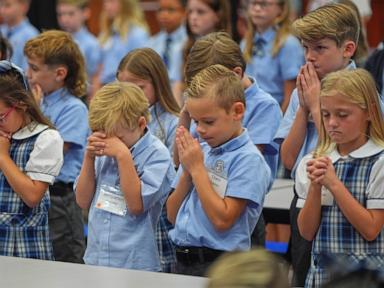
Walk into a room where ten-year-olds are conjugating Latin verbs while rain taps a steady rhythm against tall, narrow windows, and you feel a strange tug between centuries. It is not the sterile hum of a glowing tablet or the frantic bounce of a smartboard chime. It is paper. It is quiet concentration. It is a boy trying to pronounce agricola without tripping over the syllables, while beside him a classmate traces a map of ancient trade routes with a wooden pencil.
For decades, classical Christian schools existed on the edges of the public imagination. Small. Scrappy. Often tucked into church basements or rented storefronts where parents pooled paychecks, baked sales, and prayed that tuition checks would clear before the electric bill arrived.
Now, something louder is happening beneath that quiet surface.
Taxpayers are funding private school tuition through state voucher programs, education savings accounts, and tax-credit scholarships. And classical Christian schools—institutions built on old languages, formal logic, rhetoric, and explicit Christian confession—are expanding at a pace their founders once could barely picture.
Pause right there. Feel that shift?
If you pay property taxes or state income taxes, you are likely part of this story whether you asked to be or not. If you are a parent wondering what your child is actually learning—or why your local school district suddenly feels stretched thinner—you have skin in this game too. Honestly, even people who follow education policy closely find this terrain confusing and charged. Money moves through state treasuries, parents make deeply personal choices about their children's souls and minds, and neighbors argue across kitchen tables over what "public" and "private" really mean.
Let me admit something right away: I do not have every single state ledger memorized, and school finance rules shift fast enough to give anyone a headache. Still, I have sat in enough classrooms, talked with enough weary parents and principled teachers, and watched enough local budget meetings to know that dry policy summaries miss the beating heart of what is unfolding.
To see what is really changing, it helps to trace real human lives—some drawn from familiar patterns in American school choice, others explicitly hypothetical scenarios built to show how the mechanics play out on the ground.
A Kitchen Table in Ohio
Picture a hypothetical family I will call the Millers, living in a mid-sized Ohio town. (Again, this is a hypothetical illustration rather than a single real household, though variations of it play out across dozens of states.)
Hannah and David Miller both work full-time. David hauls freight on regional routes; Hannah works administrative shifts at a clinic. Neither went to a private school growing up. Both grew up believing in the public school down the road—until their oldest son, Leo, started second grade and seemed to vanish behind a wall of noise and rushing.
Nothing dramatic happened. No villain walked into Leo's classroom.
Instead, there were twenty-eight kids, three urgent reading interventions, a rotating cast of substitutes, and a schedule so packed with test prep and screen-based modules that Leo came home exhausted, irritable, and convinced he was "dumb" because reading aloud made his throat tighten.
At night, after the dishes were done and the house finally went quiet, David would spread bills across the laminate table. Tuition at the classical Christian academy twenty minutes away was just under eight thousand dollars a year. To the Millers, eight thousand dollars might as well have been eighty thousand. They had a mortgage, a car with a dashboard light that flickered whenever it rained, and groceries that cost more every single week.
Then Ohio expanded universal access to its scholarship program, allowing families to use state-funded tuition aid toward private schooling.
Suddenly, the math changed. Not magically. Not without trade-offs. Fees still existed. Gas still cost money. uniforms still needed washing. Yet the barrier that had felt like a solid brick wall now looked like a gate that had finally been unlatched.
That is the core engine driving classical Christian expansion right now. Demand from parents was already rising after the pandemic shook families' assumptions about schooling. What changed the scale was money—specifically, public dollars becoming portable enough for working- and middle-class families to reach schools that previously catered mostly to families with deeper pockets or deep church subsidies.
Think of it like this. Imagine a neighborhood bakery that bakes sourdough from scratch using a starter kept alive for thirty years. For years, only people who could afford specialty prices—or who knew the baker personally—bought a loaf. Then the city hands every household a food voucher that can be redeemed at approved bakeries. Suddenly, the line outside that little shop stretches down the block. The baker has to hire help, lease a bigger oven, and figure out how to scale without losing the soul of the bread.
That metaphor only goes so far—education is not bread, and schools are moral and civic communities, not just vendors—but it captures the sudden surge of pressure and possibility.
Why Classical Christian Schools, of All Places?
If you have not stepped inside a classical Christian school recently, you might expect something stiff, museum-like, or stuck in a bygone era.
Sometimes they can be. Any movement growing fast has growing pains.
Yet their appeal taps into a specific hunger. Many parents feel modern schooling—whether public or secular private—treats childhood like a race toward career readiness and standardized metrics too early, while leaving big questions about truth, goodness, beauty, and purpose on the sidelines.
Classical Christian education leans into the trivium—grammar, logic, and rhetoric—alongside literature, history, mathematics, and Christian theology. Younger students memorize songs, poems, timelines, and foundational facts while their brains love pattern and rhythm. Older students learn to spot logical fallacies, read dense texts slowly instead of skimming for keywords, and defend ideas clearly in speech and writing.
Add the Christian framework, and the draw becomes even sharper for believing families. For many Christian parents, faith isn't a Sunday accessory tacked onto a secular week; it shapes how they view human nature, authority, mercy, and the cosmos. When the state offers tuition funding that can flow to religious schools, families who already share that worldview no longer have to treat classical Christian education as an impossible dream.
Meanwhile, school leaders see an opening to serve families they once had to turn away at the door. A principal in a growing classical school might tell you—as many do—that their biggest heartbreak used to be saying no to a single mom or a warehouse worker who loved the mission but couldn't bridge the tuition gap.
With state scholarships and education savings accounts flowing in, those "no" piles are shrinking. New campuses open. Existing classrooms add sections. Waitlists still exist—good teachers are hard to find, and buildings take time—but the trajectory is unmistakable.
The Invisible Stakes Beneath the Ledger
Every coin has two sides. Sometimes it has a sharp edge.
When taxpayers fund private school tuition, the debate rarely stays calm for long, because everyone sees a different threat.
Take a second hypothetical character: Elena, a veteran fifth-grade teacher in a neighboring public district. Elena is not an ideological caricature. She stays late laminating science cards, buys pencils out of her own pocket when supplies run thin, and knows which of her students ate breakfast and which ones didn't.
When state lawmakers divert or expand tuition subsidies for private schools, Elena feels a quiet dread in her stomach. Every dollar that leaves the public funding formula—or every student whose departure shrinks per-pupil allocations in districts funded by enrollment counts—feels like taking bricks out of a wall she is trying to hold up. Even when states promise that public schools still receive large budgets, local districts face rising special-education costs, aging buildings, and tight staffing.
Ask yourself: What happens to the neighbor's kid who stays in the public school? What happens to rural districts with few private options nearby? What happens when public tax money flows to institutions whose religious doctrines some taxpayers deeply oppose, or whose admissions and disciplinary policies may look different from a common school?
Those are not fake questions. They are the real tension points keeping lawyers, legislators, pastors, and parents awake at night.
Critics of taxpayer-funded private tuition argue that public money should come with public accountability, non-discrimination rules, and transparency—and that subsidizing religious education crosses an important constitutional and civic line. Defenders counter that parents are the primary educators of their children, that tax money belongs to families rather than state bureaucracies, and that competition and choice push every school to do better.
Both sides can point to real evidence and real fears. Pretending the stakes are simple is lazy.
What Expansion Costs the Schools Themselves
Here is a wrinkle that gets less attention in shouting matches on cable news: rapid expansion tests classical Christian schools from the inside out.
Growth sounds like victory when you are staring at a balance sheet. In practice, growth is a stress test.
A classical Christian school lives or dies by its culture and its teachers. You cannot simply print a syllabus, hang a Latin declension chart on the wall, and call a classroom classical. Teaching a twelve-year-old to reason carefully requires adults who love reading, think clearly, and embody patience and integrity.
When enrollment jumps because state tuition aid lowers the financial hurdle, schools face tough choices:
- Do they hire underprepared teachers just to open another classroom, risking a watered-down version of the model?
- Do they take state funds that might eventually come with strings—reporting rules, testing mandates, regulatory oversight—that clash with their independence?
- Do they keep serving families with learning differences or complex needs, or risk becoming selective in ways that feel at odds with grace and stewardship?
I have seen schools wrestle with these exact dilemmas. Founders who spent years building a tight-knit community suddenly find themselves managing budgets, compliance forms, construction loans, and a wider mix of families whose expectations vary wildly. Some families come because they love classical Christian tradition; others come primarily because the tuition is covered and the school seems orderly.
Shaping a school culture takes years. Diluting it can happen in a single hiring cycle.
Why This Matters Right Now
Stepping back, it is easy to see why this story feels bigger than school boards and state budgets.
America is arguing—often clumsily, sometimes bitterly—about what holds a pluralistic society together when people hold rival visions of the good life. One vision emphasizes a shared public square funded collectively for common civic purposes. Another emphasizes parental freedom, religious liberty, and pluralism through diverse schools.
Taxpayer-funded tuition sitting right at the intersection of classical Christian expansion forces both visions to collide in real time.
For Leo's hypothetical family, the policy isn't an abstraction. It is a boy who starts looking forward to reading again instead of dreading the bell. For Elena, the hypothetical public school teacher, it is the weight of wondering whether the next budget cut will cost her classroom aide. For the school headmaster, it is the quiet prayer at six in the morning that growth will bring blessing without breaking what makes the school whole.
Numbers tell us how many scholarships are claimed and how many seats are added. They cannot tell us whether a child feels known, whether a community grows wiser or more fractured, or whether a promise made on paper turns into real flourishing in a classroom.
Listen closely to the hum of a school day.
Somewhere right now, a teacher is tapping a pointer against a map of the ancient Mediterranean, a parent is checking an online portal to see if a tuition grant cleared, and a school board member is staring at a spreadsheet trying to keep doors open without losing the soul of the place.
The checks are real. The classrooms are real. And the story is still being written in pencil, one erasure and one hard-won line at a time.