It happens every November under the sterile, unforgiving glare of fluorescent store lighting, or in the blue glow of a phone screen at 1:14 AM.
A shopper named Elena—a composite of every friend who has ever texted me a frantic screenshot of a full digital shopping cart—is staring at $412 worth of glass bottles, velvet tubes, and promises. Outside, the November air has turned sharp, the kind of chill that pulls moisture straight out of the skin and leaves behind a dull, tight ache. Inside her browser, a red banner ticks down the hours on the Sephora Savings Event. Ten percent off for Insiders. Fifteen for VIB. Twenty for Rouge.
Elena does not need twelve new products. She has a drawer full of half-used serums from last spring, sticky caps crusted with dried hyaluronic acid, silently judging her every time she reaches for her toothbrush. Yet her thumb hovers over the checkout button.
Panic.
That is the invisible engine of the Sephora fall sale. Traditional shopping guides treat this semi-annual retail event like a polite treasure hunt, handing you a bulleted checklist of trending blushes and viral lip oils as if buying luxury cosmetics were an exercise in pure logic. They miss the psychological undertow entirely. A 20 percent discount on a $90 face cream is not merely a math problem; it is an emotional negotiation between who we are in the harsh light of Tuesday morning and who we hope to become by Friday night.
When I first started covering the beauty industry a decade ago, I fell for the trap every single time. I remember standing in the Soho flagship store during a fall sale, clutching a black-and-white striped basket until the plastic handles dug red grooves into my fingers. I walked out with a $68 foundation that oxidized into a dull pumpkin shade by noon, a glittery eyeshadow palette I opened twice, and an overwhelming sense of buyer’s remorse that lasted well into January. I had confused the thrill of the discount with the actual value of the object.
The Architecture of Artificial Urgency
To shop the Sephora fall sale without losing your mind—or your savings—you first have to understand the machinery designed to make you overbuy.
Retail psychologists have studied scarcity cues for decades, and the beauty industry has perfected them. Unlike Black Friday, where doorbusters trigger stampedes over discounted televisions, prestige beauty rarely goes on sale. Brands like Chanel, Dior, Dyson, and La Mer guard their price points fiercely to protect their aura of exclusivity. When Sephora opens its tiered discount window twice a year, once in the spring and once in the autumn, it creates a pressurized vacuum. Suddenly, items that never drop by a single cent are briefly within reach, provided you have spent enough money earlier in the year to unlock the highest tier.
Consider what happens next. Because the window is brief—usually spanning about eleven days, with Rouge members getting early access before the doors open to VIB and Insider tiers—your brain shifts from deliberate evaluation to resource hoarding. Behavioral economists call this loss aversion. The pain of missing out on saving $18 feels twice as sharp as the pleasure of keeping $72 in your bank account.
And the timing is deliberate. November sits right at the intersection of seasonal biological panic and social obligation. Your summer glow has faded. Central heating is quietly stripping your skin barrier of its natural lipids. Holiday parties loom on the calendar, bringing with them high-definition smartphone cameras and relatives who haven't seen you since last winter. You aren't just buying a concealer; you are buying armor.
Separating the Workhorses from the Whims
So how do you walk into that fluorescent glare, or open that crowded app, and emerge with things that actually earn their real estate on your bathroom counter?
You stop shopping for fantasies, and you start shopping for infrastructure.
Think of your beauty routine like building a house. Most people walk into a sale and buy throw pillows—the shimmering liquid highlighters, the limited-edition holiday lip gloss sets wrapped in gold foil, the novelty masks that smell like crushed candy canes. Throw pillows are fun, low-commitment, and completely useless when the roof leaks. When a 15 or 20 percent discount is on the table, your money belongs on the foundation and the plumbing.
Let’s look at the actual numbers. Saving 20 percent on a $22 lip balm puts $4.40 back in your pocket—barely the price of an iced coffee. Saving 20 percent on a $499 Dyson Airwrap multi-styler, or a $165 bottle of Sunday Riley Good Genes lactic acid treatment, or a $115 fragrance you wear every single day saves you between $23 and $100 in a single stroke.
The sharpest shoppers treat the Sephora fall sale like a wholesale restock of high-ticket staples they have already tested and emptied. If you haven't scraped the bottom of the jar with a Q-tip to get the last millimeter of product out, it probably isn't a staple.
The Skin Barrier Emergency
If your cart is going to hold anything new this autumn, let it address the biological reality of November.
When humidity drops, transepidermal water loss accelerates. Imagine your skin’s outer layer—the stratum corneum—as a brick wall. The skin cells are the bricks, and natural fats like ceramides, cholesterol, and fatty acids are the mortar holding them together. Cold wind outside and dry radiator heat inside dissolve that mortar. Micro-fissures open up. Suddenly, the retinol you used happily in July makes your cheeks sting, and your foundation clings to dry patches you didn't know existed.
This is where targeted, clinical-grade skincare earns its keep during the sale. Instead of chasing a twelve-step routine, look for formulations heavy on barrier-repairing lipids. Skinfix Barrier+ Triple Lipid-Peptide Cream has become a quiet legend among dermatologists and beauty editors precisely because it mimics the skin’s natural lipid ratio without feeling like heavy grease. Similarly, Dieux Instant Angel—a rich, emollient moisturizer formulated by cosmetic chemist Charlotte Palermino—wraps fragile skin in a breathable seal that keeps hydration locked in through freezing commutes.
For those dealing with dullness and uneven texture left over from summer sun exposure, chemical exfoliants offer the highest return on investment, provided you don't overdo them. Paula’s Choice Skin Perfecting 2% BHA Liquid Exfoliant remains an industry benchmark for unclogging pores and smoothing rough texture, while Dr. Dennis Gross Alpha Beta Universal Daily Peel pads deliver a controlled, two-step dose of alpha and beta hydroxy acids that visibly brightens tired skin in two minutes flat. Those peel pads are notoriously expensive—a box of thirty runs nearly $92—making them the textbook definition of a smart sale acquisition.
The Quiet Shift in Color Cosmetics
Walk through the makeup aisles this season and you will notice a distinct rejection of the heavy, mask-like glamour that dominated the late 2010s. Nobody wants to look like they are wearing three layers of spackle under an overcast November sky. The current era favors skin that looks alive—slightly flushed, luminous, and effortless, even if it took twenty minutes of strategic blending to achieve.
This shift has turned complexion products into the most competitive category on the floor. Haus Labs Triclone Skin Tech Medium Coverage Foundation, formulated with fermented arnica to visibly calm redness, moves like serum over dry winter skin rather than settling into fine lines. For days when full foundation feels suffocating, Merit The Minimalist Perfecting Complexion Stick acts as an eraser for dark circles and redness around the nose, blending out with just the warmth of your fingertips.
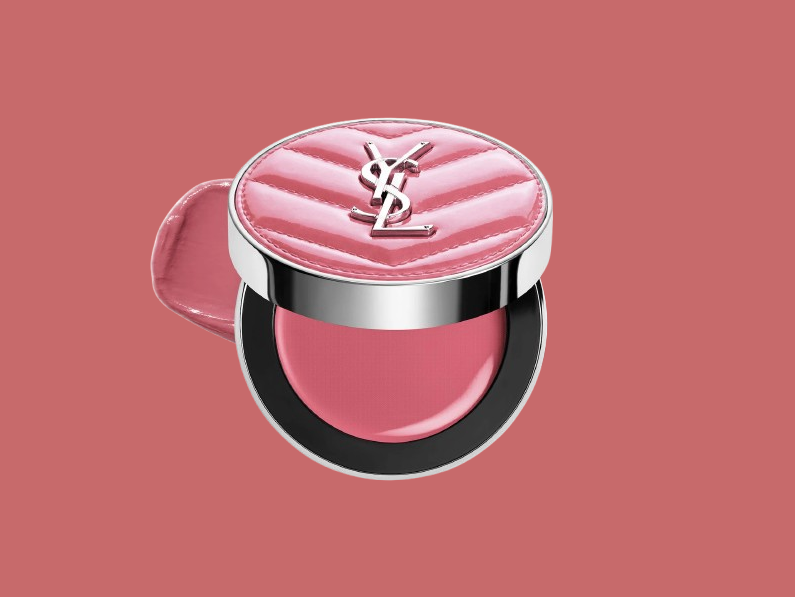
Blush, meanwhile, has quietly usurped lipstick as the emotional center of the makeup bag. A swipe of pigment high on the cheekbones mimics the rush of blood from a brisk walk in cold air, instantly making a sleep-deprived face look awake. Rare Beauty Soft Pinch Liquid Blush has earned its viral status not through clever marketing, but through sheer pigment density; a single dot smaller than a grain of rice lasts twelve hours, meaning one $23 bottle will practically outlive your current lease. If liquids intimidate you, Patrick Ta Major Headlines Double-Take Crème & Powder Blush Duo solves the longevity problem by pairing a translucent powder with a dewy cream meant to be layered on top of the powder—a backstage artist trick that keeps cheeks glowing without sliding off by afternoon.
And because winter air turns lips into parchment, heavy matte liquid lipsticks have largely been exiled to the back of the drawer. They have been replaced by hybrid lip treatments that deliver sheer color alongside heavy-duty hydration. Summer Fridays Lip Butter Balm and Ole Henriksen Pout Preserve Peptide Lip Treatment have sparked genuine shortages in stores because they bridge the gap between a protective ointment and a polished gloss.
The Hair and Fragrance Equation
The most overlooked corners of the Sephora fall sale are often the haircare shelves and the fragrance wall, yet they offer some of the highest mathematical savings in the entire store.
Prestigious haircare brands rarely discount their hero products outside of these twice-yearly events. If you rely on bond-building treatments to repair heat or bleach damage, stocking up on K18 Leave-In Molecular Repair Hair Mask—a biotech peptide treatment that actually reconnects broken polypeptide chains inside the hair shaft rather than just coating the outside in silicone—can save you substantial money over the winter months. The same logic applies to styling tools. Because Sephora caps Dyson purchases at one per customer during the event, the fall sale is practically the only time all year you can shave $80 to $120 off an Airwrap or a Supersonic hair dryer without hunting through refurbished outlets.
Fragrance, on the other hand, is pure emotional memory. Unlike skincare, which degrades over time once exposed to oxygen and light, a well-stored bottle of perfume will last for years. A 20 percent discount on luxury scents like Maison Margiela Replica By the Fireplace—which smells uncannily like roasting chestnuts and burning wood in a snowbound cabin—or Kayali Vanilla 28, a warm, brown-sugar gourmand that layers effortlessly under sharper floral scents, turns an indulgent splurge into a practical purchase.
If you are unsure which scent fits your winter mood, skip the full-size bottle entirely and look for the Sephora Favorites Deluxe Perfume Sampler. These boxed sets contain travel vials of roughly a dozen bestselling fragrances along with a voucher redeemable in-store for a full-size bottle of your favorite one—often at a lower total cost than buying the full bottle outright, even before the sale discount is applied.
The Art of the Empty Cart
Let’s return to Elena at 1:14 AM, thumb hovering over that glowing checkout button.
If she pauses for sixty seconds—just one minute to close her eyes and take a breath—she can strip away the red countdown banners, the influencer haul videos, and the quiet anxiety of seasonal change. She can look at her $412 cart not as a rescue mission for her self-esteem, but as a simple inventory check.
She deletes the glittery holiday eyeshadow palette she knows she will only wear on New Year's Eve. She removes the third backup lip gloss in a shade nearly identical to the one sitting at the bottom of her tote bag. She cuts the trendy serum with three different kinds of conflicting acids that will only irritate her winter skin.
What remains in her cart is smaller, quieter, and infinitely more useful: the rich ceramide moisturizer she scrapes empty every six weeks, the peptide hair mask that keeps her ends from snapping in dry air, a creamy blush that makes her look rested on Monday mornings, and the warm woody perfume she wears when she wants to feel grounded. Her total drops from $412 to $168. With her discount applied, she saves nearly thirty-four dollars on things she was going to buy anyway.
The true secret of the Sephora fall sale has nothing to do with finding hidden gems or beating the algorithm to viral restocks. It is the quiet discipline of knowing the difference between a bargain and a trap. You close the browser tab, plug in your phone, and turn off the light, leaving the noise of the sale behind while the winter wind rattles softly against the windowpane.