Dawn on an English airfield smells of wet grass, cold diesel, and burnt coffee from a plastic cup. You hear the wind first—a low, steady hiss rolling off flat farmland—before a single engine turns over. When you have spent enough years around flight lines, you stop jumping at sudden noises. You learn the rhythm of a base: the hum of ground power units, the clink of tools on concrete, the quiet routine of people who show up before sunrise so someone else can fly safely.
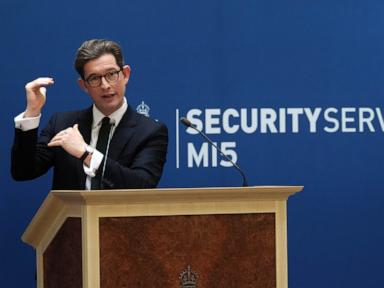
Then a spy chief stands up and tells the public that an alleged plot near a Royal Air Force base is not a one-off, and that Iran is targeting military sites.
Suddenly the morning air feels thinner.
Most of us read a headline like that while half-awake, scrolling past two sentences on a phone screen. A suspected plot. A warning from intelligence leaders. A threat to military infrastructure. It sounds like the plot of a late-night thriller—distant, theatrical, wrapped in code names and black trench coats. Yet when intelligence officials warn that military sites are in the crosshairs and that a single suspected incident at an RAF installation is part of a broader pattern rather than an isolated fluke, the distance shrinks. A perimeter fence stops looking like steel and wire. It starts looking like a line drawn in chalk.
Let’s be honest about what feels disorienting here. We live in an era of constant alarms. Every week brings another warning about cyber intrusions, foreign influence, or shadowy actors probing weak spots. After a while, a reasonable person wonders: Is this actually happening right outside our doors, or is it just high-stakes political noise?
That skepticism isn’t foolish. It’s self-preservation. When stakes are exaggerated in headlines, people tune out. When stakes are real and people tune out anyway, cracks open.
A Fence Line in the Fog
To see why intelligence warnings carry weight even before a court verdict is read, picture a hypothetical surveillance analyst—let’s call her Hannah—sitting in a windowless room two hours east of a major air station. This is a hypothetical scenario built to illustrate how threat assessments come together from fragments, not a report on a specific case file.
Hannah isn’t watching masked saboteurs vaulting razor wire in the dead of night. Real counterintelligence rarely looks like that. Usually, it looks like boredom interrupted by a pattern. A rental car parked twice near a back gate at dusk. Someone asking overly specific questions about shift changes at a nearby pub. A phone pinging near a restricted perimeter weeks after another suspicious approach two hundred miles away.
Alone, any one of those moments could be coincidence. A lost driver. A nosy aviation buff. Bad luck.
Together, they form a shape.
Think of it like this metaphor: imagine trying to recognize a face through frosted bathroom glass. You don’t get sharp eyes or a clear jawline. You get a smudge of dark hair, a tilt of the head, a shadow moving at a familiar pace. If you see that same shadow outside three different windows over several months, you stop calling it a trick of the light. You start paying attention to where the person walks next.
That is the logic behind saying a suspected plot at an RAF base is "not unique." Intelligence chiefs deal in patterns across time and geography. When a spy chief states that Iran is targeting military sites, they are pointing to a recurring behavior—surveillance, reconnaissance, recruitment of proxies, or attempts to gather intelligence on bases, personnel, or supply chains—rather than treating one alert as a freak accident.
Still, uncertainty hangs heavy over stories like this. An accusation or a suspected plot is not the same as a proven conviction. Public statements from security officials are often carefully calibrated: they want to warn institutions, deter bad actors, and reassure—or alert—the public without burning sensitive sources or compromising ongoing investigations. Reading between those lines takes patience, and it’s completely fair to ask how much we are being told versus how much must stay hidden.
Why Airfields Draw Quiet Eyes
Why a military base? Why an RAF station?
People who haven’t worked near defense installations sometimes imagine them as sealed vaults where nothing changes from one decade to the next. In reality, an active airfield is a bustling ecosystem. Hundreds—sometimes thousands—of service members, civilian contractors, delivery drivers, cleaners, engineers, and local suppliers move in and out every day. Families live nearby. Schools sit down the road. Corner shops rely on base traffic.
Vulnerability lives in that everyday normalcy.
An adversary doesn’t necessarily need to breach a hardened bunker with explosives to cause harm or gather value. Sometimes they just want to know who comes and goes, how security responds to a minor probe, which contractors have access to sensitive areas, or whether local networks can be pressured or paid to look the other way. Even a scare—a drone sighting, a suspicious vehicle near a gate, a disrupted routine—tests readiness and consumes time and money.
History backs up that unglamorous reality. Across decades of Cold War cat-and-mouse games and modern state-backed espionage, intelligence services have repeatedly found that the most persistent threats target logistics, routines, and human edges rather than dramatic frontal assaults. A locked door is hard to kick down; a propped-open side door is easy to notice if someone is watching.
Consider what happens next when a state actor uses intermediaries or deniable networks instead of uniformed operatives. Attribution gets murky. A local hire or an unwitting middleman might not even see the full picture of who is paying them or why a photograph of a gatehouse matters. That ambiguity is part of the design. It lets a state push pressure against military sites while keeping plausible deniability intact.
The Weight Carried by Ordinary People
Numbers and strategic briefings rarely capture what this feels like on the ground.
Imagine another hypothetical figure—let’s call him Dave, a retired logistics technician who spent twenty years loading freight on British airbases and now lives ten miles from one. This is also a composite picture of the mindset many veterans and base-adjacent residents share, grounded in real patterns of community life around military hubs.
Dave knows the sound of heavy transport aircraft banking low over autumn trees. He knows young airmen and airwomen grabbing groceries after a long shift, tired and ordinary, carrying duffel bags rather than rifles. When news breaks that military sites are being targeted and a plot near an RAF station isn’t an isolated event, Dave doesn’t panic. He feels a dull, familiar ache in his stomach.
Because he knows how human the people inside those fences are.
Security isn’t just cameras, radar, and armed guards. It’s the gate sentry standing in sleet at three in the morning. It’s the local council worker spotting something slightly off and deciding to report it instead of shrugging it off. It’s a family trying to live a normal life without looking over their shoulder every time a car idles by the hedge.
When threat levels rise or warnings go public, communities near bases can get pulled into a strange tension. Too much paranoia turns neighbors suspicious of every unfamiliar face. Too little awareness leaves blind spots wide open. Finding that middle ground—calm, observant, unpanicked—is harder than it sounds.
A single warning from a spy chief rarely ends a story; usually, it marks the moment the public is asked to take a quiet threat seriously before anything irreversible happens.
Separating Noise From Real Risk
If you feel a mix of unease and skepticism when reading about state threats to military infrastructure, you’re in good company. Modern information feeds are loud. Every crisis arrives with urgent graphics and dramatic phrasing.
So how do you stay grounded without letting fear run the show?
Start by looking for consistency over time rather than reacting to a single shock headline. When intelligence leaders point to a pattern—multiple incidents, repeated interest in military sites, or linked networks—that carries more weight than a lone rumor. Pay attention to the difference between an allegation under investigation and a confirmed attack; clarity protects you from jumping to false conclusions while still respecting credible warnings.
Watch how everyday resilience works in practice too. Countering covert pressure or probing around sensitive sites relies heavily on unglamorous basics: tight operational security, clear reporting channels, cooperation between policing and intelligence agencies, and steady nerves from the people doing the work day after day. It isn’t flashy. Most of the successes never make the front page because nothing blew up, nothing leaked, and nobody got hurt.
Still, the stakes remain real. Military sites aren’t abstract chess pieces on a map; they are workplaces, communities, and pillars of national defense. When a spy chief warns that they are being targeted and that one suspected plot fits a wider pattern, it’s a reminder that quiet contests are playing out even when the skies above look calm.
Late afternoon on an airfield brings a different kind of quiet. The rush of morning departures settles. Shadows stretch long across tarmac and grass. A security light flicks on beside a perimeter fence, casting a clean pool of yellow onto damp pavement as the first stars show through thin cloud—steady, watchful, waiting out the dark.