Benny Gantz, the former Chief of the General Staff of the Israel Defense Forces and leader of the National Unity party, represents the most viable center-right challenger to Prime Minister Benjamin Netanyahu’s political dominance. While Israeli politics has fractured along ideological, religious, and judicial lines, Gantz has built a political coalition designed to siphon disillusioned voters away from Netanyahu’s Likud party without alienating the secular center. His appeal rests on a carefully cultivated image of institutional stability, military credibility, and pragmatic conservatism—qualities that stand in sharp contrast to the polarized rhetoric that has defined Jerusalem for over a decade.
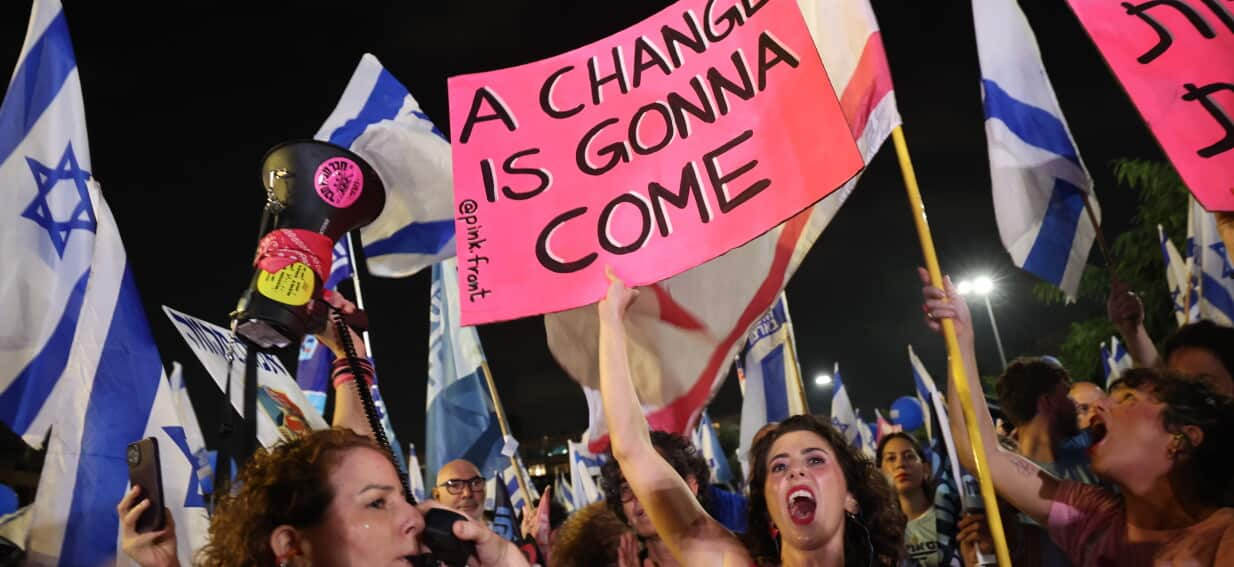
The political math in Israel is notoriously unforgiving. No single party has ever won an outright majority in the 120-seat Knesset, meaning power always belongs to the leader who can stitch together a 61-seat coalition from a volatile mix of secular centrists, religious Zionists, ultra-Orthodox factions, and Arab parties. For years, Netanyahu mastered this arithmetic by positioning himself as the indispensable guarantor of national security and economic growth. Yet the political tremors triggered by the 2023 judicial overhaul protests and the catastrophic intelligence and security failures of October 7 have fundamentally altered the electoral calculus.
According to political analysts at the Israel Democracy Institute, the traditional left-right divide in Israel—historically anchored in attitudes toward the Palestinian conflict—has largely been superseded by a referendum on governance and institutional trust. In this environment, a candidate from the traditional left faces an insurmountable demographic ceiling. To unseat Netanyahu, a challenger must speak the language of the Israeli right on security while promising the center a return to constitutional normalcy.
The Architecture of a Center-Right Challenger
Gantz’s political trajectory is unusual for an Israeli general. Unlike predecessors such as Yitzhak Rabin or Ariel Sharon, who entered politics with sweeping ideological visions or aggressive tactical reputations, Gantz rose to prominence through restraint. During his tenure as IDF Chief of Staff from 2011 to 2015, he oversaw major military operations in Gaza while maintaining a reputation as a cautious, consensus-driven commander.
When he entered politics in late 2018 with the Israel Resilience Party—later merging into the Blue and White alliance—critics dismissed him as politically naive. His decision in 2020 to join a short-lived unity government with Netanyahu, breaking a central campaign promise, nearly destroyed his political career. His polling numbers collapsed into the single digits, and pundits wrote his political obituary.
Yet that perceived weakness became his primary asset. By demonstrating a willingness to absorb political damage in the name of national unity—first during the COVID-19 pandemic and again by joining the emergency war cabinet following the October 7 attacks—Gantz differentiated himself from transactional politicians. Political commentators in Israeli outlets like Haaretz and The Times of Israel have noted that his lack of theatrical charisma actually reassures a public exhausted by constant constitutional crises.
Siphoning the Soft Right
The decisive battleground in any Israeli election is the "soft right"—voters who hold hawkish views on security, distrust international pressure, and traditionally vote Likud, yet feel alienated by Netanyahu’s alliances with far-right ultranationalists and ultra-Orthodox parties.
Gantz’s National Unity party was explicitly engineered to capture this demographic. By partnering with figures like Gideon Sa'ar—a former Likud minister and ideological hawk—and Gadi Eisenkot, another respected former IDF Chief of Staff, Gantz constructed a leadership slate with undeniable security credentials.
- Security Credibility: Voters on the center-right demand proof that a leader will not compromise on Israeli military superiority or border defense. Having two former chiefs of staff at the helm neutralizes Likud's standard attack line that any alternative government would be weak on terror.
- Institutional Preservation: Unlike far-right coalition partners who have openly called for curbing the authority of the Supreme Court and dismantling civil service gatekeepers, Gantz campaigns on protecting Israel's democratic checks and balances.
- Burden Sharing: One of the sharpest wedges in Israeli society is the military draft exemption granted to ultra-Orthodox yeshiva students. Following the prolonged military mobilization after October 7, secular and religious-Zionist families who bore the brunt of reserve duty grew increasingly resentful of Netanyahu’s dependence on ultra-Orthodox parties. Gantz has made universal national service a central pillar of his platform, directly appealing to frustrated Likud voters.
The Coalition Trap and the Arithmetic of Power
Unseating an incumbent prime minister in Israel requires more than winning the most seats; it requires blocking the incumbent from forming a majority while assembling a functional alternative. Here lies the central vulnerability of Gantz’s strategy.
Netanyahu’s core bloc—comprising Likud, the ultra-Orthodox parties (Shas and United Torah Judaism), and the far-right Religious Zionist and Otzma Yehudit factions—possesses a remarkably disciplined voting base. Even when polling dips, these parties tend to stick together because their policy goals depend entirely on Netanyahu remaining in power. The ultra-Orthodox parties rely on him to protect draft exemptions and state funding for religious schools, while the far-right relies on him for cabinet ministries and settlement expansion.
To reach 61 seats without Netanyahu, Gantz faces a structural dilemma. If he refuses to sit with Netanyahu’s Likud—and refuses to rely on the far-right—his path to a majority requires uniting a deeply fractious opposition. This potential coalition would need to stretch from right-wing secularists like Avigdor Lieberman’s Yisrael Beiteinu to centrist factions like Yair Lapid’s Yesh Atid, and potentially rely on the outside support or participation of Arab parties.
The Lessons of the "Change Government"
Israel already tested a broad anti-Netanyahu coalition in 2021, led sequentially by Naftali Bennett and Yair Lapid. That government successfully passed a national budget and stabilized public administration, proving that Netanyahu was not irreplaceable. However, it collapsed after barely a year because its ideological contradictions were too severe to survive routine legislative friction. Right-wing members balked at concessions to Arab coalition partners, while left-wing members resisted policies favored by settlement advocates.
Gantz’s advisors are acutely aware that repeating the 2021 model without a stronger center-right anchor would lead to the same paralysis. Consequently, National Unity’s strategy relies on growing large enough to dictate terms to smaller opposition parties, rather than being held hostage by them. If National Unity emerges as the clear largest faction in the Knesset, Gantz gains the moral and political authority to demand that smaller partners subordinate their niche agendas to a core recovery platform.
Security Policy Without Ideological Dogma
On the defining question of Israel's future—relations with the Palestinians and regional integration—Gantz occupies a deliberately cautious space. He does not advocate for the immediate establishment of a Palestinian state, arguing that the security realities following October 7 make unilateral territorial concessions impossible in the foreseeable future. This aligns him closely with the post-war consensus among the Israeli public.
At the same time, he diverges sharply from the messianic right wing of Netanyahu’s government, which openly advocates for the permanent military occupation and resettlement of Gaza and the formal annexation of the West Bank. Gantz favors long-term Israeli security control paired with diplomatic arrangements involving moderate Arab states, such as Saudi Arabia and the United Arab Emirates, alongside the United States.
This pragmatic posture is designed to repair Israel’s strained relationships with Washington and European capitals without promising diplomatic breakthroughs that Israeli voters no longer believe are realistic. Foreign policy analysts at institutions like the Washington Institute for Near East Policy have observed that Western policymakers view Gantz as a predictable interlocutor—someone who prioritizes strategic coordination with the U.S. over domestic political survival.
The Vulnerabilities Inside the Tent
Despite strong polling numbers during periods of national crisis, Gantz’s political armor has significant cracks. Critics from both the left and the right argue that his obsession with consensus often curdles into indecisiveness.
On the progressive left, voters view him as insufficiently committed to ending the military occupation or confronting the systemic inequalities facing Israel's Arab citizens. Many left-leaning Israelis still resent his 2020 decision to join Netanyahu, viewing it as an unforgivable betrayal that fractured the anti-Netanyahu movement at a critical juncture. While these voters might reluctantly support a Gantz-led coalition to remove Likud from power, they harbor little enthusiasm for him as a transformative leader.
On the political right, Likud’s formidable media apparatus relentlessly portrays Gantz as a weak, hesitant figure who would cave to American diplomatic pressure and hesitate to authorize decisive military strikes. Netanyahu’s campaign strategists have historically excelled at framing elections as a binary choice between a strong, experienced statesman and a collection of naive generals who lack the political ruthlessness required to survive in the Middle East.
Furthermore, Gantz’s coalition is susceptible to internal fragmentation. The alliance between Gantz and Gideon Sa'ar has already experienced turbulence, with Sa'ar splitting off and rejoining at different intervals based on disagreements over war cabinet strategy and opposition tactics. Maintaining unity among ambitious politicians who all view themselves as potential prime ministers requires constant management—a skill Netanyahu has honed over three decades, and one where Gantz remains comparatively untested.
Economic Recovery and the Cost of Polarization
Beyond security and constitutional norms, the next Israeli prime minister will inherit an economy under severe strain. Prolonged military conflict, credit rating downgrades, disrupted supply chains, and the mobilization of hundreds of thousands of reservists have placed immense pressure on Israel’s fiscal stability.
The high-tech sector, which accounts for roughly a fifth of Israel’s economic output and a massive share of its tax revenue, became the financial backbone of the anti-judicial overhaul protests in 2023. Tech executives and venture capitalists warned that weakening the independence of the judiciary would trigger capital flight and destroy investor confidence.
Gantz’s economic message targets this anxious middle class. Rather than proposing radical market reforms, he emphasizes institutional predictability, fiscal discipline, and shifting state budgets away from sectarian coalition payouts toward education, infrastructure, and reserve soldier compensation. For business leaders and international investors, a Gantz premiership signals a return to technocratic governance—an assurance that economic policy will be driven by professional ministries rather than the ideological demands of fringe coalition partners.
The Structural Shift in Israeli Leadership
Whether Benny Gantz ultimately succeeds in unseating Benjamin Netanyahu depends on forces larger than any single campaign. Netanyahu’s political longevity is a testament to his unmatched ability to dominate the media cycle, exploit societal grievances, and outmaneuver rivals inside the Knesset. Counting him out has proven to be a losing bet for a generation of Israeli politicians.
Yet every political era eventually encounters demographic and institutional limits. The core proposition of Gantz’s candidacy is not that he possesses Netanyahu’s rhetorical brilliance or tactical cunning, but that the Israeli public has grown exhausted by those very traits. After years of perpetual election cycles, constitutional brinkmanship, and profound national trauma, a substantial segment of the electorate is no longer looking for a political magician. They are looking for a competent manager who will lower the national temperature, rebuild broken state institutions, and restore a sense of predictability to public life. If that exhaustion holds through the next ballot, the quiet general will not need to out-maneuver Netanyahu at his own game—he will simply change the rules of what Israeli voters value in a leader.