Silence.
That is the sound of a locked classroom door in Kabul at eight o’clock on a Tuesday morning, when the chalk dust hangs untouched in the slant of pale autumn sunlight and the wooden desks sit empty in neat, agonizing rows. If you found value in this post, you might want to read: this related article.
Imagine, for a moment, a hypothetical fourteen-year-old girl named Mariam—a composite of millions of real adolescents living behind closed curtains across Afghanistan today. Mariam spent the summer of 2021 memorizing the periodic table, her fingers stained blue from a leaking ballpoint pen, dreaming of the day she would wear a white coat in a pediatric ward. Then came August. Overnight, the doors of secondary schools swung shut for girls, and by December 2022, universities followed. Now, Mariam’s world has shrunk to the four walls of a mud-brick courtyard, where her older brother leaves every morning with a backpack full of calculus textbooks while she stays behind to sweep the flagstones.
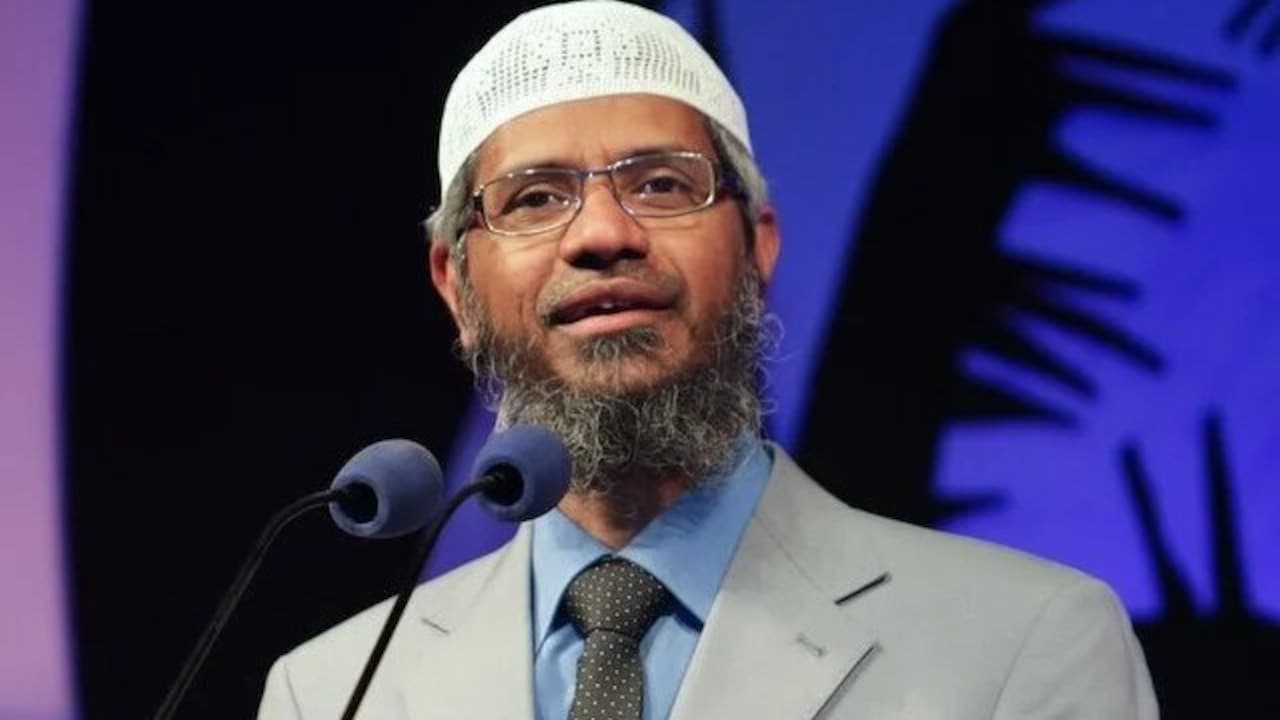
To most of the world, Mariam’s stolen future is an obvious moral tragedy. Yet thousands of miles away, under the bright studio lights of a global broadcast, a booming voice dressed in a dark suit and skullcap stepped up to a microphone to argue that locking Mariam out of school wasn't an injustice at all—it was a triumph of moral protection. For another look on this development, check out the latest coverage from Al Jazeera.
When controversial Indian televangelist Zakir Naik publicly defended the Taliban’s sweeping ban on girls’ secondary and higher education, the reaction wasn't just the usual ripple of social media outrage. It triggered an immediate, fierce diplomatic and scholarly backlash across the Muslim world, drawing sharp condemnations from voices and institutions across three major countries—Pakistan, Saudi Arabia, and Afghanistan’s own neighboring critics, alongside the Organization of Islamic Cooperation.
To understand why a single speech ignited such a firestorm, you have to look past the headlines and step inside the collision between two wildly different visions of faith, power, and human dignity.
The Anatomy of a Defense
Zakir Naik built a massive global following over decades by turning religious debate into a spectator sport. Known for quoting scripture and comparative texts at breakneck speed, his style relies on confident, rapid-fire certainty that leaves little room for nuance.
During a widely circulated address—and subsequent remarks defending the regime in Kabul—Naik addressed the elephant in the room: why the Taliban prohibits girls from attending school beyond the sixth grade. Rather than distancing himself from the policy, he framed the ban as a necessary measure to preserve modesty and prevent "free mixing" between genders. In his telling, if an education system cannot guarantee complete gender segregation and strict adherence to their specific code of dress, shutting the schoolhouse doors entirely is not just acceptable—it is preferable.
Stop and sit with that logic for a second.
It rests on a chilling premise: that a young woman’s mind is an acceptable casualty in the battle to control her physical presence. By framing education as a secondary privilege rather than a fundamental birthright, the argument reduces half of a country's population to a logistical problem. If you cannot build enough separate walls, you simply lock the women inside their homes.
Having spent years covering educational crises across South and Central Asia, I have sat in living rooms where mothers hide tattered biology textbooks beneath floorboards like contraband. I still remember the smell of damp paper and kerosene in a basement room in Peshawar, where exiled Afghan teachers huddled around a single dim bulb, whispering lessons to girls who risked arrest just to learn algebra. When you have seen a teenager weep because she forgot how to solve a quadratic equation she knew by heart two years ago, abstract theological excuses feel like salt rubbed into an open wound.
Why Three Countries Pushed Back
If Naik expected applause from the broader Muslim world, he miscalculated badly. The pushback came swiftly from three distinct fronts, exposing how isolated the Taliban’s position—and Naik’s defense of it—truly is.
First came the thunder from Pakistan, a country with deep, complicated historical ties to Kabul and a massive audience for Naik’s broadcasts. Ironically, Naik’s remarks landed right around the time of his high-profile visit to Pakistan, where he was treated as a state guest. Instead of smooth applause, he walked straight into a buzzsaw of criticism from Pakistani lawmakers, human rights advocates, and prominent religious scholars. In a nation that still remembers the gunshot that nearly killed Malala Yousafzai for demanding the right to go to school, defending a ban on girls' education touched a raw, bleeding nerve. Pakistani commentators and parliamentarians pointed out the glaring hypocrisy: Naik’s own daughter had received a comprehensive modern education, yet he was comfortable endorsing a policy that denied that exact same right to millions of Afghan girls.
Then came the weight of Saudi Arabia—the birthplace of Islam and home to its two holiest cities. Through the Jeddah-based Organization of Islamic Cooperation (OIC) and senior Saudi religious authorities, the kingdom had already spent years dismantling the exact argument Naik was trying to revive. Senior Saudi clerics and official statements have repeatedly declared that the Taliban’s ban violates fundamental Islamic principles, noting that seeking knowledge is an explicit religious obligation for both men and women. When Saudi-backed institutions and scholars reject a policy as un-Islamic, the theological rug is pulled completely out from under anyone claiming to speak on behalf of traditional orthodoxy.
The third wave of condemnation surged from Afghanistan’s own diaspora and regional neighbors, including voices from Iran and exiled Afghan civil society. Even Tehran—hardly a bastion of Western liberalism—publicly criticized Kabul’s ban on female education, pointing out that women in Iran attend universities in massive numbers and serve as doctors, engineers, and professors. Meanwhile, Afghan educators and religious scholars living in exile dismantled Naik’s claims line by line, reminding the world that the very first word revealed in the Quran was Iqra—"Read"—a command given without gender conditions.
| Country / Entity | Core Stance on Girls' Education | Primary Criticism of Naik's Defense |
|---|---|---|
| Pakistan | Constitutional right; hard-won cultural consensus after decades of struggle | Highlighted personal hypocrisy and the devastating toll of extremism on South Asian girls |
| Saudi Arabia (via OIC & Clerics) | Religious duty for both men and women; actively expanding female higher education | Rejected the theological justification, labeling the ban a distortion of Islamic law |
| Regional Critics (Iran & Afghan Diaspora) | Essential for national survival, healthcare, and economic stability | Exposed the practical impossibility of running a society without educated women |
The Metaphor of the Broken Compass
Think of a society’s moral framework like a ship’s compass. When the needle works properly, it points toward human flourishing—toward health, knowledge, justice, and the protection of the vulnerable.
What happens when someone deliberately places a heavy magnet next to that compass? The needle spins wildly, then locks onto a false north. Suddenly, cruelty disguises itself as virtue. Deprivation is renamed "protection." Ignorance is rebranded as "purity."
That magnet is ideological rigidity. When commentators like Zakir Naik defend the Taliban’s edicts from the comfort of air-conditioned studios and five-star hotels, they are holding that magnet against the glass. They are asking millions of listeners to believe that locking a girl out of a chemistry lab is an act of righteousness, while ignoring the catastrophic chain reaction it triggers in the real world.
Consider what happens next when you erase girls from classrooms for five, ten, or twenty years.
You don't just lose poets and painters. You lose female obstetricians. In a society that strictly forbids male doctors from examining female patients, banning girls from medical school is a slow-motion death sentence for mothers and newborns. Every year that the classroom doors stay bolted, maternal mortality rates climb quietly in the dark. Bridges go unbuilt. Farms fail for lack of agricultural scientists. Half of the nation’s brainpower is simply amputated.
UNESCO estimates that Afghanistan is now the only country on Earth where secondary and higher education is strictly forbidden to girls and women. Over 1.4 million girls have been deliberately barred from secondary school since 2021, and if you count those blocked from universities and primary transitions, nearly two and a half million young women are watching their futures evaporate in real time.
The Trap of Performative Certainty
Why do figures like Naik make these arguments in the first place? Part of the answer lies in the economics of modern outrage, and part lies in a deeper psychological trap.
When your entire public persona is built on never backing down, never admitting complexity, and always defending the most hardline interpretation of tradition against perceived "Western" values, empathy becomes a liability. To say, "The Taliban is wrong, and these girls deserve to learn," would require admitting that a self-proclaimed religious regime can commit a profound moral failure. For a populist preacher, nuance doesn't generate viral clips. Defiance does.
It is easy to feel confused—even intimidated—when a charismatic speaker rattles off verses and historical citations at high speed. You might wonder if you are missing some hidden scholarly loophole. You aren't. History is remarkably clear on this point.
Over a thousand years ago, in the city of Fez, Morocco, a Muslim woman named Fatima al-Fihri used her inheritance to found the University of al-Qarawiyyin—widely recognized by historians and UNESCO as the oldest continually operating degree-granting university in the world. During the Golden Age of Islam, women served as scholars, jurists, astronomers, and patrons of learning from Baghdad to Cordoba. The idea that silencing women’s minds is somehow a requirement of faith isn't ancient wisdom; it is a modern political invention born out of tribal insecurity and authoritarian control.
What Survives Behind Closed Doors
Despite the decrees, despite the armed guards at the school gates, and despite the speeches justifying their erasure, the girls of Afghanistan have not surrendered their minds.
Across Kabul, Herat, and Mazar-i-Sharif, an underground network of secret schools has blossomed in basements, kitchens, and behind curtained windows. Courageous women who once lectured at universities now teach physics and literature over encrypted messaging apps, rationing meager mobile data like drops of water in a desert. Teenage girls hide notebooks inside hollowed-out loaves of bread or beneath loose garments when walking down the street, terrified of checkpoints yet unwilling to let their curiosity starve.
Let’s return to Mariam in that quiet courtyard in Kabul.
It is late afternoon now. The shadows have stretched across the flagstones, and the air has turned sharp with the scent of woodsmoke from neighboring chimneys. Inside the back room, away from the street-facing windows, Mariam sits cross-legged on a worn wool rug. Beside her is a battered, secondhand anatomy textbook with missing pages and a faint tea stain on the cover.
She traces a diagram of the human heart with her index finger, whispering the names of the chambers under her breath so quietly that even the walls cannot hear her. A televangelist thousands of miles away may have declared her education unnecessary, and diplomats across three countries may still be arguing over the microphones and headlines.
Mariam does not care about the microphones. She turns the page, picks up her blue ballpoint pen, and keeps reading in the fading light.