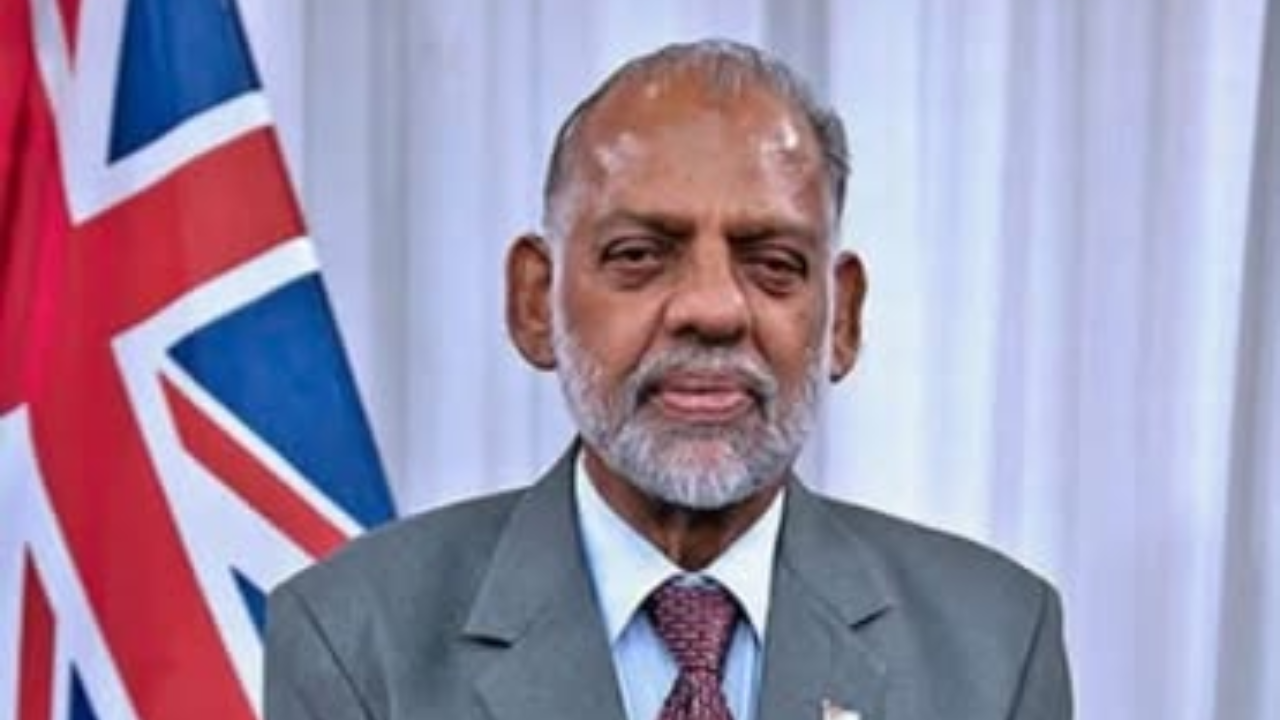
Most news outlets will feed you a sanitized, wire-service obituary about Fiji’s Minister for Employment, Productivity and Industrial Relations passing away in Brisbane at 60. They will list his past union posts, offer generic condolences from regional diplomats, and move on to the next headline.
That coverage misses the entire point.
When a sitting Pacific Island cabinet minister dies on foreign soil during an official visit, you are not looking at a mere biographical footnote. You are looking at an immediate, high-stakes structural rupture in regional labor diplomacy, union politics, and the fragile coalition arithmetic keeping Suva’s government intact. The standard media narrative treats Agni Deo Singh’s passing as a sad pause button. In reality, it is an accelerant for a labor crisis Fiji has been quietly bleeding from for three years.
The Myth of Seamless Institutional Continuity
Mainstream reporting loves the comforting lie that ministries run on autopilot when a leader vanishes. They assume permanent secretaries and deputy ministers simply pick up the clipboard and keep marching.
In Fiji’s industrial relations ecosystem, that assumption is dangerously naive.
Singh was not a technocrat plucked from a corporate boardroom. He spent decades in the trenches as the General Secretary of the Fiji Teachers Union (FTU) before stepping into Sitiveni Rabuka’s coalition cabinet. In Pacific Island politics, institutional memory does not live in filing cabinets or digital databases. It lives in personal relationships, decades-old handshake agreements, and the hard-earned trust of skeptical union bosses.
I have watched regional negotiations implode overnight because a single key mediator left the room. You cannot download forty years of union credibility into a replacement minister’s briefing binder over a weekend. When Singh died in Australia, Suva lost its primary human shock absorber between an impatient, inflation-battered workforce and a cash-strapped coalition government.
The Two-Front War He Left Behind
To understand why the wire-service framing fails, you have to look at the exact dossier sitting on Singh’s desk when he boarded that flight to Brisbane:
- The Great Pacific Brain Drain: Fiji is hemorrhaging skilled and semi-skilled workers to Australia and New Zealand through the Pacific Australia Labour Mobility (PALM) scheme and seasonal worker visas. Local hotels, construction firms, and hospitals cannot keep staff.
- Domestic Wage Stagnation vs. Union Militancy: The very unions Singh used to lead are demanding aggressive minimum wage hikes and cost-of-living adjustments that the Fijian private sector claims will bankrupt small businesses.
Singh’s entire political value rested on his ability to look angry union leaders in the eye and tell them to hold their fire because he was one of them. Whoever Prime Minister Rabuka taps to fill that seat will not have that shield. They will walk straight into an ambush.
Why His Presence in Brisbane Matters More Than the Press Admits
Standard reports gloss over the location of his death—Brisbane, Queensland—as mere geographic trivia. It is anything but.
Brisbane is the operational nerve center for Australia’s Pacific labor pipelines and diaspora networks. When Fiji’s Employment Minister travels to Queensland, he is not there for ceremonial ribbon-cuttings. He is there to manage the most volatile economic lifeline in the South Pacific: remittances versus domestic labor depletion.
Let us look at the hard mechanics of what happens when Fijian workers fly south to Queensland meatworks, farms, and aged-care facilities:
- The Short-Term High: Remittances flow back to Viti Levu and Vanua Levu, propping up household consumption and foreign reserves.
- The Long-Term Rot: Fiji loses its prime working-age demographic—teachers, nurses, mechanics, and hospitality veterans—leaving local industries crippled by chronic understaffing and plummeting productivity.
- The Exploitation Blowback: Reports of wage theft, substandard housing, and visa dependency among Pacific workers in regional Australia have repeatedly threatened to turn the PALM scheme into a diplomatic liability.
Singh was in Australia navigating this exact minefield. By reducing his trip to a passing mention in an obituary, journalists ignore the reality that Fiji’s labor export strategy just lost its chief negotiator mid-mission.
Dismantling the "Unstoppable Remittance" Fallacy
If you ask conventional economists in Suva or Canberra about Fiji’s labor policies, they will recite the same tired orthodoxy: Labor mobility is a win-win engine for Pacific development.
Stop buying that pitch.
Treat a country’s workforce like a raw commodity export, and you hollow out the nation from the inside. I have seen developing economies fall into this exact trap—celebrating record remittance inflows while their domestic schools lack qualified teachers and their hospitals run on skeleton crews.
| Metric | The Official Narrative | The Ground Reality in Fiji |
|---|---|---|
| Worker Migration | "Upskilling and regional integration" | Permanent loss of mid-career professionals |
| Remittances | "Boosts GDP and household resilience" | Fuels local inflation without building domestic capacity |
| Employer Response | "Adapting to global market dynamics" | Importing low-cost foreign labor from Asia to fill local gaps |
| Union Leverage | "Constructive tripartite dialogue" | Fragmented bargaining power and rising wildcat frustration |
Look at row three in that table. That is the dirty secret nobody in polite diplomatic circles wants to discuss. Because Fijian workers are leaving for Australia, Fijian businesses are increasingly lobbying the government for permits to import cheaper labor from Bangladesh, the Philippines, and India to keep resorts and factories running.
Singh was caught directly in the crossfire of this demographic swap. As a career unionist, he had to defend Fijian workers' rights while presiding over a ministry approving foreign work permits to plug holes left by departing Fijians. That contradiction would tear a lesser politician apart. Without him, the friction between the Fiji Commerce and Employers Federation (FCEF) and the Fiji Trades Union Congress (FTUC) will turn ugly fast.
The Coalition Math Nobody Wants to Calculate
Fiji’s governing coalition—a fragile alliance between the People’s Alliance, the National Federation Party (NFP), and SODELPA—survives on razor-thin margins and delicate ethnic and ideological balancing acts.
Agni Deo Singh was a heavyweight figure within the National Federation Party, led by Deputy Prime Minister Biman Prasad. In Fijian politics, cabinet portfolios are not handed out based on a LinkedIn resume. They are carefully calibrated power-sharing tokens.
Losing a senior Indo-Fijian minister from the NFP ranks forces an immediate reshuffle that ripples through the entire cabinet:
- Internal NFP Pressure: Party loyalists will demand the Employment portfolio stay firmly inside NFP hands to maintain their cabinet footprint.
- Union Backlash: If Rabuka hands the ministry to a pro-business technocrat instead of a labor veteran, the FTUC will view it as a declaration of war.
- Medical Scrutiny: A high-profile official dying abroad at 60 inevitably triggers uncomfortable questions across the Pacific about executive stress, healthcare infrastructure, and why senior leaders routinely seek or require medical care in Brisbane and Auckland rather than Suva.
To be clear, I am not suggesting anyone could have prevented a sudden medical emergency. Heart attacks and acute health crises do not check political calendars. The flaw is building an entire governance model around a handful of aging political patriarchs without cultivating a deep bench of second-tier negotiators capable of surviving a sudden shock.
What Actually Happens Next in Suva
Forget the polite mourning period. Once the funeral rites conclude and the official tributes fade from the front pages of the Fiji Times and Fiji Sun, three immediate pressure points will test the government’s survival instincts.
1. The Minimum Wage Showdown
Fiji’s staggered minimum wage increases have already pushed small retailers and agricultural operators to the brink. Unions argue the increases barely cover basic groceries in Suva and Lautoka. Without Singh acting as the trusted intermediary who can convince union executives to accept phased compromises, expect stalled wage councils and louder threats of industrial action before the end of the fiscal year.
2. The Teacher Exodus Crisis
Singh knew the education sector better than anyone in cabinet. Fiji’s classrooms have been hammered by resignations as experienced teachers take up offers in Australia and New Zealand or pivot out of the profession entirely. Whoever inherits his portfolio will face immediate demands to fix public sector retention without blowing up a national budget already strained by public debt.
3. Bilateral Friction Over Worker Welfare
Canberra relies heavily on Pacific labor to keep its agricultural and hospitality sectors afloat, especially as geopolitical competition in the Pacific intensifies. If Fiji’s new Employment Minister lacks the stature to push back against Australian employers or demand tighter oversight of recruitment agents, worker exploitation scandals will multiply—and Suva will take the domestic political blame.
Stop Reading Obituaries Like They Are Epilogues
The biggest mistake observers make in regional politics is treating a leader’s death as the end of a chapter. In fragile labor markets and coalition governments, it is the opening bell of a succession fight.
Agni Deo Singh spent his life navigating the brutal tension between protecting workers and keeping an island economy solvent. He held together a fragile truce that kept strikes off the streets while Fiji tried to recover from pandemic economic devastation and mass migration.
That truce died with him in Brisbane. Every employer, union boss, and cabinet minister in Suva knows it—even if they are too polite to say it out loud this week.


