The clink of a crystal glass against a bottle of mediocre cabernet. That is usually how alliances are saved.
Not in the sterile, fluorescent-lit war rooms where generals point lasers at maps of the Arctic, and not in the mahogany-paneled chambers where senators read prepared remarks into C-SPAN microphones. Alliances—the real, load-bearing kind that keep two nations from misunderstanding each other during a midnight crisis—are built over lukewarm coffee in hotel ballrooms, at think tank panels in Washington, and in the quiet corners of embassy receptions where a Canadian colonel and an American undersecretary can finally take off their badges and tell the truth.
Which is why a seemingly bureaucratic footnote out of the Pentagon should make anyone who cares about North American security pause, set down their coffee, and pay very close attention.
Recently, a U.S. senator stepped up to clarify the nature of quiet, newly imposed Pentagon restrictions regarding Canada. To hear the official framing, it is practically a non-story. Nothing to see here, folks. The core defense architecture—NORAD, the shared radar screens watching the northern skies, the joint patrols—remains untouched. According to the senator, these new Pentagon restrictions on Canada focus primarily on think tanks and social events.
Just think tanks. Just social events.
On paper, it sounds like a belt-tightening exercise, the kind of administrative pruning a mid-level comptroller signs off on at 4:45 p.m. on a Friday before a long weekend. Who misses a reception? Who mourns a cancelled panel discussion on supply chain resilience at a policy institute off Dupont Circle?
If you have ever worked in the trenches of international diplomacy or defense policy, you know the answer. Everybody does. And the silence that follows is deafening.
The Architecture of Trust
Let me take you inside one of those rooms, because I have stood in them, nursing a club soda with lime while watching history get negotiated in whispers.
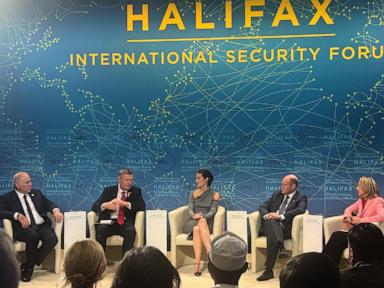
Imagine a Tuesday evening in November in downtown Washington. Outside, a cold rain sleets against the windows of a nondescript office building a few blocks from the White House. Inside, eighty people are packed into a room meant for fifty. Half are Americans—mid-level Pentagon planners, congressional staffers, intelligence analysts with dark circles under their eyes. The other half are Canadians—diplomats from the embassy on Pennsylvania Avenue, visiting scholars from Ottawa, military attachés in crisp uniforms.
This is a think tank reception. Technically, it is a "social event."
Watch what happens near the cheese platter. A Canadian defense official, let’s call him Marc—a hypothetical composite of a dozen real civil servants I have met over the years—corners an American Pentagon desk officer we’ll call Sarah. In formal bilateral meetings, Marc and Sarah are bound by talking points vetted by three layers of bureaucracy. They cannot deviate. They cannot speculate. If Marc admits that Ottawa’s procurement timeline for new Arctic patrol ships is slipping by eighteen months, it becomes an official diplomatic admission.
So in the formal meeting, Marc smiles and says, "We remain fully committed to our shared timeline."
But here, next to the brie and crackers, with the hum of sixty other conversations masking their voices, Marc leans in. "Sarah," he says quietly, "the shipyard in Halifax is hitting a steel bottleneck. Off the record, you need to tell your boss not to count on that hull before next autumn."
Sarah nods. She doesn't take out a notebook. She doesn't leak it to the press. She simply adjusts her mental model, goes back to the Pentagon the next morning, and quietly shifts a contingency plan so that a gap in Arctic surveillance doesn't accidentally open up.
That is not a party. That is the nervous system of the longest undefended border in the world.
When the Pentagon restricts its personnel from attending think tank forums and social events involving Canadian counterparts, it is not merely cutting out the hors d'oeuvres. It is severing the informal capillaries through which unvarnished truth flows.
Why It Happened Now
To understand why the Pentagon would pull back from these spaces—and why a U.S. senator felt compelled to publicly downplay the move as limited to policy institutes and receptions—you have to look at the broader friction humming beneath the surface of U.S.-Canada relations.
For years, Washington has grown increasingly impatient with Ottawa’s defense spending. NATO members agreed long ago to spend at least two percent of their gross domestic product on defense. Canada, shielded for decades by geography and the comfortable assumption that the United States would always defend North America out of sheer self-interest, has consistently lagged behind, hovering closer to 1.3 or 1.4 percent.
Add to that the shifting political winds in Washington—a growing skepticism toward multilateral forums, a deep suspicion of the foreign policy establishment, and a desire within corners of the Defense Department to rein in what some political appointees view as "unproductive" engagement with outside think tanks. In the current climate, think tanks themselves have become political lightning rods, often viewed by populist lawmakers as echo chambers for an entrenched elite rather than vital testing grounds for policy.
So, a directive goes out. Trim the fat. Pull Pentagon officials back from external panels, bilateral mixers, and think tank roundtables with Canadian participants. Keep interactions strictly strictly operational, strictly official, strictly on the clock.
When word of the restrictions leaked out, alarms began ringing in Ottawa and across Washington’s foreign policy circles. Was the United States downgrading its oldest, closest security partnership? Was NORAD in trouble?
Enter the senator, stepping in to calm the waters. The restrictions, the lawmaker explained, aren't a rupture in military cooperation. They are narrow. They target the periphery: the think tanks, the dinners, the social gatherings.
It was meant to be reassuring. Instead, it revealed a profound misunderstanding of how power actually works.
The Illusion of "Purely Operational"
There is a seductive myth in government that you can separate the "hard" work of defense from the "soft" work of relationship-building. You see it in corporate America all the time, too. A new CEO comes in, looks at the travel and entertainment budget, sees fifty thousand dollars spent on industry conferences and client dinners, and slashes it to zero. We don't need schmoozing, the logic goes. We have Zoom, and we have contracts.
For six months, the spreadsheet looks fantastic. Margins are up. Expenses are down.
Then a supply chain crisis hits. Suddenly, your company isn't calling a friend who will pull your order to the front of the line at midnight; you are calling a stranger who reads you the fine print of the contract and puts you on hold.
Geopolitics operates by the exact same human rules, only the stakes aren't quarterly earnings—they are sovereignty, intelligence sharing, and continental defense.
Think of the U.S.-Canada alliance like an old, load-bearing brick wall. The formal treaties—NORAD, NATO, the Five Eyes intelligence pact—are the bricks. They are heavy, rigid, and visible to everyone. You can point to them in a press release.
Think tanks, academic conferences, and diplomatic receptions are the mortar.
Mortar looks unimpressive. Compared to a solid slab of granite or fired clay, it seems soft, crumbly, almost decorative. If you want to save money, you might convince yourself you don't need much of it. Stack the bricks directly on top of one another, and the wall still stands. Until the ground shakes. Without the mortar to absorb the shock and distribute the weight, rigid bricks grind against each other until they crack.
What Happens in the Vacuum
Consider what happens next when an American defense official is told they cannot speak on a panel at the Wilson Center alongside a Canadian diplomat, or cannot attend a reception hosted by the Canadian embassy to celebrate a joint Arctic research initiative.
First, the narrative vacuum opens up.
Think tanks are not just clubs for policy wonks; they are the intellectual clearinghouses where journalists, congressional aides, and foreign observers go to figure out what a government is actually thinking. When U.S. defense officials vacate those rooms, the conversation doesn't stop. It simply continues without the American perspective in the chair—or worse, it gets filled with speculation about why the Americans didn't show up.
Second, a chill settles over the mid-level ranks.
I remember talking to a former Pentagon official who spent twenty years managing European alliances. He told me that the hardest thing to recover once a restriction like this is put in place isn't the budget—it's the permission structure. Even if a restriction technically allows a meeting under certain exemptions, bureaucratic fear takes over. A young major or a civilian desk officer looks at the guidance, sees that Canadian think tank events are frowned upon, and thinks, Why risk my career explaining an exception to the Inspector General? So they just say no. They stay at their desk. They send an email instead of having a conversation.
And emails are where nuance goes to die.
In an email, a question about radar modernization in the High Arctic sounds like an accusation. In a hallway outside a seminar room, over two cups of bad coffee, the exact same question sounds like a shared problem two neighbors are trying to solve together.
The Invisible Stakes of the North
We are living through a moment when North America can least afford a communication freeze between Washington and Ottawa.
Look at a globe from the top down—not the flat Mercator projection hanging in elementary school classrooms, which distorts the poles, but a true polar view. Look at the space between Russia and North America. It isn't an ocean away. It is a narrow, melting corridor across the Arctic Circle.
As sea ice retreats, new shipping lanes are opening up. Russian icebreakers are patrolling waters that were frozen solid a generation ago. Chinese research vessels—ostensibly studying climate change, though defense analysts watch their dual-use capabilities with intense scrutiny—are mapping the seabed of the Canadian archipelago. Hypersonic missiles, if they are ever launched toward Chicago or New York, will not fly across the Atlantic; they will scream straight over the North Pole, directly through Canadian airspace.
To defend the American homeland, the Pentagon literally cannot do it without Canadian territory, Canadian radar stations, and Canadian cooperation.
And right now, Ottawa is facing monumental, politically agonizing decisions about how much money to spend on upgrading those northern defenses, how to modernize NORAD, and how to balance domestic economic pressures against Washington’s demands for greater burden-sharing.
To push those decisions through a skeptical Canadian parliament, Ottawa’s defense leaders need allies in Washington who understand the political tightrope they are walking. And Washington’s planners need to understand the real constraints Canada faces—not just the sanitized talking points delivered at a podium, but the raw, unfiltered reality of Canadian politics, shipbuilding capacity, and public sentiment.
Where do you learn those things? Not from a classified cable. You learn them at a think tank roundtable in Ottawa. You learn them over dinner in Washington. You learn them when the microphones are off.
The Trap of Performative Toughness
There is a temptation in modern politics to mistake friction for strength.
When politicians or defense officials clamp down on "social events" and "think tanks," it plays well to a certain cynical instinct. It projects an image of no-nonsense austerity. We aren't here to sip wine with diplomats; we're here to be warfighters. It feeds into a broader cultural frustration with the polished, insular world of Washington insiders.
I get that frustration. Truly, I do. Anyone who has spent enough time inside the Beltway has seen conferences that were little more than vanity exercises, panels full of self-congratulatory platitudes that changed nothing in the real world. There is plenty of waste in the think tank ecosystem, and plenty of rubber-chicken dinners that could have been a three-sentence memo.
If the Pentagon were simply auditing travel budgets to cut down on boondoggles, nobody would blink.
But blanket restrictions aimed specifically at interactions involving a singular, vital ally are not about saving taxpayers money on cocktail shrimp. They are a diplomatic signal. Whether intentional or not, singling out Canadian-focused forums sends a unmistakable message north of the border: You are no longer in the inner circle. You are a file to be managed, not a partner to be consulted.
History is painfully clear on what happens when great powers take their closest neighbors for granted. The friction rarely explodes into open hostility overnight. Instead, it curdles into quiet resentment. Canadian officials stop volunteering early warnings. Joint working groups move at half speed. Domestic politicians in Ottawa find it easier—and more popular—to resist American requests rather than spend political capital to fulfill them.
By the time someone in Washington notices that the gears are grinding, the rust has already set in deep.
A Chair Left Empty
The U.S. senator who stepped forward to clarify the Pentagon’s stance was trying to draw a neat, reassuring boundary around the story. Don't worry, the message went. The tanks are still rolling. The jets are still scrambling. It’s only the think tanks and the social events.
Perhaps the senator genuinely believes that line holds. It is an easy mistake to make if you view diplomacy as a series of grand treaties rather than a daily, fragile habit of human trust.
But diplomacy is not a machine that runs on autopilot once the contracts are signed. It is a living conversation. It requires proximity, candor, and the unscripted moments where two people from different flags realize they are worried about the exact same thing.
Somewhere in Washington next week, a panel will convene to discuss the future of Arctic defense. A nameplate will be printed on heavy cardstock. A microphone will be tested. A glass of water will be set on the table.
And across from the Canadian official who flew down from Ottawa to speak honestly about the threats gathering at the top of the world, there will be an empty chair where an American counterpart used to sit.