Silence.
In the heavy, oak-paneled chamber of the Michigan House of Representatives, right before a historic gavel strikes, the air feels thicker than usual. You can smell the faint, metallic tang of old radiator heat and the sharp cedar of freshly sharpened pencils. For decades, the people holding that wooden mallet looked, sounded, and lived remarkably similar lives, carrying inherited blueprints of how power in the Midwest was supposed to operate.
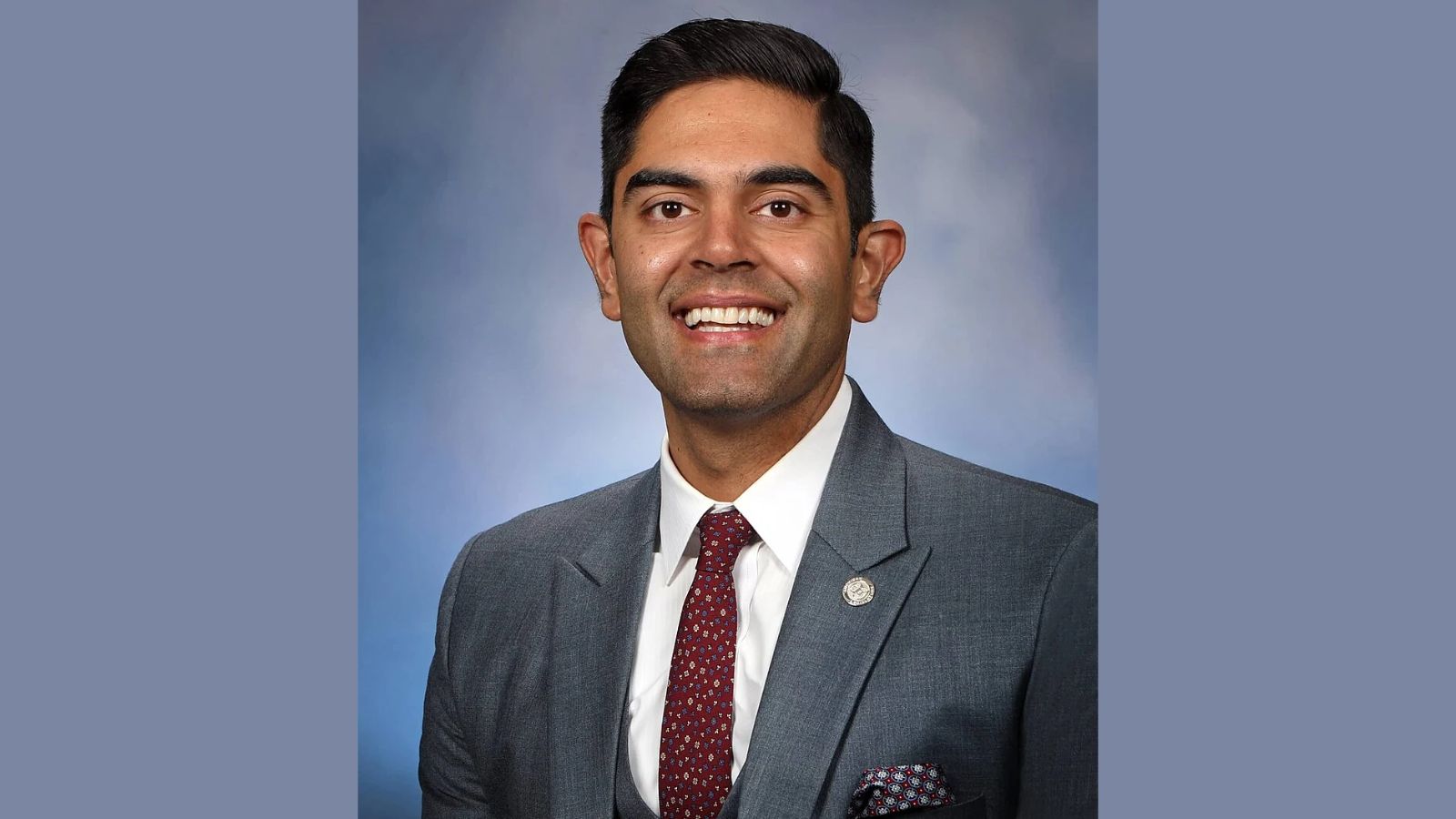
Then walked in Ranjeev Puri.
When the Canton Democrat stepped forward to claim the role of the first Indian-American Speaker of the Michigan House, the standard headlines treated it like a tidy box checked on a diversity checklist. A press release here. A congratulatory quote there. Cold facts stacked neatly like cinderblocks, completely missing the quiet earthquake happening beneath the floorboards of the State Capitol.
Because history rarely announces itself with fireworks. Usually, it arrives disguised as a guy who used to build spreadsheets for corporate supply chains, standing at a podium in Lansing, carrying the invisible weight of millions of people who never saw their last names etched onto a brass nameplate outside a government office.
The Weight of an Empty Chair
To understand what happened on that chamber floor, you have to step out of the marble hallways of Lansing and drive forty miles east to Wayne County.
Picture a hypothetical family—let’s call them the Sharmas—sitting around a kitchen table in Canton, Michigan, circa 1998. The smell of cardamom tea hangs in the air, mixing with the cold draft creeping under the back door during a brutal January freeze. Rajesh and Meera came to Michigan with two suitcases, an engineering degree, and an unspoken rule that immigrants survive by keeping their heads down. Pay your taxes. Fix your lawn. Send your kids to good public schools. Never make noise.
For decades, politics was something that happened to families like the Sharmas, never by them. When property taxes spiked, or when local roads cracked open like dry riverbeds, or when school funding formulas shifted in ways nobody could explain, the conversation at that kitchen table always ended with a shrug. Who in Lansing knew what Canton actually looked like? Who understood the quiet anxiety of building a life in a place where your heritage was treated like an exotic footnote rather than an American foundation?
That invisible distance between the governed and the governors is the real problem in modern democracy. Most people assume political representation is just about passing bills. They think a lawmaker is merely a vending machine: put votes in, get policies out.
They have it completely backward.
Representation is actually about translation. When a crisis hits—whether it is a global supply chain collapse, an automotive industry shift toward electric vehicles, or an aging water infrastructure—the solutions crafted in the Capitol depend entirely on the lived experiences of the people holding the gavel. If everyone at the top shares the exact same blind spots, entire communities fall straight through the cracks.
From the Assembly Line to the Floor
Ranjeev Puri did not grow up memorizing parliamentary procedure at elite prep schools. Born in Wisconsin to Indian immigrant parents, his early education in power came from watching how things actually get built—and how easily they break.
Before he ever ran for the 24th House District, Puri lived in the trenches of the private sector. He worked in corporate finance and operations, spending years dissecting how massive organizations move money, manage risk, and survive economic shocks. Think of the Michigan legislature not as a debating society, but as a complex, aging factory floor. For years, partisan gridlock jammed the gears, leaving urgent maintenance undone while politicians argued over who owned the wrenches.
Puri arrived in Lansing in 2021 with an operator’s eye. He didn't crave the television cameras; he craved the mechanics. During his tenure, particularly as Majority Whip, he became the guy behind the curtain who actually counted the votes, listened to the holdouts, and figured out how to get fragile coalitions across the finish line without shattering them.
Consider what happens when a legislature loses its ability to function. Bills stall. Budgets miss deadlines. Local townships freeze hiring because they don't know if state revenue sharing will arrive on time. I remember sitting in a crowded township hall in southeast Michigan a few winters ago, watching local fire chiefs and school superintendents plead with state officials over delayed infrastructure grants. The frustration in that room wasn't partisan; it was existential. People were tired of theatrical outrage. They just wanted the lights to stay on and the bridges not to crumble.
That exhaustion is the exact soil from which Puri’s rise grew.
What the Speaker Actually Controls
If you ask the average voter what the Speaker of the House does, you will usually get a blank stare or a vague guess about giving speeches. In reality, the Speaker is the chief traffic controller of state democracy.
Imagine a massive railroad switchyard during a snowstorm. Dozens of trains—representing tax cuts, reproductive rights, environmental protections, education funding, and labor laws—are barreling toward the station at once. The Speaker stands in the control tower with hands on the levers. They decide which tracks stay open, which trains get routed onto a siding to rust, and which ones roar straight into law.
Specifically, the Speaker of the Michigan House holds three massive levers of influence:
- Committee Assignments: The Speaker decides who sits on the powerful committees that vet bills before the public ever gets to vote on them. Put the wrong chair in charge of Appropriations, and critical funding dies in the dark.
- The Legislative Calendar: No bill reaches the House floor for a final vote unless the Speaker allows it onto the schedule. Silence from the rostrum is a quiet veto.
- Budget Negotiations: Alongside the Senate Majority Leader and the Governor, the Speaker sits in the locked rooms where tens of billions of taxpayer dollars are carved up and distributed across Michigan’s eighty-three counties.
When Ranjeev Puri stepped into that control tower, the significance stretched far beyond biographical trivia. As the first Indian-American—and first South Asian—to hold the gavel in Michigan’s history, he brought an entirely different sensory memory to those locked rooms.
He knows what it feels like to translate complex American systems for immigrant parents. He understands the economic pulse of places like Canton, Plymouth, and Northville—fast-growing, fiercely diverse suburbs that look nothing like the monochrome political maps of the twentieth century. And having worked inside the auto-adjacent corporate world, he grasps the terrifying speed at which Michigan’s core manufacturing economy is being forced to reinvent itself.
The Invisible Stakes of the Gavel
Skeptics will argue that identity doesn't change the math of politics. And honestly, there is truth in that doubt. A historic title does not magically erase a razor-thin partisan margin, nor does it make negotiating a multi-billion-dollar state budget any less brutal. In fact, taking the gavel in a fiercely divided state like Michigan is a bit like being handed the captain’s hat on a ship sailing straight into a hurricane. Every decision alienates someone. Every compromise feels like a betrayal to the loudest voices on the fringes.
Yet history proves that who holds the gavel alters the gravitational pull of a room.
Look back at the long arc of Michigan’s political evolution. For generations, power in Lansing was tightly held by a narrow slice of the population, reflecting an era when the state’s economy relied on predictable assembly-line rhythms and rigid social hierarchies. As Michigan changed—welcoming waves of engineers, doctors, small business owners, and factory workers from across the globe—the Capitol lagged decades behind reality.
When someone from an underrepresented background finally breaks through that ceiling, two subtle shifts occur immediately.
First, the agenda widens. Issues that were once dismissed as niche concerns—language access in healthcare, equitable small business lending, protection against hate crimes, culturally competent school curricula—suddenly sit at the center of the table because the person setting the table recognizes them as everyday realities.
Second, the psychological barrier cracks for everyone watching from the outside.
Let’s return to that hypothetical kitchen table in Canton, twenty-eight years later. The kids who grew up drinking cardamom tea while doing their algebra homework now have children of their own. When they turn on the local evening news and see Ranjeev Puri standing behind the Speaker’s rostrum, gavel in hand, the unspoken rule about keeping your head down quietly expires.
Beyond the First
There is a dangerous trap in celebrating "firsts." Too often, the public applauds the milestone, takes a commemorative photo, and assumes the work is finished.
Puri himself has consistently framed his ascent not as a victory lap, but as an obligation. Being the first means nothing if the door slams shut behind you. The real test of his speakership isn't written in the press releases celebrating his election; it will be written in the unglamorous, grinding work of legislative sessions over the coming years.
Can he keep a fractious caucus united when the inevitable storms hit? Can he bridge the widening cultural and economic canyon between Michigan’s booming suburban corridors, its struggling urban centers, and its rural northern counties? Can he prove that an operator’s mindset—focused on execution over spectacle—can actually survive the meat grinder of modern partisan warfare?
Nobody knows the answers yet. Politics is messy, unpredictable, and unforgiving. Even the sharpest blueprints get torn up when unexpected crises roll across the state line.
Still, something irreversible happened when that wooden gavel came down in Lansing. The brass nameplate outside the Speaker’s office carries a name that thousands of Michigan families recognize from their own family trees, their own neighborhood grocery stores, their own quiet struggles to belong in a place they helped build.
In the heavy oak silence of the House chamber, the echo of that strike sounded less like an ending, and far more like a door swinging wide open.