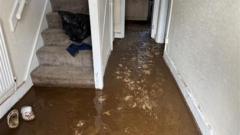
The political shockwaves following the catastrophic quarry blast flooding have finally reached the highest office, with the first minister demanding immediate answers from operators and local authorities. Communities shattered by sudden inundations are left picking up the waterlogged pieces of their lives while bureaucrats scramble for cover. When a routine industrial operation compromises the safety of surrounding residential areas, the public deserves more than closed-door inquiries and polite expressions of concern. They deserve accountability, transparency, and a fundamental overhaul of how heavy extraction sites are monitored.
Operating heavy machinery and managing controlled explosions near populated civilian zones requires a terrifying margin of error. That margin evaporated weeks ago when heavy rainfall combined with compromised quarry topography, sending millions of gallons of turbid, debris-laden water cascading directly into adjacent neighborhoods. Basements were submerged within minutes. Structural foundations were compromised. Vehicles were tossed like plastic toys.
Journalists have spent decades covering industrial accidents, and a recurring pattern always emerges. Companies push the boundaries of operational permits, local watchdogs are underfunded or toothless, and citizens bear the brunt of the fallout. This disaster is not an unpredictable act of God. It is the predictable consequence of regulatory complacency.
The Anatomy of an Industrial Catastrophe
To understand how a quarry turns into a lethal hydraulic threat, you have to examine the engineering mechanics. Extraction sites rely on complex drainage networks, retention ponds, and managed water tables. When mining operations blast through rock faces, they alter subterranean hydrology. Natural aquifers shift. Runoff patterns change overnight.
Local residents warned the council months before the disaster occurred. Heavy trucks rumbled past cracked foundations daily, and the sound of routine blasting rattled window panes with increasing ferocity. More importantly, residents noticed water pooling in areas where it had never pooled before. They filed complaints. They sent emails. They attended local government meetings. Their warnings were filed away under administrative indifference.
When the blast occurred on that fateful morning, it was not just the sound that terrified locals. It was the immediate rumble of water following the shockwave. The explosion fractured a natural retaining barrier that had kept the local water table in check for generations. Without that barrier, the accumulated rainwater inside the perimeter breached the walls and surged downhill with terrifying momentum.
Regulatory Blind Spots and Corporate Shielding
Industry defenders are quick to point out that weather events have grown increasingly erratic. Climate anomalies are real, but they serve as a convenient shield for corporate negligence. Blaming the weather lets operators off the hook for failing to maintain adequate surge infrastructure.
The regulatory framework governing quarries in the region is antiquated. Oversight bodies rely heavily on self-reporting. Operators submit environmental impact assessments and safety logs on fixed schedules, often with minimal independent verification from state inspectors. If an extraction company cuts corners on drainage maintenance to protect profit margins, the regulatory agency might not notice until the mud is already knee-deep in living rooms.
Furthermore, insurance claims and liability battles are already stalling relief efforts. Residents forced out of their homes face a bureaucratic labyrinth. Insurance adjusters argue over whether the destruction was caused by a flood or an industrial accident. Homeowners policies frequently exclude standard flood damage, leaving victims caught in a cruel semantic trap where the mining company blames the storm and the insurer blames the blast.
The Human Cost Behind the Headlines
Numbers and bureaucratic reports sanitize the raw trauma experienced by families who lost everything. One local homeowner, whose family has lived in the valley for three generations, watched their ancestral home fill with water in less than twenty minutes. The family dog was rescued at the last second, but family heirlooms, photo albums, and the tangible history of a lifetime were destroyed.
Psychological trauma lingers long after the water recedes. Every time it rains now, anxiety grips the neighborhood. Residents sit by their windows watching the storm drains, listening for the distant rumble of the quarry. Trust in local institutions has completely collapsed. When the first minister arrived in a convoy of sleek vehicles to survey the damage, the reception was frostier than the floodwaters. Handshakes and sympathetic nods do not rebuild ruined walls.
Local businesses are suffering too. A nearby automotive repair shop lost thousands of dollars in diagnostic equipment and customer vehicles. The owner does not know if he will survive the winter, letokines and legal fees mounting by the day. The economic shockwave ripples outward, hitting every corner of the local economy.
Breaking the Cycle of Impunity
Demanding answers is a necessary first step, but political theater will not fix a broken system. Real reform requires structural changes to how industrial licenses are granted and monitored.
First, independent environmental watchdogs must possess real enforcement power. Fines for safety violations need to scale with corporate revenue, making negligence financially unviable. Second, mandatory setback zones must be expanded to ensure residential areas are never placed within striking distance of catastrophic hydrological failures. Third, emergency response protocols for industrial zones need direct lines of communication that bypass municipal red tape.
The first minister's intervention has put operators on notice, but history suggests that public outrage fades once the cameras leave. Ensuring that this disaster remains front and center until justice is served falls on relentless investigative journalism and an unyielding local community. The water has drained away, but the mud of accountability remains to be cleared.