A team of Chinese researchers just proved that quantum tech isn't just a lab experiment anymore. It's actually outperforming classical AI in a real-world scenario. Forget the hype about quantum supremacy from five years ago. That was mostly about solving math puzzles that had zero use for anyone. This is different. This is about practical utility.
Most people think quantum computers are decades away from doing anything useful. They're wrong. A team led by Pan Jianwei, often called the "Father of Quantum" in China, used the Jiuzhang quantum processor to tackle a problem that makes standard artificial intelligence sweat. They focused on graph theory—basically the study of how things connect, like social networks or protein chains. The quantum system didn't just win. It destroyed the competition. Don't forget to check out our recent post on this related article.
The End of the Classical Monopoly on Intelligence
For years, we’ve relied on GPUs and specialized AI chips to handle massive datasets. We assumed that if we just threw more compute at a problem, classical silicon would eventually solve it. That's a mistake. Some problems are naturally "quantum-shaped." When you try to force those problems into a classical AI model, you waste an incredible amount of energy and time.
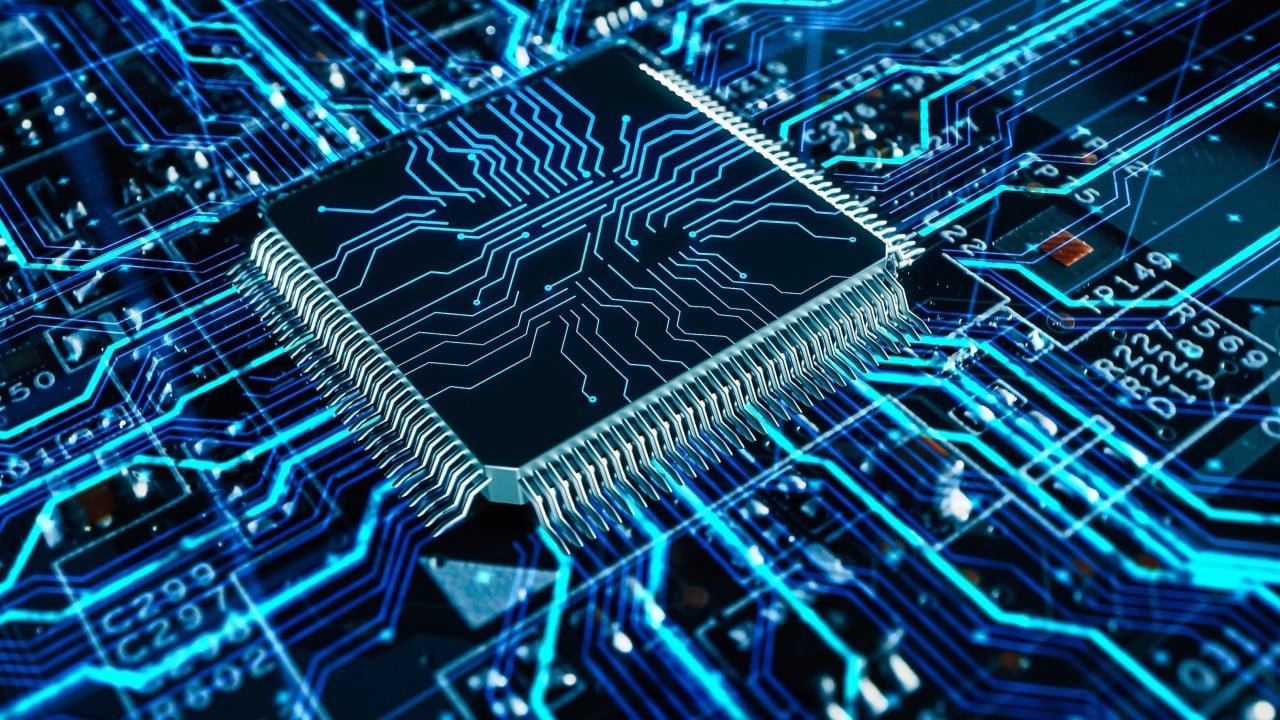
The Chinese team used a process called Gaussian Boson Sampling (GBS). Don't let the name bore you. It’s a way of using light particles—photons—to simulate complex networks. In their latest experiment, they applied this to a task involving "maximal cliques" in graphs. A clique is just a group where every member is connected to every other member. Finding the biggest one in a giant, messy dataset is a nightmare for traditional computers. It’s what computer scientists call NP-hard. To read more about the background here, The Verge offers an in-depth breakdown.
Standard AI attempts this using heuristic searches. It guesses, checks, and refines. It’s slow. The Jiuzhang system, however, uses the inherent properties of quantum mechanics to "see" the answer almost instantly. We're talking about a speedup that isn't just a few percentage points. It’s orders of magnitude faster.
Why This Specific Task Actually Matters
You might wonder why finding a "clique" in a graph is a big deal. It sounds like high school drama. It isn't. This specific math problem is the backbone of how we design new drugs. When scientists look at how a molecule binds to a protein, they're looking for cliques. When a bank looks for fraud patterns across millions of transactions, they're looking for cliques.
The Chinese researchers didn't just run a simulation. They applied this to a practical problem in chemistry. They used the quantum system to identify molecular structures that would take a classical supercomputer months to find. The quantum processor did it in seconds.
This is where the "disruption" comes in. If you're a pharmaceutical company, you don't care about the philosophy of quantum mechanics. You care about time-to-market. If a quantum-enhanced AI can shave two years off your R&D cycle, the classical AI you’re using right now is suddenly a liability. It’s obsolete.
Quantum Enhanced AI is the Real Winner
It’s a mistake to think of this as Quantum vs. AI. That’s a false choice. The future is Quantum-Enhanced AI. The Chinese team showed that by using the quantum processor as a "subroutine"—a specific tool for the hardest parts of a calculation—the overall AI system becomes unstoppable.
Think of it like a hybrid car. The electric motor handles the stop-and-go city driving where it's most efficient, while the gas engine takes over for the long hauls. In this scenario, the quantum processor handles the complex, high-dimensional probability maps, and the classical AI handles the data management and final output.
I’ve seen plenty of "breakthroughs" that never leave the university basement. This feels different because the researchers focused on the bottleneck. AI's biggest bottleneck right now is the "curse of dimensionality." As you add more variables, the computational cost grows exponentially. Quantum tech handles high dimensions natively. It's built for it.
The Hardware Gap is Closing Faster Than You Think
People like to point out that quantum computers are finicky. They need extreme cold. They’re prone to errors. That’s all true, but it’s becoming less relevant. The Jiuzhang system uses photons at room temperature for much of its operation. While it still requires sophisticated setups, it isn't the giant, shivering fridge that IBM or Google often showcases.
The Chinese team is also getting better at error mitigation. They aren't waiting for a "perfect" quantum computer. They're using "noisy" intermediate-scale quantum (NISQ) devices and finding ways to get accurate results anyway. It’s scrappy. It’s practical. And it’s working.
If you look at the data from the University of Science and Technology of China (USTC), the precision of these photonic systems has improved by orders of magnitude in just three years. They've moved from "look what we can do" to "look what we can solve."
Stop Waiting for the Future
If you’re waiting for a quantum computer to sit on your desk before you pay attention, you’re going to lose. The disruption is happening in the cloud. Companies are already beginning to integrate quantum sampling into their machine learning pipelines.
The Chinese team’s success proves that the hardware is ready for specific, high-value tasks. We’re moving into an era where "classical-only" companies will find themselves unable to compete on speed or accuracy. You don't need a quantum computer; you need a quantum strategy.
Start by identifying the graph-based problems in your own data. Are you doing supply chain optimization? Are you modeling complex social interactions? Are you doing genomic sequencing? These are the areas where quantum tech will eat AI's lunch first.
Don't get distracted by the hardware wars between the US and China. Focus on the math. The math says that for certain tasks, the era of classical dominance ended this year. You should be looking at Python libraries like PennyLane or Qiskit today to understand how to bridge your existing AI models with quantum backends. The code isn't as scary as the physics.
Identify your most computationally expensive "search and find" tasks. If those tasks involve high-dimensional data or complex networks, start looking for quantum-sampling alternatives. The bridge between classical AI and quantum utility has been built. You just have to walk across it.