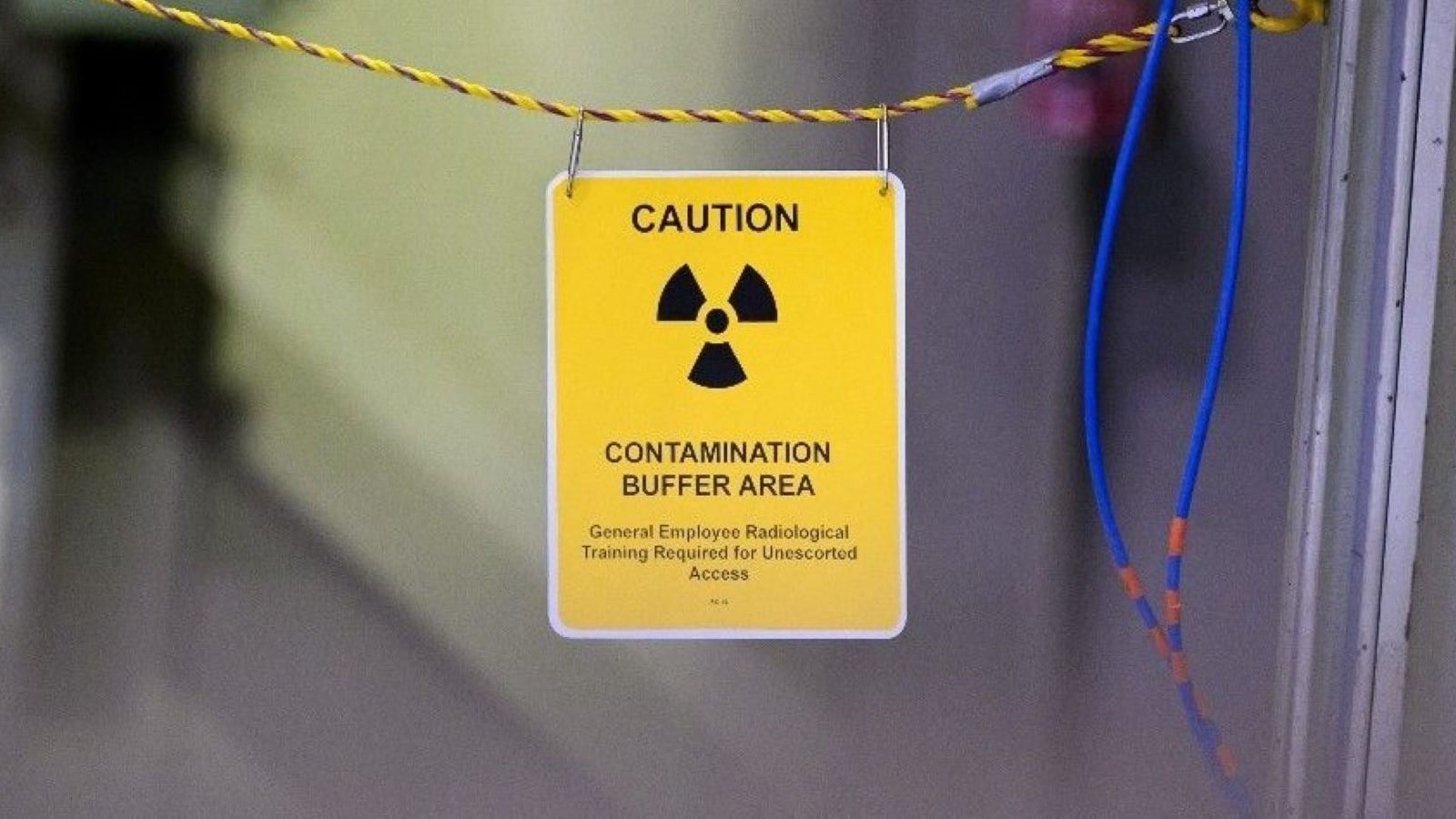
The nuclear legacy of the Marshall Islands represents an unresolved failure of intergenerational risk transfer and accounting. Between 1946 and 1958, the United States conducted 67 nuclear weapons tests in the Republic of the Marshall Islands, yielding an estimated equivalent of 7,200 Hiroshima bombs. Decades after the cessation of testing, the structural mechanisms for remediation, compensation, and health infrastructure remain profoundly misaligned with the actualized damages. Recent interventions by the United Nations Human Rights Council underscore a core systemic truth: the financial and institutional settlements of the past failed to internalize the long-tail costs of radiological contamination.
To understand why standard diplomatic and financial resolutions continue to break down, one must deconstruct the architecture of the original agreements, the friction points in institutional execution, and the economic reality of residual radiological hazard management.
The Three Structural Failures of the Compact Settlement
The legal and financial relationship between Washington and Majuro is governed primarily by the Compact of Free Association, alongside a subsidiary agreement concerning the Nuclear Claims Tribunal. This framework suffers from three distinct structural flaws that guarantee under-compensation and ongoing public health crises.
1. The Underestimation Vector of the Nuclear Claims Tribunal
The Nuclear Claims Tribunal adjudicated more than 2.3 billion dollars in personal injury and property damage claims. However, the initial trust fund established to pay these judgments was capitalized at approximately 150 million dollars. This created an immediate asset-liability mismatch of catastrophic proportions.
[Actual Assessed Damages: ~$2.3B] >>> [Capitalized Trust Fund: ~$150M]
Because the fund relied on investment yields rather than guaranteed principal injections, and because the scale of claims vastly exceeded initial actuarial projections, the Tribunal was forced to issue prorated awards. Claimants routinely received fractions of a cent on the dollar. The structural error lay in treating a permanent, compounding biological and environmental remediation cost as a finite, closed-end liability.
2. Information Asymmetry and Classified Archives
A primary bottleneck in resolving the human rights dimensions of the Marshall Islands legacy is the restriction of access to historical data. Official dose reconstructions, atmospheric fallout trajectories, and medical monitoring data gathered by US agencies during the Cold War have historically faced classification or scatter-shot declassification.
Without complete historical dosimetry, independent epidemiologists cannot accurately model cancer latency curves or establish rigorous causal links for contemporary generations. This information asymmetry acts as a legal firewall, shifting the burden of proof onto a displaced and under-resourced population.
3. Healthcare Infrastructure Mismatches
The health consequences of exposure to isotopes such as Cesium-137, Strontium-90, Iodine-131, and Plutonium are multi-generational, manifesting as thyroid cancers, leukemias, and metabolic disorders. Yet, the healthcare delivery mechanisms tied to the Compact were geographically concentrated and temporally bounded.
Populations relocated from contaminated atolls, as well as those living on outer islands experiencing secondary fallout, frequently lack access to advanced oncology and endocrinology diagnostics. The funding model assumes health interventions can be phased out on a schedule, whereas genetic and oncological risks operate on multi-decade biological timelines.
The Cost Function of Environmental Remediation
Remediating an entire atoll ecosystem is not an engineering problem with a linear budget; it is an asymptotic cost curve. Runit Dome, a massive concrete crater on Enewetak Atoll containing over 73,000 cubic meters of radioactive debris and soil, exemplifies the hazards of containment versus total removal.
Cost vs. Containment Effectiveness:
[Temporary Capping] ---------> Low Initial Cost, High Long-Term Leakage Risk
[Exhumation & Removal] ------> Extreme Capital Expenditure, Permanent Hazard Mitigation
The dome was designed as a temporary storage facility rather than a permanent geological repository. Rising sea levels driven by climate change now threaten to breach the aging concrete barrier, introducing transuranic elements back into the marine biosphere. The economic cost function here is binary and punitive: jurisdictions either pay upfront capital expenditures for deep-ocean or off-site containment, or they incur infinite perpetual remediation costs as climate vectors degrade temporary structures.
The Mechanics of Transitional Justice
When international bodies like the United Nations call for enhanced frameworks, they are pointing toward a transition from bilateral settlement politics to open-ended reparative justice. Traditional diplomatic compacts assume that a signed treaty closes a liability ledger. In radiological governance, ledgers never close because half-lives dictate timelines that span centuries.
An effective remedial architecture requires three synchronized interventions:
- Declassification Protocols: Unconditional release of all health, environmental, and military archival data pertaining to Operation Crossroads and subsequent tests to establish baseline transparency.
- Actuarial Realignment: Transitioning health funding from fixed-sum grants to variable-cost absorption models that scale dynamically with verified oncological incidence rates.
- Ecological Auditing: Independent, multi-national environmental monitoring of marine food webs and groundwater tables on Enewetak, Bikini, Rongelap, and Utrik atolls.
Strategic Execution
The path forward for stakeholders requires abandoning the fiction that the historical trust funds settled the account. Remediation must be decoupled from fixed-term foreign assistance treaties and reframed as a continuous environmental liability management protocol. Until the risk transfer mechanism is corrected to match the biological and physical reality of atomic fallout, the economic and human toll in the Marshall Islands will continue to compound.


