Volodymyr Zelenskyy tried something completely different. He bypasses the usual diplomatic channels and writes an open letter straight to Vladimir Putin. The letter challenges Putin’s age, mocks his 26-year rule, warns that Ukraine will fight into 2027 and 2028, and demands a face-to-face meeting to end the war.
It did not go down well.
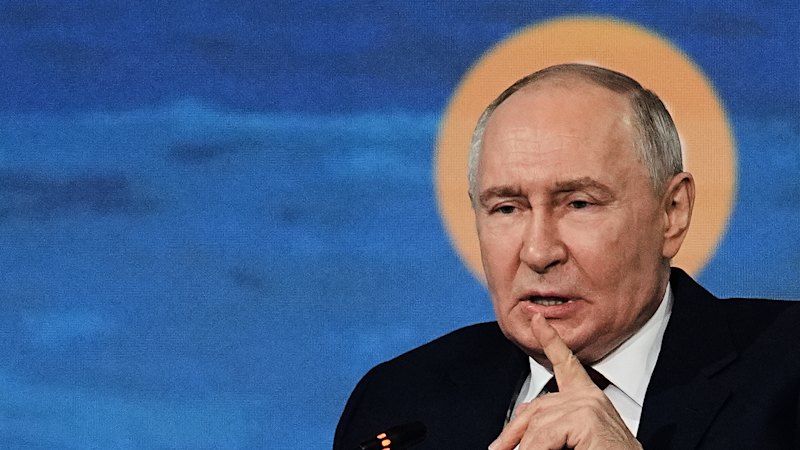
Speaking on stage at the St. Petersburg International Economic Forum, Putin flatly rejected the invitation. He told the audience he sees no point in meeting the Ukrainian president right now. Instead of prepping for peace talks, Putin turned around and gave his military a blunt order to keep working.
This public rejection exposes the massive gulf between what Kyiv wants and what Moscow is willing to accept. If you are looking for a quick diplomatic breakthrough to end this four-year war, you are not going to find it here.
The Letter That Backfired
Zelenskyy’s public letter was an aggressive gamble. It was the first direct, public message the Ukrainian leader sent to Putin since the full-scale invasion began in 2022. It wasn't exactly a traditional olive branch.
Zelenskyy used the text to point out that Putin is 73 years old and suggested that age is catching up to him. He claimed the Russian people are growing exhausted by both the conflict and Putin's decades in power. The goal seemed to be dual-purpose: pressure the Kremlin publicly while signaling to the West that Ukraine is still ready to talk terms, provided Russia is serious.
Putin called the letter boorish and rude.
"Is it a way to create conditions for personal meetings and talks, or create an environment which makes any personal meetings impossible? I think it's the second."
Putin argued that the tone of the letter proves Ukraine isn't actually looking for a real compromise. He thinks the move was a public relations stunt rather than a serious diplomatic initiative. According to the Russian leader, a secret intermediary—an unnamed Russian businessman—actually traveled to Kyiv to hear Zelenskyy’s pitch for a meeting. But whatever was said in private was derailed by the public taunts.
The Anchorage Terms and Shifting Alliances
Putin isn't refusing to talk forever, but he wants the terms dictated entirely on his own ground. He made it clear that a face-to-face meeting only happens when a final peace deal is already on the table and ready to be signed. He doesn't want empty conversations.
Moscow’s baseline for these negotiations goes back to the understandings reached during Putin's summit with U.S. President Donald Trump in Anchorage, Alaska. Putin explicitly stated that Ukraine must accept those frameworks if it wants an end to the fighting.
The battlefield reality complicates this. Putin sees the current Ukrainian push for an immediate ceasefire as a tactical ploy. He claims Ukraine simply wants to freeze the frontline to halt the steady advance of Russian forces. Moscow wants a total, comprehensive settlement that includes Ukraine pulling its remaining troops out of the Donbas region entirely. A temporary truce is out of the question for the Kremlin.
The geopolitical backdrop has also shifted radically. Washington's focus is drifting away from Eastern Europe. Zelenskyy himself admitted that the Trump administration is heavily preoccupied with the war in Iran. With U.S. priorities moving elsewhere, Ukraine cannot simply sit back and wait for Washington to fix the problem.
Putin used his platform in St. Petersburg to mock this dynamic. He brought up Zelenskyy's difficult Oval Office meeting and openly thanked Trump for educating the Ukrainian president on world politics and even teaching him a proper dress code. It was a calculated insult designed to show that Russia feels it holds the upper hand.
Military Reality Rules the Day
Diplomacy is stuck in the mud, so the conflict remains a test of raw military endurance. Putin’s message to his soldiers was simple: "Keep working, brothers."
This means Russia will continue its grinding, slow-moving offensives in the east. It is a war of attrition. Putin did acknowledge that Ukrainian drone strikes deep inside Russian territory, including recent attacks on oil terminals and infrastructure, are causing real damage. But his response isn't negotiation; it's an escalation of domestic defenses and air defense manufacturing.
The conflict has stretched to four years. Both sides are digging in for the long haul. Zelenskyy's open letter warned against letting the war bleed into 2027 and 2028, but Putin's dismissive response shows the Kremlin is perfectly willing to wait.
For international observers and security analysts, the next steps are clear. Watch the frontline advances in the Donbas, monitor whether Ukraine can secure the anti-ballistic missiles it recently requested from the U.S., and track any backchannel discussions based on the Anchorage framework. The public theater in St. Petersburg proved that real peace will not be negotiated through open letters or personal summits anytime soon.
.jpg)