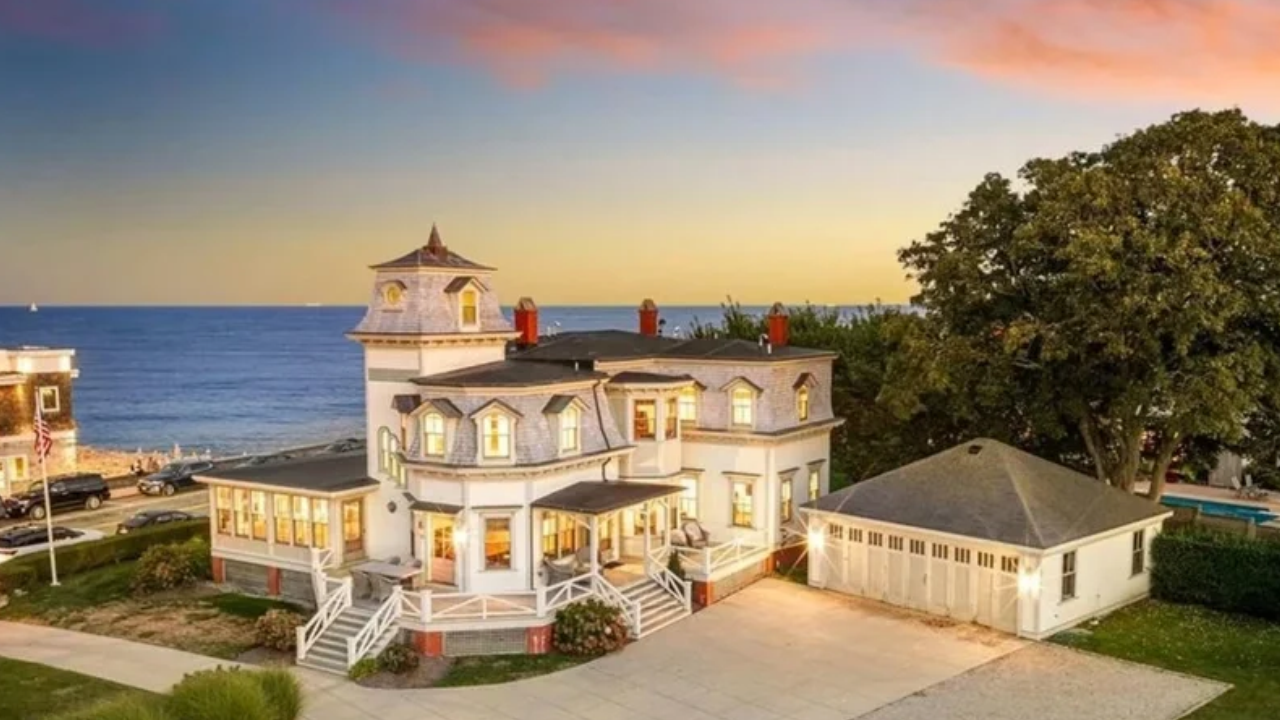
Deconstructing the Headline Price Cut
A $1.2 million reduction on a historic coastal property does not automatically signal a distressed sale. When the Reading Room in Narragansett, Rhode Island, moved from an initial June asking price of $10.95 million down to $9.75 million after months on the market, standard real estate coverage treated the markdown as a standalone mystery or a simple sign of a softening high-end listing.
That framing misses the structural mechanics of ultra-prime coastal real estate. Trophy properties with multi-decade holding histories—such as the Reading Room at 41 Ocean Road, which originally served as a Gilded Age social club and changed hands after more than half a century—operate in a thin market where comparable sales are sparse and pricing depends heavily on initial anchor effects.
The blueprint for this analysis follows four steps:
- Map the conventional narrative around the price reduction and identify where cause and effect are conflated.
- Separate verified property and listing facts from analytical hypotheses about buyer absorption.
- Break down the valuation mechanics across physical attributes, historical scarcity, carrying costs, and micro-market liquidity.
- Establish an execution framework for pricing and negotiating legacy coastal assets.
What Standard Coverage Gets Wrong
Conventional real estate reporting tends to read price reductions linearly: a property sits unsold, the seller cuts the price, and the new number represents market value. In practice, three analytical flaws distort this interpretation:
- Treating list price as market value: An initial asking price of $10.95 million tests upper-bound willingness to pay; a reduction to $9.75 million (an approximate 11% cut) reflects price discovery rather than an objective drop in intrinsic value.
- Conflating time on market with physical obsolescence: A five-bedroom, four-bathroom structure on a 0.69-acre lot with prior preservation restoration does not lose structural integrity in a few months. Extended market time in the near-$10 million bracket usually reflects a small buyer pool and long decision cycles, not physical decay.
- Ignoring opportunity cost and carrying drag: Holding a large coastal parcel involves ongoing property taxes, insurance, utilities, and maintenance. A seller who trims $1.2 million after several months is often trading headline aspiration for faster liquidity before another seasonal cycle passes.
Facts Versus Analytical Hypotheses
Clear separation between verified facts and educated hypotheses prevents over-interpreting a single listing adjustment.
Known facts establish the baseline parameters of the asset:
- The property is the Reading Room in Narragansett, Rhode Island (41 Ocean Road), built in the late nineteenth century as a social club and later moved to its current site near The Towers and the historic Narragansett Pier Casino footprint.
- The residence offers five bedrooms and four bathrooms on a 0.69-acre lot, accompanied by architectural details such as porches, sunrooms, a tower room, and prior historic preservation work.
- It entered the market after a multi-decade ownership span at $10.95 million in June and was later reduced by $1.2 million to $9.75 million following months without a sale.
Educated hypotheses explain the underlying market dynamics where full transaction records or private negotiations are not public:
- Opening above $10.5 million likely tested whether scarcity alone could command a premium above recent Narragansett coastal benchmarks.
- Moving below the $10 million psychological threshold to $9.75 million aims to expand visibility among buyers who filter searches under eight figures while preserving strong perceived prestige.
- Seasonal timing plays a role: listing in early summer captures peak vacation attention, while adjusting later in the year reflects how summer showings converted into serious offers.
The Four Valuation Pillars of Trophy Coastal Assets
Valuing a landmark coastal home requires evaluating four distinct pillars rather than relying on price per square foot alone.
1. Scarcity and Provenance Value
Historic properties tied to recognized local landmarks carry non-replicable provenance. Buyers pay for narrative continuity—a building relocated in 1899 alongside the Narragansett Pier Casino, retaining period woodwork, architectural massing, and proximity to coastal landmarks. Yet provenance is double-edged: historic charm attracts purists, while layout quirks or preservation rules can deter buyers who want modern open-plan living.
2. Land and Micro-Location Economics
In coastal markets, land scarcity and lot geometry anchor long-term value. A 0.69-acre parcel in an established village-adjacent coastal pocket provides privacy and exterior space that smaller infill lots cannot match. At the same time, coastal proximity introduces exposure to wind, salt air, storm surge dynamics, and evolving flood or windstorm insurance underwriting.
3. Capital Expenditure and Restoration Status
Historic assets split sharply between "project homes" and "turnkey restorations." Prior restoration work—especially when recognized by preservation bodies—reduces immediate capital shock for the buyer. However, legacy buildings still demand ongoing maintenance of roofs, masonry, mechanical systems, and envelope weatherproofing. Savvy buyers discount asking prices whenever projected capital reserves are unclear.
4. Liquidity and Buyer Pool Depth
Above $5 million—and especially near $10 million—transaction velocity drops. The pool of cash or high-net-worth buyers willing to commit capital to a secondary or legacy residence in a specific Rhode Island town is narrow. When initial pricing sits above what those few buyers view as fair value, showings may occur without offers, forcing a strategic reset rather than gradual nickel-and-dime reductions.
Cause-and-Effect Chains Behind the Price Adjustment
In luxury real estate, pricing mechanics operate as a chain of cause and effect:
- Over-anchoring reduces early urgency: Launching at $10.95 million sets a high reference point. If buyers perceive a gap between the asking price and comparable coastal sales, they wait rather than compete, stretching days on market.
- Stale listing status erodes bargaining leverage: Once a trophy listing crosses several months without going under contract, prospective buyers infer that the seller has fewer competing bids. That perception encourages lower initial offers or demands for concessions.
- Crossing the $10 million threshold resets search filters: Dropping from $10.95 million to $9.75 million does more than trim 10.96% off the price; it places the asset beneath the $10 million ceiling while signaling serious intent to negotiate.
- Carrying costs compound over time: Insurance premiums, municipal taxes, security, and upkeep accrue monthly. A $1.2 million cut can look steep on paper, but if it accelerates a closing by six to twelve months, the net savings in carrying cost and foregone capital deployment can offset part of the nominal reduction.
Tactical Playbook for Sellers and Buyers
For Sellers Pricing Legacy Properties
- Anchor to closed comparables, not aspirational peaks: Build a pricing band around recent high-end coastal closings and adjust explicitly for lot size, water views, and restoration condition.
- Test the market with a clear review window: Set a defined 60-to-90-day evaluation checkpoint tied to showing volume, qualified tour feedback, and offer activity rather than drifting aimlessly.
- Make a decisive adjustment when needed: Small cuts of 1% to 2% rarely change buyer psychology at the $10 million level; a meaningful step down signals realism and invites serious counter-negotiation.
- Document capital improvements upfront: Provide clear records of structural, mechanical, and preservation work so buyers do not apply a blanket risk discount.
For Buyers Evaluating a Price-Cut Trophy Asset
- Audit true annual carrying costs before bidding: Model property taxes, coastal wind and flood insurance, utilities, and a dedicated annual maintenance reserve (often 1% to 3% of property value for older or coastal homes).
- Separate emotional appeal from resale liquidity: Ask who the next buyer will be in five to ten years and how narrow that resale pool might be.
- Inspect for coastal and historic constraints: Verify flood zone classifications, municipal historic review rules, and potential renovation restrictions before finalizing terms.
- Use listing duration as context, not a crutch: A price cut creates opening leverage, but aggressive lowballing on a rare property can backfire if another well-capitalized buyer steps in at the revised number.
Limitations of This Framework
No pricing model captures every nuance of a one-of-a-kind property. Public listing figures do not reveal private seller motivation, estate or trust timelines, tax structuring, or off-market interest. Furthermore, two buyers can look at the same historic home and assign wildly different weights to architectural character versus modern convenience. Quantitative benchmarks narrow the valuation range, but final clearing price always depends on the specific match between one seller's timeline and one buyer's balance sheet.
Strategic Play
For sellers of similar historic coastal properties, the decisive move is front-loaded price discipline paired with documented operational readiness: price realistically at launch based on closed comparables rather than using early summer listing momentum to test an inflated ceiling, and pair the asking price with transparent maintenance and insurance documentation so qualified buyers can act decisively without waiting for a reactive markdown.