The air in St. Albert during the late summer carries a specific weight. It smells of cooling asphalt, mown grass, and the faint, muddy tang of the Sturgeon River. For most people, a Tuesday evening walk with the dog is the invisible glue of a mundane life. It is the time to decompress, to let the mind drift while the leash tugs gently at the wrist. It is a ritual of safety.
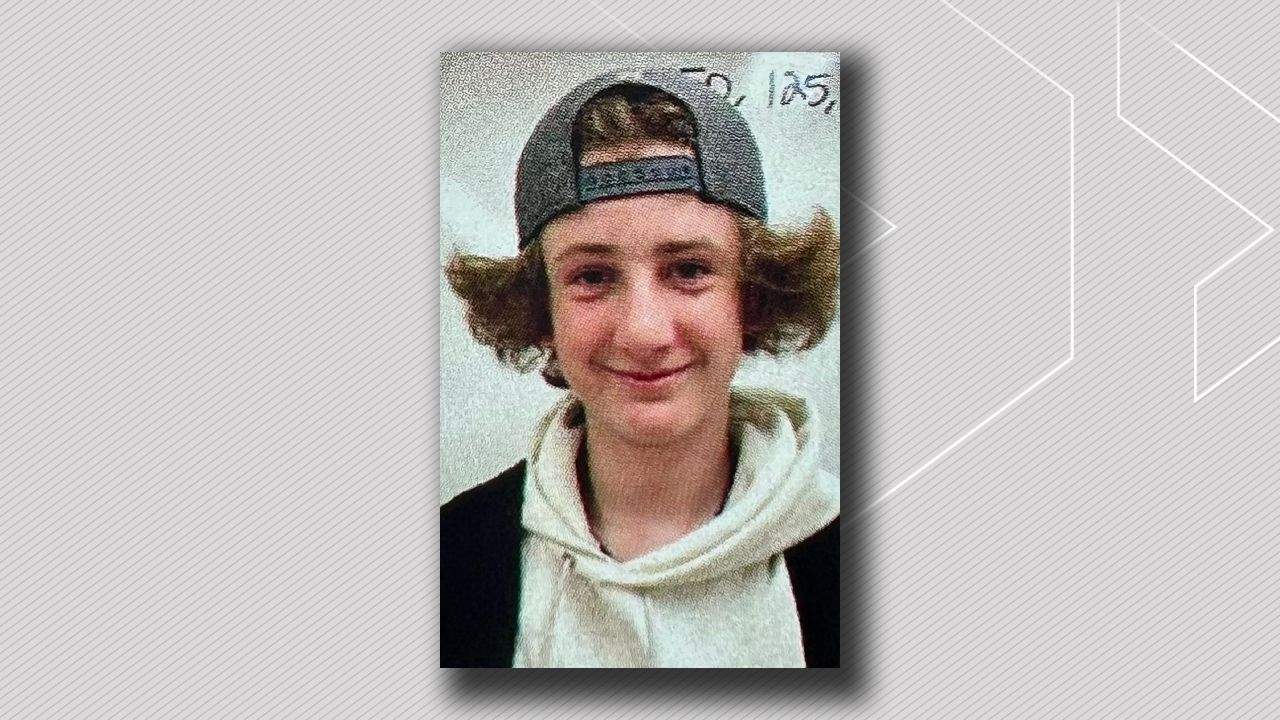
Kaj Randall was fifteen. At fifteen, the world is supposed to be an expanding map of possibilities, not a narrow corridor of violence. He was doing what thousands of teenagers do every single day: walking the family dog. He wasn't looking for trouble. He wasn't part of some grand, cinematic conflict. He was simply existing in a space that should have been his by right. Discover more on a similar topic: this related article.
Then the peace of a suburban trail shattered.
When the Path Diverges
Courage is often discussed in the abstract, but for Kaj, it became a physical reality in a matter of seconds. We often think of "manslaughter" as a legal term, a cold classification used by clerks and judges to sort the chaos of human tragedy into filing cabinets. In reality, it is the word we use when a life is extinguished because of a choice that never should have been made. Further reporting by Al Jazeera explores similar views on the subject.
Brodie McQuaig, the man now sentenced to fourteen years in prison, didn't set out that day to become a headline. But intent is a fickle shield when the consequences are permanent. Reports indicate a confrontation—sudden, sharp, and utterly senseless. A knife was drawn. In that heartbeat, the mundane Tuesday evening evaporated.
Imagine the silence that follows such an event. Not the peaceful silence of the woods, but the heavy, ringing void where a young man’s voice used to be. The dog, likely confused, the scent of copper replacing the scent of the trail. The community of St. Albert didn't just lose a resident; it lost its sense of equilibrium.
The Calculus of Justice
Fourteen years.
To a teenager, fourteen years is an eternity—nearly their entire life lived over again. To a parent, it is an insultingly short span of time to account for the loss of a child. This is the friction at the heart of our legal system. Justice tries to be a scale, balancing the gravity of the crime against the nuances of the law, but for the grieving, the scale is always broken.
Manslaughter, by definition, implies a lack of the specific intent to kill. It suggests a situation that spiraled out of control. However, when you carry a weapon into a public space, the "spiral" is already halfway formed. The court heard about the "vicious and unprovoked" nature of the attack. It heard about a young man who died not because of a long-standing feud, but because he was in the wrong place at the wrong time—except that "wrong place" was his own neighborhood.
The sentencing wasn't just about punishment; it was an attempt to draw a line in the dirt. The judge’s decision to hand down a fourteen-year sentence—minus time already served—reflects a recognition of the sheer brutality involved. It is on the higher end of the spectrum for manslaughter in Canada. It acknowledges that while the law may call it one thing, the community feels it as another.
The Ghost on the Trail
Statistics tell us that violent crime in suburban enclaves is statistically rare. We lean on those numbers like a crutch. We tell ourselves that if we stay in the light, if we stay on the path, we are insulated. But the death of Kaj Randall acts as a jagged tear in that insulation.
It forces us to confront the vulnerability of our children. It makes every parent look at the clock when their teen is ten minutes late coming home from a walk. The "invisible stakes" of this case aren't just about one man going to jail; they are about the collective loss of peace.
Consider the hypothetical family three houses down from the Randalls. They didn't see the attack. They didn't know the victim personally. But now, when they hear a dog bark in the distance at 9:00 PM, their heart rate spikes. The narrative of their neighborhood has changed from "safe" to "scarred." That is the collateral damage of a single violent act. It ripples outward, touching people who never even knew the victim’s name.
The Weight of the "Why"
Humans are wired to seek a reason. We want a motive that makes sense, something we can point to and say, "That won't happen to me because I don't do X." But this case offers no such comfort. There was no grand motive. There was no deep-seated grievance. There was only a man with a knife and a boy with a dog.
When the motive is absent, the fear is greater. It suggests a randomness to existence that we spend our whole lives trying to ignore. The legal proceedings focused on McQuaig's history, his mental state, and the specifics of that night, but none of those facts fill the hole left behind.
The defense might argue for rehabilitation. The prosecution argues for denunciation. The public simply wonders how a walk can end in a morgue.
The Silence Left Behind
Fourteen years from now, Brodie McQuaig will likely walk out of a prison. He will be older, perhaps changed, perhaps not. He will see the sky as a free man.
Kaj Randall will never reach his thirtieth birthday. He will never know the weight of a first mortgage, the sting of a hard breakup, or the quiet joy of a career well-chosen. He is frozen at fifteen, a permanent resident of a summer evening in 2024.
The tragedy of the St. Albert stabbing isn't just the violence of the act; it is the stolen potential. It is the birthdays that will be celebrated with candles lit for a ghost. It is the family dog, who likely waited by the door for a long time, wondering why the walk ended that way.
The court has spoken. The gavel has fallen. The paperwork is filed. But for the people of St. Albert, and for a family whose world was centered on a fifteen-year-old boy, the sentence is much longer than fourteen years. It is a life term of "what if" and "why."
The trail remains. The river still flows through the heart of the city. But the air is a little colder now, even in the height of summer, as if the land itself remembers the night the mundane became monstrous.