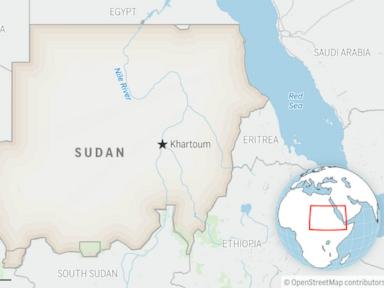
The market at Al Fula never truly slept, but it woke up properly just before dawn. It smelled of crushed mint, diesel exhaust, and the damp earth of West Kordofan. Traders unrolled their tarps. They stacked onions in precise, neat pyramids. For months, this patch of dirt was more than just a place to buy food. It was a fragile sanctuary. In a country tearing itself apart, the market was where you went to remember what normal life felt like. You argued over the price of tomatoes. You drank sweet hibiscus tea. You survived.
Then came the buzz.
It is a sound the people of Sudan have learned to recognize with terrifying clarity. It is not the deep roar of a fighter jet, which gives you a few seconds to run, to dive into a ditch, to press your face into the dust. It is the persistent, mechanical drone of an unmanned aerial vehicle. It hovers. It watches. It decides.
On an otherwise ordinary Tuesday, that sound preceded a flash of blinding light. In a single heartbeat, the architecture of daily survival was obliterated. When the smoke cleared, twenty-eight people were dead. Dozens more lay bleeding into the dirt among the scattered produce.
This is not a story about military strategy. It is a story about what happens when the sky itself becomes an executioner, and when a place of life transforms into a slaughterhouse.
The Geography of a Fragile Refuge
To understand why twenty-eight people died in a market, you have to understand West Kordofan. Sudan is currently locked in a brutal civil war between the Sudanese Armed Forces and the Rapid Support Forces. Cities have been hollowed out. Millions have fled their homes.
In this landscape of displacement, local markets became the vital organs of the community. They were not just commercial hubs; they were communication centers. They were places where refugees from Khartoum could meet locals, exchange news about missing relatives, and find a fleeting moment of solidarity.
Human rights organizations, including local emergency lawyers and regional monitoring groups, verified the grim tally of the strike. Twenty-eight lives. The numbers are precise, but statistics have a cruel way of flattening human suffering. They turn agony into data.
Consider what happens when a missile strikes a crowded marketplace. It does not just kill the people standing at the epicenter. The kinetic force and shrapnel tear through mud-brick stalls, ignite fuel containers, and turn everyday objects—a metal scale, a bicycle frame, a plastic crate—into lethal projectiles. The local rights group that documented the strike described a scene of absolute chaos. There were no military barracks here. There were no trenches. There were only civilians trying to buy ingredients for dinner.
The Illusion of Precision
We are often told that modern warfare is clean. Proponents of drone technology paint a picture of surgical precision, where algorithms and high-definition cameras isolate targets with mathematical certainty. They speak of minimizing collateral damage.
But the reality on the ground in Sudan tells a completely different story.
When a drone loiters over a civilian area, the operator sitting hundreds of miles away sees shapes on a screen. They see heat signatures. They see movement. What they cannot see is the desperation of a father trying to bargain for grain to feed his children. They cannot see the history of a community trying to maintain a shred of dignity amidst a national collapse.
The strike in West Kordofan underscores a terrifying trend in the Sudanese conflict: the increasing normalization of attacks on civilian infrastructure. Markets, hospitals, and schools are no longer safe havens. They have become targets. Whether through faulty intelligence, reckless indifference, or a deliberate strategy to terrorize the population, the result remains identical. The social fabric is systematically ripped apart.
The Ripple Effect of an Explosion
The damage of a drone strike does not end when the smoke clears and the bodies are buried. The true toll ripples outward, altering the lives of thousands who survived the blast itself.
First comes the medical catastrophe. West Kordofan, like much of Sudan, faces a catastrophic collapse of its healthcare system. Hospitals lack basic surgical supplies, clean water, and electricity. When dozens of severely wounded people arrive simultaneously, doctors are forced to make agonizing choices. Who gets the remaining antibiotics? Who receives the last units of blood? Many of those injured in the Al Fula market strike faced amputations or succumbed to infections that would be entirely preventable in a functioning society.
Then comes the economic paralysis. A market is an ecosystem. When a market is bombed, farmers in the surrounding villages lose their only venue to sell crops. Truck drivers refuse to haul goods down roads watched by drones. Prices spike overnight. The strike does not just kill twenty-eight people today; it sentences hundreds more to slow starvation in the months to follow.
But the deepest wound is psychological.
When the sky becomes a source of random, unpredictable death, the psychological toll is devastating. Parents look at the sky before letting their children step outside. The sound of a generator or a distant motorbike triggers panic. The safe spaces vanish. The entire community enters a state of chronic, low-grade terror.
Beyond the Silence of the International Community
The war in Sudan is often called a forgotten conflict. It competes for headlines with other global crises, frequently relegated to brief, back-page updates. A drone strike kills twenty-eight people, a press release is issued, a rights group expresses grave concern, and the world moves on.
But for the families in West Kordofan, there is no moving on.
The tragedy of Al Fula is a stark reminder that the cost of geopolitical inaction is paid in human blood. Every delay in diplomatic pressure, every ignored violation of international humanitarian law, sends a clear message to the warring factions: you can bomb a market with impunity.
The tarps will eventually be replaced in Al Fula. A few brave traders will return to the dirt patch. They will stack onions again, and they will try to sell tomatoes. But the market will never be the same. The silence that now hangs over the square between the shouting of prices is the heavy, suffocating silence of a community waiting for the sky to open up once more.