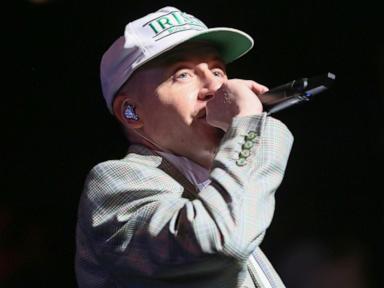
The modern entertainment complex likes to pretend it operates on a simple transactional currency. Tickets are sold, songs are streamed, arenas are filled, and everyone goes home happy. But underneath the glittering veneer of stadium tours lies a brittle architecture of risk aversion, corporate sponsorship, and strict political boundaries. When rapper Macklemore took the microphone at MetLife Stadium and delivered a blunt pro-Palestinian speech, he did not just risk a performance slot. He detonated a landmine that corporate promoters and mega-venues have spent decades trying to pave over.
Within days, the fallout was absolute. Ed Sheeran’s camp, caught in a public relations crossfire that threatened to derail a massive financial undertaking, quietly cut ties with the rapper. The official narrative pointed toward logistics and brand protection. The unspoken reality pointed toward something much darker for free expression in live entertainment. Major arenas, booking conglomerates, and corporate ownership groups operate with a singular, unyielding mandate: protect the bottom line at all costs.
To understand why this specific dismissal reverberated so violently across the industry, one must look at how modern touring economics function. A stadium tour is not a collection of independent artists jamming out on a stage. It is a finely tuned corporate machine backed by multinational conglomerates, banking institutions, and venue ownership groups with deep ties to institutional wealth. When an artist steps onto a stage funded by these entities, they enter a silent contract. The contract dictates that music can be emotional, edgy, and occasionally rebellious, provided it never threatens the corporate balance sheet or offends the sensibilities of institutional landlords.
Macklemore’s removal laid bare the illusion of artist autonomy. For months following his dismissal, reports surfaced detailing how subsequent efforts to mount a "Free Palestine" benefit tour ran into institutional brick walls. Major U.S. venues—including prominent facilities in New York, Los Angeles, and San Francisco—allegedly rescinded availability the moment the true nature of the bookings became clear. Venue spokespeople hide behind standard bureaucratic shields, citing tight scheduling and inventory limits. But industry veterans know the dance. When a venue wants to say no without getting tangled in a First
When the Mic Cuts Out The Cost of Free Speech on Major Stadium Tours
entertainment, celebs
The music industry has long operated under a tacit understanding. Artists perform, fans pay, and politics stay safely sequestered away from the merchandise booths unless the corporate machinery sanctions the message. That fragile illusion shattered when Macklemore was quietly dropped from Ed Sheeran's tour lineup following a series of onstage comments concerning the Palestinian conflict. This quiet removal highlights a widening chasm between stadium-scale pop commercialism and the messy reality of geopolitical activism.
When a multi-million-dollar live tour cuts ties with an artist over a political statement, the decision is rarely about sudden moral clarity. It is about logistics, risk mitigation, and the nervous system of modern global entertainment. Sheeran's stadium run is a finely tuned corporate ecosystem involving multinational promoters, local venue monopolies, insurance underwriters, and corporate sponsors who view controversy as a direct threat to the bottom line.
To understand why this happened, we have to look past the sanitized press releases and examine how the live music business functions in an era of hyper-polarization.
The Corporate Architecture of Modern Stadium Tours
Touring at the level of Ed Sheeran is no longer just about playing guitar for tens of thousands of screaming fans. It is a logistical behemoth that requires millions of dollars in upfront capital, complex routing across multiple continents, and airtight contracts.
Promoters like Live Nation or independent regional giants shoulder massive financial risks. A single cancelled show due to protests, security threats, or sponsor pullouts can cost hundreds of thousands of dollars in refunded tickets, localized labor fees, and logistical penalties. When an opening act uses a massive global platform to voice explicit, polarizing political stances, they introduce an unpredictable variable into an environment designed for maximum predictability.
Corporate sponsors hold considerable sway in these high-stakes decisions. Brands paying top dollar for VIP hospitality tents and stadium branding do not want their logos juxtaposed with geopolitical debates that alienate segments of their consumer base.
Macklemore has never been shy about aligning his art with his politics. From his 2016 track "White Privilege II" to his explicit pro-Palestinian rallying cries during live performances, he operates from a tradition of activist hip-hop. But mainstream stadium tours operate from a tradition of risk aversion. When the two collide, the commercial apparatus almost always protects the asset with the broader, safer appeal.
The Illusion of Neutrality in Pop Culture
For decades, the music industry pushed the narrative that pop culture is a universal unifier. Pop stars were encouraged to be blank slates upon which fans could project their own values. Expressing broad sentiments about peace or love was acceptable, even encouraged, because those words mean everything and nothing all at once.
Naming specific conflicts, demanding targeted geopolitical actions, or using a microphone amplified by a major stadium sound system to critique sovereign states breaks the unwritten contract of pop neutrality.
The industry insists on maintaining a facade of apolitical entertainment, even as culture wars bleed into every facet of daily life. Yet, this neutrality is an illusion. Choosing who to platform, who to silence, and who to drop is inherently political. By removing Macklemore, the tour management did not remain neutral. They took a definitive stance that commercial stability and frictionless consumer experiences outweigh unscripted political dissent.
This dynamic creates a chilling effect across the industry. Independent artists and mid-tier performers watch what happened to Macklemore and calculate the career cost of speaking their minds. The financial penalty for dissent is steep, particularly in a post-pandemic touring landscape where ticket sales and streaming royalties are already squeezed by inflation and platform economics.
The Economics of Fan Backlash and Loyalty
The modern music consumer is fragmented. Traditional gatekeepers no longer dictate who becomes a star, and social media ecosystems allow artists to build direct, fiercely loyal followings independent of radio or mainstream media approval.
When an artist is dropped from a major tour for political reasons, it triggers an immediate polarization among ticket holders. One segment applauds the promoter for keeping concerts focused on music rather than geopolitics. Another segment accuses the industry of censorship and stifling free speech.
However, the financial calculus for promoters heavily favors institutional safety over fringe loyalty. While a vocal contingent of fans might boycott a tour in solidarity with a dropped artist, the vast majority of stadium-goers buy tickets for the headliner. Ed Sheeran draws crowds that fill stadiums regardless of who is opening the show. The risk of losing Macklemore's specific fanbase is deemed negligible compared to the potential catastrophe of a disrupted tour schedule or a coordinated sponsor boycott.
This economic reality exposes the limits of artist autonomy within major corporate tours. No matter how established an artist might be, opening acts remain subordinate to the master agreement governed by top-tier management and promoters.
The Precedent for Future Collaborations
The fallout from Macklemore's removal extends far beyond a single tour lineup change. It establishes a clear warning flare for other artists who might want to use stadium stages as a soapbox for international politics.
Promoters are rewriting contract clauses to include explicit conduct and political speech restrictions, aiming to insulate themselves from sudden reputational damage. Legal teams are tightening force majeure and moral turpitude clauses to give management immediate leverage if an artist steps outside approved talking points.
Musicians who pride themselves on political engagement will increasingly find themselves pushed to the margins of major commercial touring networks. They will have to choose between the lucrative reach of corporate-backed stadium circuits and the uncompromising freedom of independent touring models.
The silence that follows these high-profile removals is deafening. It signals to the next generation of performers that while art can touch on the abstract, specifics come with a pink slip. The stadium lights stay bright, the sound systems stay loud, but the space for unpredictable, unscripted human conscience narrows just a little bit more.