The air inside a situation room doesn't smell like heroism. It smells like stale coffee, recycled oxygen, and the sharp, metallic tang of cooling server racks. When a crisis breaks in the Middle East, the silence in these rooms is heavy. It is the kind of silence that precedes a thunderclap.
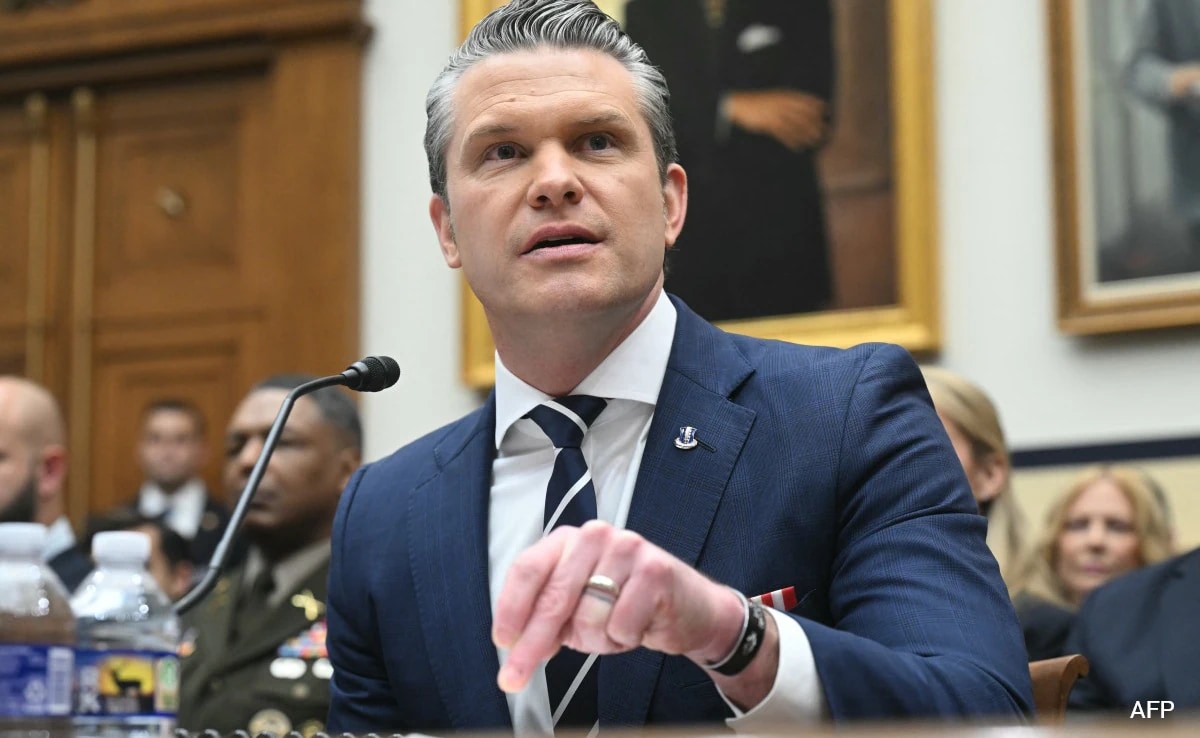
Pete Hegseth, now navigating the labyrinthine corridors of American defense policy, isn't looking at spreadsheets as mere math. To him, the $1.5 trillion defense budget isn't a bureaucratic abstraction. It is a physical wall. It is the thickness of the steel on a carrier deck and the invisible code humming inside a drone patrolling the Persian Gulf. As tensions with Iran move from a simmer to a localized boil, the debate over this astronomical sum has shifted. It is no longer about whether the price is too high. It is about what happens to the person sitting in that silent room when the screens go dark because we decided to save a few billion dollars on satellite redundancy.
Consider a hypothetical young radar technician named Elias. He is twenty-four, fueled by energy drinks, and stationed on a destroyer in the Strait of Hormuz. His entire world is a glowing green sweep. If that sweep hitches for even a millisecond because of an aging processor or a jammed frequency, the narrative of his life—and the lives of three hundred shipmates—ends.
This is the human heartbeat beneath the $1.5 trillion figure.
The Weight of Every Dollar
The skeptics argue that $1.5 trillion is an obscene amount of capital to sink into the machinery of ghost-hunting and border-watching. They point to crumbling bridges at home and the rising cost of bread. They aren't wrong about the need elsewhere. However, the argument from the current defense leadership suggests that global stability is not a natural state of being. It is an expensive, manufactured product.
Iran represents a unique kind of adversary. They don't fight with the massive, predictable movements of the 20th century. They fight with shadows. They use swarms of low-cost suicide drones, asymmetric naval tactics, and cyber-attacks that target the very nervous system of Western logistics. To counter a "cheap" threat, the defense must be incredibly sophisticated. It is a cruel irony of modern physics: it costs ten thousand times more to stop a drone than it does to build one.
Hegseth’s defense of the budget rests on the idea that we are currently paying for the "prevention of the unthinkable." We aren't just buying missiles. We are buying the fact that Elias, our radar tech, gets to finish his shift and call his mother.
Beyond the Spreadsheet
When people hear "trillion," the brain short-circuits. We can't visualize it.
Think of it instead as an insurance policy for a house built in a forest fire zone. If you pay the premium, you might feel like you’re throwing money away every month that the house doesn't burn. But the moment the wind shifts and the embers fly, that "wasteful" expenditure is the only thing standing between your family and the ash.
The current geopolitical climate is that shifting wind.
The budget covers the mundane and the miraculous. It pays for the fuel in the tankers that keep jets airborne so they can intercept provocations before they reach civilian airspace. It pays for the encrypted links that prevent a rogue actor from seizing control of a city's power grid. Most importantly, it pays for the people. A massive chunk of that $1.5 trillion goes toward housing, healthcare, and training for the millions of individuals who have signed a contract stating they will stand in the gap.
If you cut the budget by 20%, you don't just lose "fancy toys." You lose the experienced NCO who knows exactly how to de-escalate a tense encounter with an Iranian patrol boat. You lose the specialized maintenance that keeps a jet from falling out of the sky due to metal fatigue.
The Invisible Stakes of Innovation
Technology in the defense sector moves at a terrifying pace. We are currently in the middle of a transition that rivals the shift from sails to steam. Artificial intelligence and autonomous systems are no longer science fiction; they are the baseline.
Iran has spent decades perfecting the art of the "budget-breaker" attack. They know that if they can force the United States to fire a $2 million interceptor at a $20,000 drone, they win the long-term war of attrition.
The $1.5 trillion is a gamble on innovation. It is an attempt to flip the script. By investing in directed-energy weapons—lasers that can fire for the cost of a gallon of fuel—the U.S. aims to make the "cheap" attack obsolete. But getting to that point requires a mountain of R&D capital. You have to fail a thousand times in a lab so that you don't fail once in the field.
The critics will say we are over-preparing for a ghost. The proponents will say that the ghost hasn't attacked because it's afraid of the light we’re shining.
The Human Core of a Hard Choice
Imagine the weight on a policymaker’s shoulders. On one hand, you have the very real needs of a domestic population. On the other, you have the intelligence briefings that the public never sees—the grainy thermal footage of a missile being fueled in a desert silo, or the intercepted chatter of a group planning to blind a GPS constellation.
Hegseth’s stance is one of grim realism. He isn't selling a dream of world peace; he is selling a shield.
Wealthy nations often forget that their wealth is protected by a thin line of people and machines. We enjoy the luxury of debating whether $1.5 trillion is too much because, for the most part, we don't have to worry about the sky falling. That luxury is exactly what the money buys.
When the sun sets over the Persian Gulf, the water turns a deep, bruised purple. Somewhere out there, Elias is staring at his screen. He isn't thinking about the national debt or the political bickering in Washington. He is thinking about the pulse on his monitor. He is trusting that the hardware he’s using was built by the best minds, funded by a country that decided his life was worth the highest possible price tag.
We can argue about the numbers until the ink runs dry. But the moment a threat goes from a line on a map to a scream in the air, the only number that matters is one. One life. One ship. One chance to get it right.
The budget is a statement of value. It asks a simple, brutal question: What are we willing to pay to ensure that tomorrow looks exactly like today?
The answer is currently $1.5 trillion.
And for the person standing the watch in the dark, that might just be a bargain.



