The tension in a military command center doesn’t sound like alarms. It sounds like silence. It is the heavy, suffocating quiet of people staring at screens, waiting for the fallout of a mistake that hasn’t even hit the headlines yet.
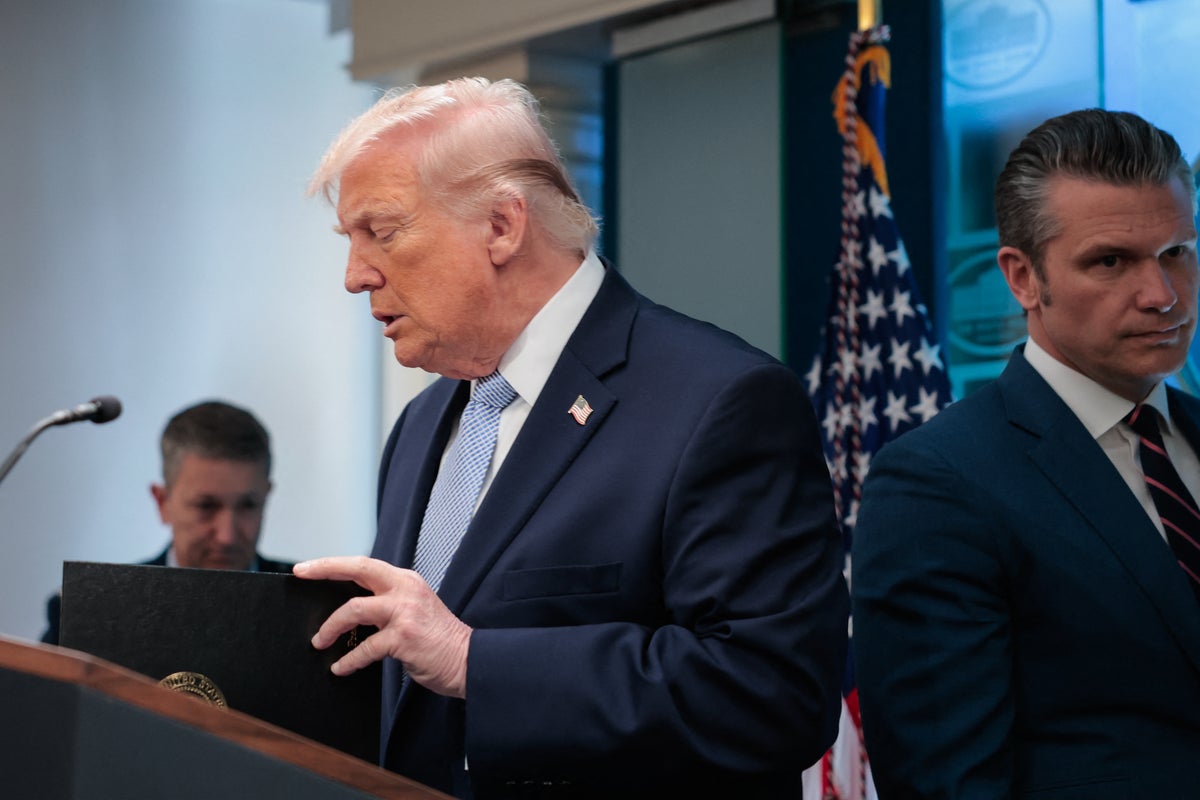
Geopolitics is a game played in millimeters. A single misplaced word from a leader can move battalions, spook markets, and leave allies sweating in closed-door rooms from Washington to Warsaw. When Pete Hegseth, Donald Trump’s pick for Defense Secretary, stepped up to speak about troop deployments, the world was listening. In related developments, we also covered: Why Swiss Neutrality is Effectively Dead After the Latest Russia Sanctions.
He spoke too soon.
The announcement was massive: a major deployment of American troops to Poland. In the theater of international relations, Poland is not just another European nation. It is the Eastern Flank. It is the tripwire. To announce a sudden influx of American boots on that specific soil is to throw a match into a room full of fumes. TIME has also covered this critical subject in great detail.
The problem was simple. The ink wasn't dry. The deal wasn't done.
The Weight of the Unsaid
To understand why this mattered, you have to look past the podiums and the television cameras. Think of a mid-level officer stationed in Germany, looking at a map, suddenly realizing their entire unit's deployment schedule might have just been rewritten on live television. Think of the Polish diplomats who suddenly had to field frantic calls from neighbors, demanding to know what secret deals had been struck behind closed doors.
Military planning relies on a concept called operational security. You do not telegraph your moves. More importantly, you do not telegraph moves that the Commander-in-Chief has not officially authorized.
Hegseth’s blunder wasn't just a slip of the tongue. It was a breach of protocol that sent ripples through the Pentagon.
Donald Trump is a man who prizes absolute control over his narrative. He views himself as the ultimate negotiator, the closer who signs the final document with a flourish of a black sharpie. For a subordinate—even a highly favored one—to step into the spotlight and announce a major strategic shift before the President could frame it himself is a cardinal sin in West Wing geography.
The correction was swift. It had to be.
Trump was forced to publicly step in and set the record straight. The message from Mar-a-Lago was clear: nothing is real until the President says it is. The deployment to Poland was pulled back into the realm of "discussion," leaving Hegseth to quietly adjust his posture.
The Invisible Stakes of the Flank
Diplomacy is often misunderstood as a series of grand handshakes and state dinners. It isn't. It is an excruciatingly fragile web of unspoken assumptions.
When America talks about moving troops to Poland, Russia listens. NATO listens. Every Baltic state holds its breath. A sudden, uncoordinated announcement makes America look unpredictable—not the strategic, calculated unpredictability that Trump often favors, but the dangerous kind born of internal miscommunication.
Imagine being a private citizen in a town like Rzeszów, just miles from the Ukrainian border. You wake up, check your phone, and see that the American Defense Secretary nominee has just declared a massive influx of US troops to your doorstep. Is it a reassurance? Or is it a sign that a storm is coming?
The anxiety is real. The human cost of political posturing is paid in the nerves of people who live on the edge of the map.
Consider what happens next when a administration has to clean up a mess like this. The phone lines between Washington and Warsaw don't just buzz; they burn. Diplomats spend forty-eight hours rewriting statements, assuring foreign ministers that the policy hasn't changed, that the institutional guardrails are still holding. It is grueling, invisible work required to erase a mistake that took three seconds to make.
The Education of a Secretary
Every incoming administration goes through growing pains. The transition from talking about power on television to actually wielding it in the corridors of the Pentagon is a brutal awakening.
On a cable news set, a bold statement gets you applause and higher ratings. In the E-Ring of the Pentagon, a bold, unauthorized statement gets you a classified briefing where serious people with stars on their shoulders explain exactly how many lives your comment just complicated.
Hegseth represents a new guard, a shift toward media-savvy fighters who value direct communication. But the old rules of deterrence haven't changed. Deterrence requires clarity. It requires an adversary to know exactly where the line is drawn, and exactly what will happen if they cross it. When the messaging is muddy, the risk of miscalculation skyrockets.
The President’s intervention was a public reining-in. It was a reminder of the hierarchy. By forcing a correction, Trump reestablished the boundary between political rhetoric and state action. He signaled to foreign capitals that the chaotic energy of the campaign trail stops at the water's edge.
The dust will eventually settle over the Poland deployment. The troops will move, or they won't, based on a calculus that happens far away from the microphones. But the lesson of those frantic hours remains etched into the concrete of the Pentagon.
Words have weight. In the high-stakes theater of global security, you must never speak faster than the men who carry the rifles can move.