The air in Havana doesn't just sit; it weighs. It carries the scent of salt spray from the Malecón, the ghost of diesel exhaust, and the invisible, heavy pressure of a decades-long wait. For the person standing in a two-hour line for a liter of cooking oil, geopolitics isn't a theory. It’s a physical ache in the lower back. It’s the calculation of whether the remaining pesos in a pocket will stretch until Friday.
When the news broke that the Cuban government was finally ready to sit down and discuss a $100 million aid offer from the United States, it didn't arrive with the fanfare of a revolution. It arrived like a crack in a dam.
For years, the relationship between these two neighbors—separated by only ninety miles of water but an ocean of ideology—has been defined by the word "No." No to trade. No to travel. No to compromise. But pride is a difficult thing to eat when the cupboards are bare. Foreign Minister Bruno Rodríguez’s recent signal that Cuba is open to the proposal marks a shift from the old guard's defiance toward a pragmatic, albeit cautious, survival instinct.
The Anatomy of a Breaking Point
To understand why $100 million matters, you have to look past the number. In the grand theater of global finance, $100 million is a rounding error. It’s the price of a single high-end fighter jet or a mid-sized tech acquisition. But in an economy where the power grids are flickering into darkness and the pharmacies are running thin on basic antibiotics, that money represents something more volatile than currency. It represents a concession.
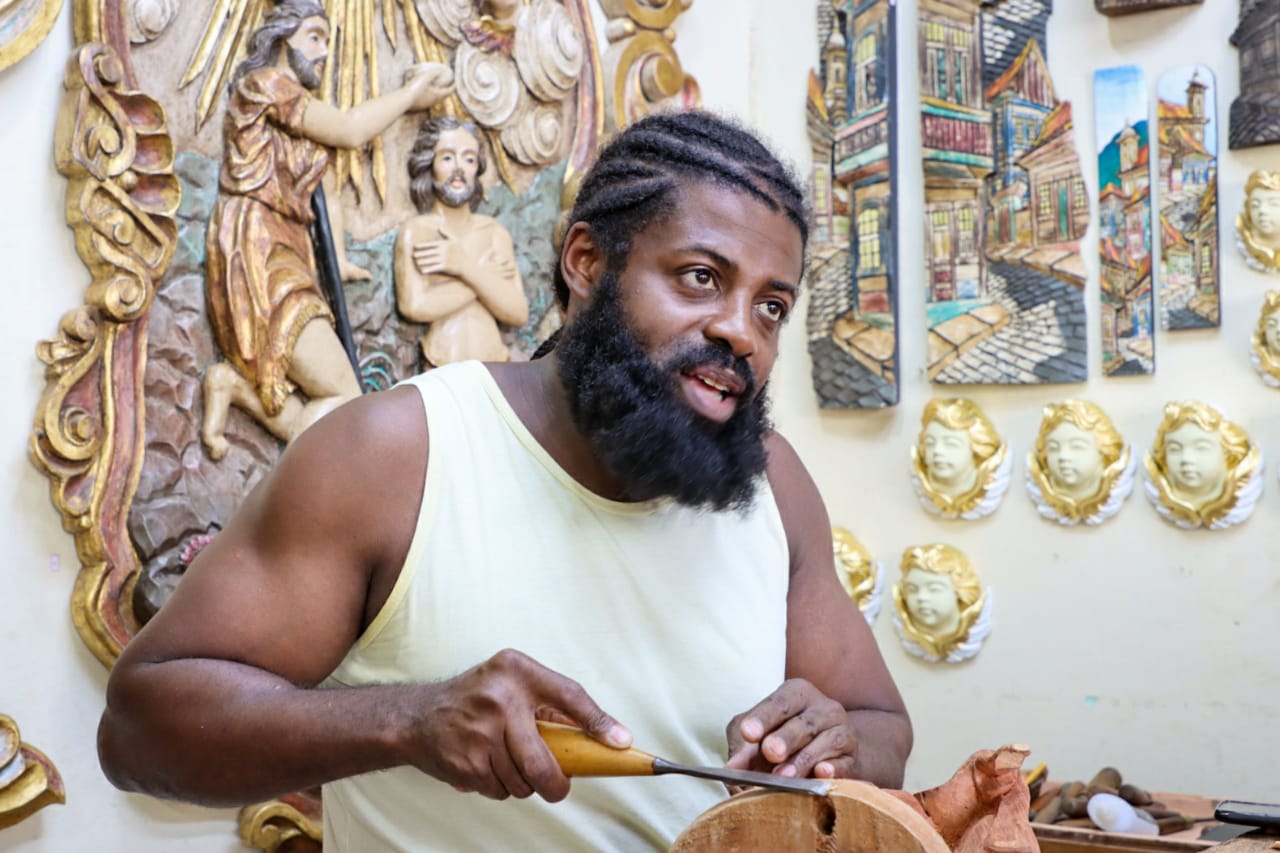
Consider a hypothetical shopkeeper in Old Havana named Mateo. Mateo has spent thirty years repairing watches. His eyes are failing, and the parts he needs are locked behind a wall of sanctions and bureaucracy. To Mateo, a diplomatic thaw isn't about "bilateral agreements." It’s about whether the next shipment of medical supplies includes the insulin his neighbor needs.
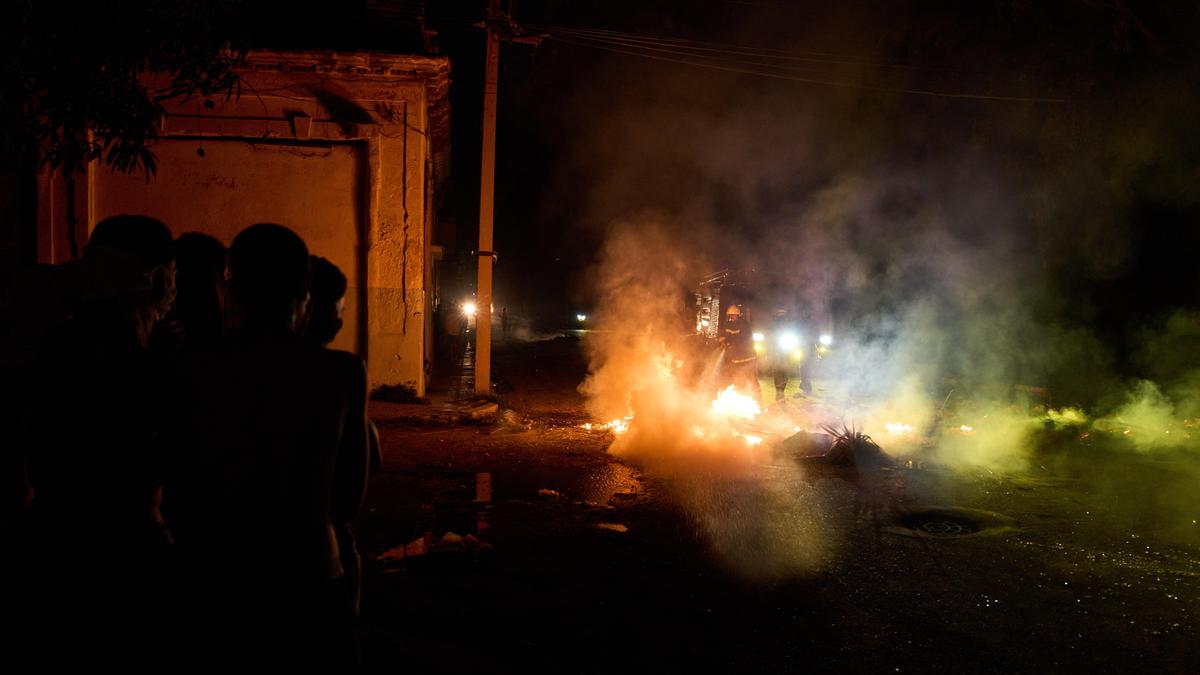
The Cuban economy is currently navigating its worst crisis since the collapse of the Soviet Union. Inflation has stripped the value from the peso, leaving families to rely on remittances from relatives in Miami or the grueling ingenuity of the black market. When the lights go out during a tropical heatwave, the frustration isn't just about the heat. It’s about the silence. The silence of factories that aren't running and the silence of a future that feels stalled.
The United States offered this aid package following the devastation of Hurricane Ian and the ongoing energy crisis. Originally, the gesture was met with the usual skepticism. Havana viewed it as a Trojan horse; Washington viewed it as a humanitarian necessity that doubled as a diplomatic lever.
But the math changed.
The Weight of the Offer
The shift happened when the Cuban leadership realized that the internal pressure had reached a boiling point. The protests of 2021 proved that the social contract was fraying. People weren't just asking for liberty; they were asking for bread and electricity.
Minister Rodríguez’s statement wasn't a surrender. It was a carefully calibrated maneuver. By saying the government is "ready to consider" the offer, they are testing the depth of the water. They are asking: Can we take the help without losing our soul? Or, more accurately, can we take the help without losing our grip?
The aid is earmarked for private enterprises and humanitarian relief. This is a crucial distinction. Washington wants to bypass the state apparatus to fuel the "mipymes"—the small and medium-sized private businesses that have recently been allowed to sprout across the island. It’s a strategy of bottom-up transformation. If the Cuban government accepts, they are essentially inviting a capitalist seed to grow in their socialist garden.
It is a gamble for both sides.
For the U.S., there is the risk of being seen as propping up a regime it has spent sixty years trying to isolate. There is the political minefield of South Florida, where every cent sent to the island is scrutinized by an exile community that has not forgotten what was lost. Yet, the alternative is a failed state ninety miles off the coast, a humanitarian disaster that would trigger a migration wave unlike anything seen since the Mariel boatlift.
For Cuba, the risk is more existential. Accepting the money validates the efficacy of their greatest rival. It admits a vulnerability that the rhetoric of the last six decades has tried to mask.
Beyond the Ledger
Numbers tell stories, but they rarely tell the truth. The truth is found in the logistics of the ordinary.
The proposed aid isn't just a pile of cash. It’s potentially trucks full of spare parts for a crumbling electrical grid. It’s containers of grain. It’s a bridge.
When a government says "we are ready to consider," they are acknowledging that the old ways of standing tall are no longer sustainable. You can't stand tall if you can't keep the lights on. The dialogue suggests a realization that the "maximum pressure" campaign from the north and the "resistance" strategy from the south have reached a stalemate where the only losers are the people caught in the middle.
There is a specific kind of exhaustion that comes from living through history. Cubans have been "living through history" for generations. They are tired of being a symbol. They are tired of being a case study in Cold War leftovers. They want to be a country where a $100 million offer isn't a geopolitical crisis, but a simple transaction of help between neighbors.
The negotiations will be slow. They will be bogged down in the minutiae of "distribution channels" and "monitoring mechanisms." The U.S. will demand transparency to ensure the money doesn't end up in the pockets of the military. Cuba will demand respect for its sovereignty, a word they use as both a shield and a sword.
But while the bureaucrats argue over the fine print in air-conditioned rooms, the humidity in Havana continues to rise.
The Invisible Stakes
The real story isn't the $100 million. It’s the precedent.
If this deal goes through, it breaks the seal. It proves that despite the embargo, despite the "State Sponsor of Terrorism" designation, despite the scars of the Bay of Pigs and the Missile Crisis, there is a path forward. It suggests that the two nations can find a way to communicate that doesn't involve shouting across a fence.
It’s about the gradual, painful transition from a wartime footing to a functional reality.
Think back to Mateo and his watches. He doesn't care about the ideology of the person who manufactured the tiny gears he needs. He cares that the gears exist. He cares that he can finish his work before the sun goes down and the scheduled blackout begins.
The minister’s announcement is a signal to the Mateos of the island that the government sees the darkness too. It is an admission that the island cannot be an island forever, entirely unto itself.
We often mistake diplomacy for a game of chess. In reality, it’s more like a long-distance marriage that has gone sour. There is too much history, too many insults, and too much baggage to ever truly start over. But there are children to feed and a house to maintain. Eventually, you have to stop screaming and start talking about the roof.
The roof in Cuba is leaking. The U.S. has offered the shingles.
The tragedy of the situation is that it took this long to reach a point of "consideration." The hope is that the consideration doesn't vanish into the same political ether that has swallowed every other attempt at a thaw.
As the sun sets over the Malecón, the orange light hits the crumbling facades of the colonial buildings, making them look, for a brief moment, as grand as they were a century ago. It is a beautiful, deceptive sight. Then the streetlights fail to flicker on, and the reality of the 21st century returns.
The hand is extended. The other side has looked at it. Now, the world waits to see if they will finally take it.