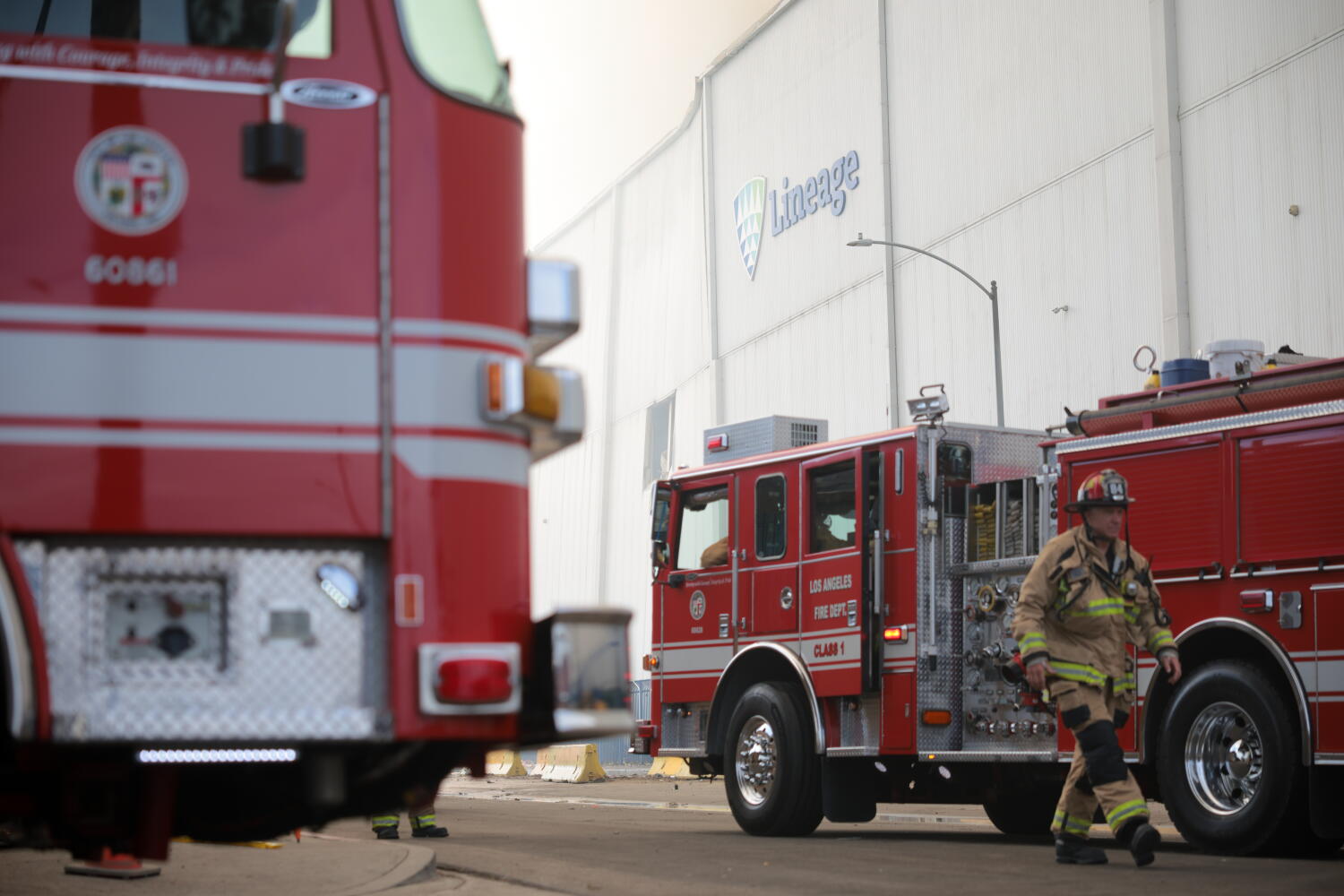
The Los Angeles City Council’s unanimous decision to place a half-cent sales tax measure on the November ballot exposes a structural failure in municipal resource allocation: the inability of the nation's second-largest city to fund core public safety infrastructure out of its existing general fund. Sponsored by the United Firefighters of Los Angeles City via a signature-gathering petition that collected over 225,000 signatures, the initiative seeks to raise an estimated $345 million annually. If approved by a simple majority, it will elevate the local sales tax rate from 9.75% to 10.25%. This policy intervention attempts to correct a decades-long capital underinvestment, but it highlights a broader systemic issue. Local governments increasingly rely on regressive, single-issue tax measures to insulate basic services from competing budgetary pressures.
Evaluating the viability and structural design of this tax initiative requires a deep look at operational capacity constraints, municipal finance mechanics, and regressive taxation trade-offs.
The Operational Decay Function
The core justification for the proposed sales tax rests on an operational divergence between service demand and systemic capacity. Over a sixty-year horizon, the structural parameters of the Los Angeles Fire Department (LAFD) have remained stagnant or contracted, while demand variables have scaled linearly with demographic shifts.
- Demographic Scaling: The population of Los Angeles expanded from 2.4 million residents in 1960 to approximately 3.9 million by 2024.
- Asset Atrophy: The city operates with six fewer active fire stations than it did in 1965. Over 50 active facilities are more than 50 years old, creating a substantial capital expenditure backlog for seismic retrofits and modernization.
- Labor Equilibrium: Sworn staffing levels have remained virtually unchanged, moving from 3,379 authorized positions in 1965 to 3,412 in 2024.
- Demand Exponentiality: The total emergency call volume has multiplied by a factor of five over the same period.
This equilibrium mismatch implies that the department's capacity utilization has entered a zone of diminishing marginal returns, manifesting as longer response times and increased asset wear. According to internal metrics aligned with International Association of Fire Fighters parameters, achieving optimal geographic distribution and incident management would require adding 4,000 personnel and 62 new facilities. The $345 million in projected annual revenue serves as a partial capital infusion rather than a comprehensive structural solution.
The Structural Mechanics of the Ballot Initiative
The architecture of the proposed measure relies on a specific statutory framework designed to optimize revenue protection while avoiding state constitutional constraints. By using a citizen-led initiative pathway—which required a minimum of 154,000 valid voter signatures—the sponsoring union utilized California judicial precedents that allow citizen-backed special taxes to pass with a simple majority (50% plus one vote). This path avoids the strict two-thirds supermajority threshold mandated for government-initiated special taxes under Proposition 13 and Proposition 218.
To prevent the city from using the new revenue to displace existing allocations, the initiative incorporates a mandatory maintenance-of-effort clause. This legal firewall prohibits the City Council from reducing the LAFD’s baseline general fund appropriation once the new revenue flows into the treasury. Structurally, the initiative establishes:
- A dedicated special fund legally segregated from general operating accounts.
- A Citizen’s Oversight Committee tasked with reviewing expenditure outlays.
- Mandatory annual independent public financial audits.
The structural limitation of this framework lies in its fiscal rigidity. While the maintenance-of-effort clause protects the fire department from budget cuts during economic expansions, it restricts the city's fiscal flexibility during cyclical revenue contractions. If general fund revenues drop during a recession, the city cannot legally reduce its baseline support for the fire department. This dynamic forces deeper proportional cuts onto unprotected municipal agencies, such as parks, libraries, and general administration.
Macroeconomic Trade-offs and Regressive Revenue Models
The decision to fund public safety infrastructure through a local consumption tax introduces clear macroeconomic challenges. Sales taxes are fundamentally regressive, as lower-income households spend a larger share of their disposable income on taxable commodities than wealthier households.
Raising the aggregate sales tax rate to 10.25% places Los Angeles among the highest-taxed municipal jurisdictions in the United States. This high rate alters consumer incentives along regional borders. Consumers can easily avoid the additional tax by moving transactions to adjacent municipalities with lower rates, or by shifting purchases to digital e-commerce platforms that may capitalize on different jurisdictional tax structures. This boundary effect can erode the local retail tax base over time, lowering the actual yield below the projected $345 million baseline.
The Howard Jarvis Taxpayers Association and other fiscal conservative groups argue that using a consumption tax for core municipal obligations represents a policy failure. Their argument rests on a fundamental principle of public finance: essential public safety services should be funded from the first dollar of general revenue, not treated as an add-on expense funded by separate taxes. By carving out dedicated revenue streams for specific departments, the city avoids making the difficult trade-offs required to balance its core budget.
Long-Term Capital Inflow or Fiscal Displacement
The long-term success of the initiative depends on how effectively the city manages its overall budget. While the maintenance-of-effort clause prevents the direct substitution of general funds, it cannot prevent subtle forms of long-term fiscal displacement. For instance, the city might freeze future cost-of-living adjustments or pension contribution increases within the LAFD's general fund allocation, choosing instead to pay for those rising costs out of the new sales tax revenue. If that happens, the new tax money won't actually expand operational capacity; it will simply absorb cost growth that the general fund would have otherwise had to cover.
Voters must weigh immediate operational needs against long-term structural efficiency. If the measure passes, it provides a stable, dedicated revenue stream to modernize the LAFD's aging infrastructure and expand staffing. However, it also locks in a higher cost of living for residents and reduces the city's long-term budget flexibility. If the measure fails, the city will face an immediate crisis: it must either continue to run an overextended emergency response system with 1960s capacity levels, or make deep, unpopular cuts to other public services to fund the fire department from the existing general fund.