The air in Frankfurt smells of damp stone and stale coffee when the autumn rain settles over the banking district. Inside the towering glass monoliths, the men and women who price the future stare at glowing Bloomberg terminals, tracking basis points, yield curves, and overnight rates with the cold precision of surgeons. They believe they are measuring reality. They believe that every risk known to human civilization can be rendered into a spreadsheet, assigned a probability, and hedged away for a fraction of a percent.
They are wrong.
Consider a hypothetical town in the heart of agricultural Europe, a place called Ostrava or Valencia, where the local economy breathes in rhythm with the soil and the seasonal rains. Imagine a baker whose family has milled flour in the same stone basement for four generations. He does not read European Central Bank bulletins. He does not care about the capital adequacy ratios of cross-border financial institutions. But he cares intimately about the price of winter wheat.
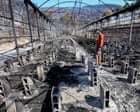
Last July, the rain did not come. Then, when the soil was already baked to the consistency of concrete, four months of water fell in forty-eight hours. The basement filled with mud. The ovens cracked.
When the local bank calls in his commercial loan renewal six months later, the loan officer is polite, apologetic, and utterly immovable. The risk model has changed. The zip code is now classified as a high-exposure flood zone. The insurance premium has quintupled. The collateral is worth a fraction of its ledger value. The baker signs bankruptcy papers under a flickering fluorescent bulb.
Multiply that baker by ten thousand. Then by a million.
That is the quiet terror keeping central bankers awake long after the trading floors have gone dark.
For decades, monetary authorities treated the physical environment as an external variable, a backdrop against which the serious business of capital allocation took place. Interest rates went up. Inflation ticked down. Bond yields fluctuated. These were the rhythms of the machine. But the machine is sitting on a fault line.
When officials at the European Central Bank step up to microphones to issue warnings about core financial stability, they are not dabbling in environmental activism. They are accountants looking at a balance sheet that is actively catching fire.
Money is not real. It is a shared hallucination backed by trust and collateral. A euro is a promise. A bond is a promise. A mortgage is a promise that tomorrow will look remarkably like yesterday, that houses will stand, that crops will grow, that factories will operate, and that the people living in those houses will have jobs to pay the interest.
What happens to that web of promises when yesterday ceases to exist?
To understand the scale of the vulnerability, you have to look past the macro numbers and into the plumbing of the system. Commercial banks hold billions in real estate loans, corporate debt, and agricultural portfolios. These loans are secured by physical assets. If those assets are swept away by a flash flood, scorched by a wildfire, or rendered uninsurable by chronic drought, the security vanishes.
The collateral evaporates.
Suddenly, a bank that looked robust on Friday morning discovers by Monday afternoon that its balance sheet is hollowed out by invisible impairments. This is not a theoretical exercise in long-term forecasting. It is a slow-motion systemic cascade.
Insurance is the shock absorber of modern capitalism. It takes the sharpest edges off catastrophe, spreading the cost of disaster across broad risk pools so that no single institution takes a fatal blow. But the shock absorber is wearing out.
In parts of southern Europe, property insurance is becoming the luxury good of the decade. Premiums are spiking beyond the reach of ordinary homeowners and small business owners. When insurance withdraws from a region, the property market does not adjust downward gradually. It seizes. Without insurance, mortgages cannot be secured. Without mortgages, real estate transactions stop. Without real estate liquidity, municipal tax bases collapse. Local governments find themselves unable to service their own debt, triggering municipal bond downgrades that ripple upward into the portfolios of major investment funds.
A dried-up riverbed in Andalusia becomes a non-performing loan in Frankfurt.
The traditional tools of central banking were forged for a different era. When a liquidity crunch hit in the past, central banks opened the discount window, lowered the price of money, and pumped liquidity into the banking system to keep the gears turning.
You cannot print water. You cannot lower interest rates to make a scorched valley fertile again.
Monetary policy can cushion a demand shock. It can fight a credit freeze. It is completely, fundamentally powerless against the physical depreciation of the planet's productive capacity. When real wealth is destroyed at the source, injecting liquidity into the financial sector is like pouring water into a bucket with no bottom. It temporarily masks the hole, but the level keeps dropping.
There is a profound, uncomfortable irony at the heart of this crisis. The very financial system that prices risk so meticulously has spent centuries mispricing the biggest risk of all. By treating the stability of the natural world as a given, finance built its towering pyramids of leverage on a foundation of shifting sand.
Every time a credit rating agency assigns a AAA rating to a corporate bond without factoring in the vulnerability of that corporation's supply chain to extreme weather, it is lying to its investors. Every time a bank extends a thirty-year mortgage on a coastal development without pricing in rising sea levels, it is writing a bad check against the future.
The warnings coming out of Frankfurt are an admission of this institutional blindness. They are saying, in the polite, bloodless language of bureaucrats, that the math no longer works.
Think of the institutional investors managing pension funds for millions of retirees. These funds depend on steady, predictable returns over decades. They hold utility bonds, infrastructure debt, and sovereign bonds. If a critical shipping canal dries up for three months a year due to drought, or if a major power grid fails repeatedly under extreme heatwaves, the cash flows underpinning those investments stutter and die.
The retiree sitting in a sunlit kitchen in Vienna, waiting for a pension check that relies on the solvency of a diversified European portfolio, is downstream from a melting glacier in the Alps.
We are standing at a historic pivot point where abstract finance and concrete reality are colliding with brutal force. For generations, we built an economy that treated nature as an infinite sink for externalities and an endless source of free inputs. The bill has arrived, and it is denominated in the currency of systemic instability.
The bankers know it. The models show it. The rising curve of uninsured losses points directly toward it.
The only question left is whether the system will adapt before the ledger runs out of pages, or whether we will simply keep balancing our books by the light of a burning house.