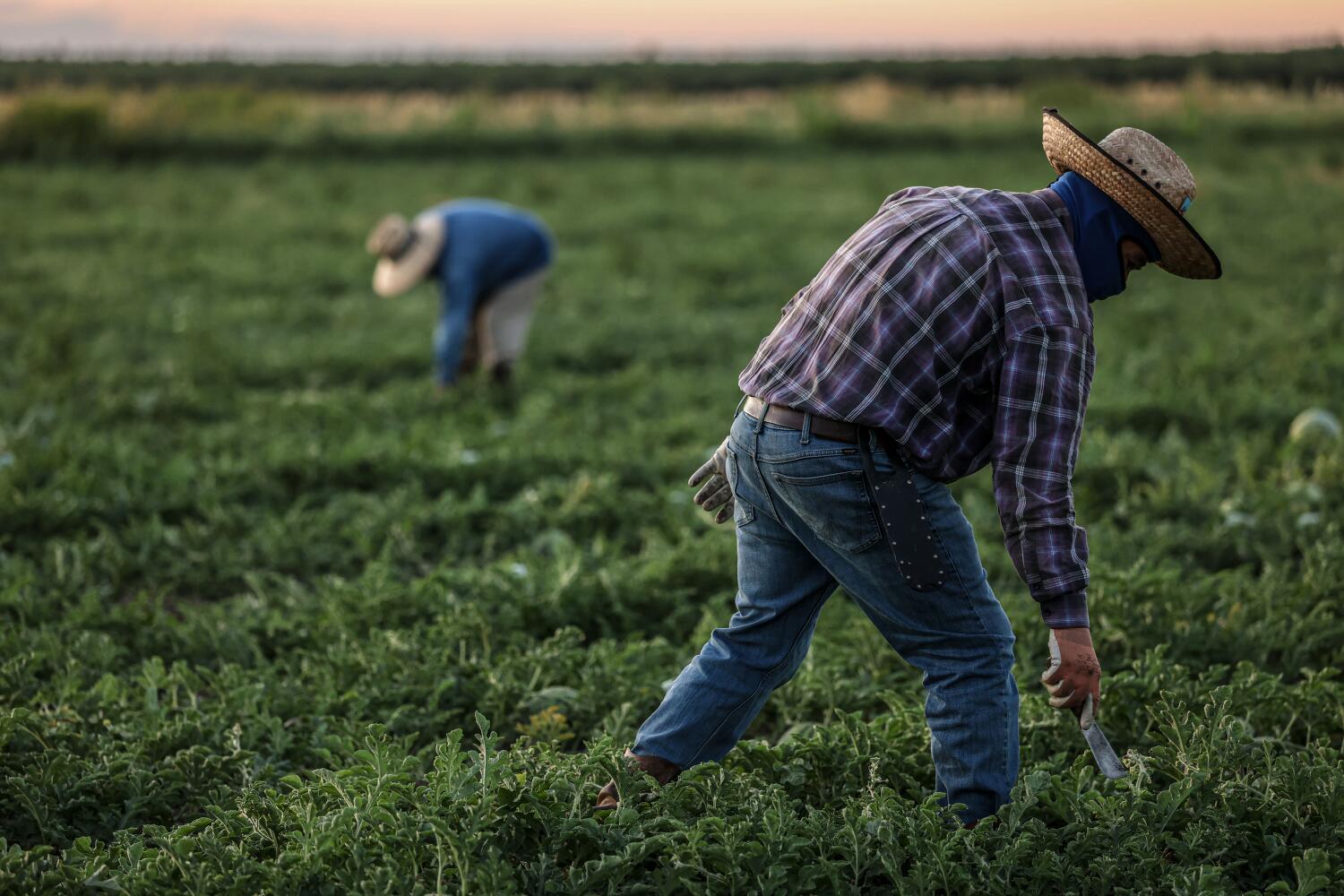
Dawn in the Central Valley does not break so much as it bleeds through the dust. Long before the sky turns blue, the air smells of crushed earth, diesel, and the sharp, metallic tang of sweat that has not yet dried from yesterday.
You stand in the rows. Your hands are already stained a deep, permanent purple from the fruit, your skin tight from the dry heat that will soon press down like a physical weight. Every movement is a calculation. Bend. Reach. Twist. Drop. Repeat ten thousand times before the sun hits its peak.
For generations, the people who do this work have been treated as background actors in the grand American feast. They are ghosts who pull strawberries from the loam, clip citrus from the branches, and tend the vines that fill the wine glasses of cities they will never visit. They are told their labor is essential, yet treated as disposable.
Then came the cuts.
Imagine standing in that predawn chill, watching the numbers on a pay stub shrink. Not because you worked fewer hours. Not because you picked less fruit. But because a stroke of a pen in a distant, air-conditioned room decided that the sweat on your back was suddenly worth less than it was yesterday.
That is what happened under the Trump administration when it attempted to slash the wages of seasonal agricultural workers under the H-2A visa program. It was a calculated maneuver, wrapped in bureaucratic jargon about economic relief and market rates, designed to lower the floor beneath the feet of people who have nowhere lower to fall.
Federal judges do not often speak the language of the soil. But sometimes, the law catches up to cruelty.
A federal court in California stepped into that dust and ruled the wage cuts unlawful. The decision was a stark reminder that even in the labyrinth of immigration policy and administrative overreach, there are lines that cannot be crossed without breaking the social contract entirely.
Let us be clear about what was at stake.
The H-2A program brings tens of thousands of foreign agricultural laborers to farms across the United States every year. Growers argue they need this workforce because domestic workers refuse the grueling, backbreaking labor of the harvest. Critics, on the other hand, point out that bringing in workers tied to a single employer creates a modern indentured dynamic, where complaining about wages or safety means instant deportation and ruin.
When the administration tried to freeze or reduce the Adverse Effect Wage Rate—the baseline pay designed to ensure that foreign guest workers do not depress the wages of domestic laborers—it wasn't just a minor administrative tweak. It was an assault on the value of human toil.
Consider what a wage cut means when you are earning pennies per bucket. It is the difference between buying medicine for a coughing child and hoping they fight off the fever on their own. It is the difference between sending a few dollars home to a village that depends on remittances and watching that lifeline snap. It is the quiet, grinding erosion of dignity.
The administration argued that freezing these wages would help farmers struggling through economic turbulence. But that argument relies on a false choice, a rigged ledger that balances the books by bleeding the poorest people in the supply chain.
It assumes that the American food system can only survive if the people who plant and harvest the food are pushed past the brink.
Logic, history, and basic human empathy tell us otherwise.
When you devalue farm labor, you don't just hurt the worker standing in the furrow. You warp the entire market. Domestic workers find themselves competing against artificially suppressed wages, driving them out of the fields entirely and deepening the reliance on a captive foreign workforce. The race to the bottom accelerates until the only thing left in the dirt is exploitation.
The California federal judge who struck down the wage cuts saw through the bureaucratic smoke. The ruling emphasized that the federal agencies failed to follow the law, acting arbitrarily and capriciously in a rush to pad the bottom line of agricultural conglomerates at the expense of human beings.
It was a victory, yes. But victories in court rarely smell like justice when you are still standing in the dust at four in the morning.
The legal win stopped the immediate drop in pay, but it did not change the underlying reality of the fields. The work remains punishing. The vulnerability remains absolute. The invisible machinery that extracts maximum profit from maximum suffering continues to turn, grinding up backs, knees, and hands season after season.
We sit at our dining tables, surrounded by abundance. We slice the avocado, rinse the berries, carve the roast, and rarely do we think about the hands that made it possible. We treat food as a commodity, disconnected from the humanity that birthed it.
The ruling serves as a temporary shield, but it is not a cure.
Until we recognize that the true cost of a meal includes the well-being of the person who harvested it, we will continue to repeat these battles in courtrooms and legislative halls. We will continue to pretend that we can build an economy on the backs of ghosts.
The sun climbs higher over the valley now, burning off the morning mist, turning the dust into a golden haze that blinds you if you look too long straight ahead.
Down in the rows, the work starts again.
Bend. Reach. Twist. Drop.
The wages are protected for today, but the earth is still heavy, and the hands that tend it are still waiting for a world that values them as more than just a line on a balance sheet.