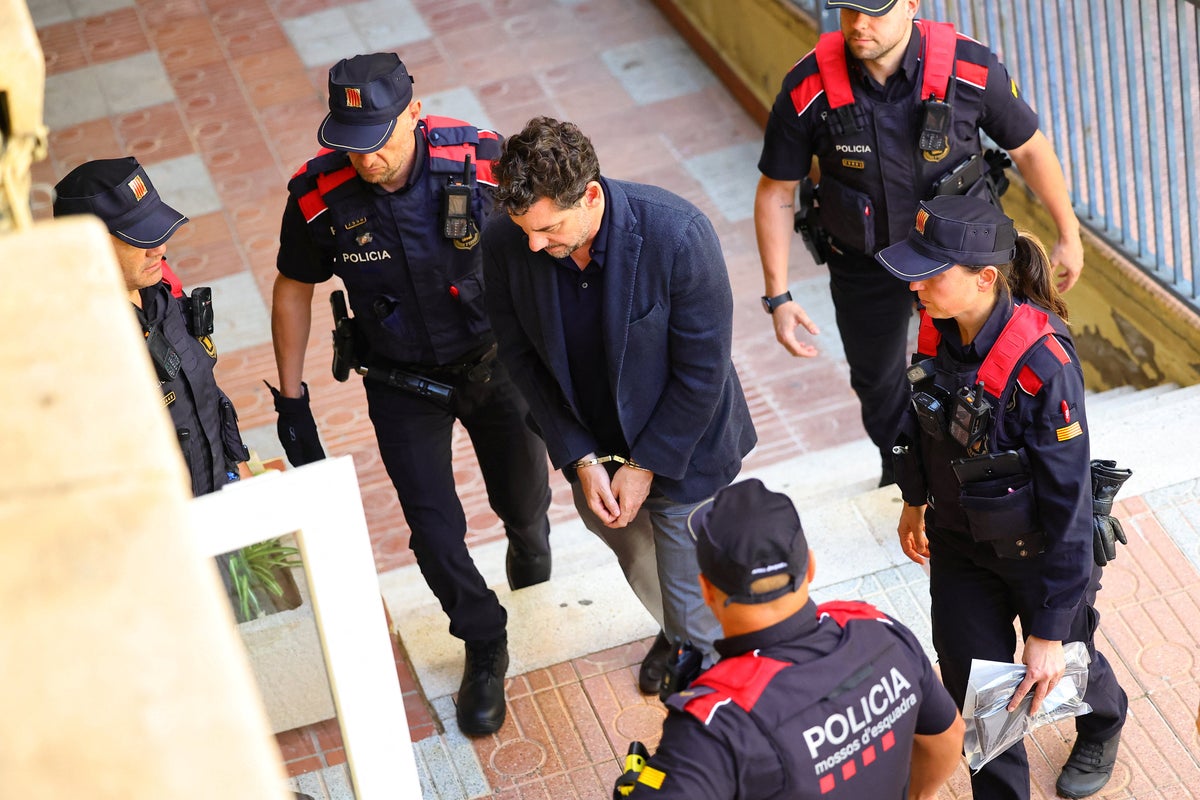
The Mediterranean sun usually suggests warmth, leisure, and the effortless chic of a European summer. But inside a sterile courtroom in Barcelona, the atmosphere froze. A judge looked across the room at Alejandro Andic and stripped away any lingering illusions of a tragic family accident.
This was not a story of a grieving son inheriting the mantle of a global fashion empire. It was, according to the magistrate, something far darker. A calculated, premeditated betrayal.
To understand how the heir to the Mango fashion fortune ended up accused of playing an active role in the death of his own father, Nahman Andic, one must look beyond the glossy storefronts and the runway glitz. You have to look at the crushing weight of legacy, the poison of patience, and what happens when a family business becomes a gilded cage.
The Foundations of the Empire
Nahman Andic did not just build a company. He built a monolith. Alongside his brother Isak, he arrived in Spain as an immigrant and transformed a small clothing stall into Mango, a fast-fashion juggernaut that rivals Zara and shapes how millions of people dress every single day.
Imagine spending your entire life under the shadow of a giant.
That was Alejandro’s reality. In billionaire dynasties, the patriarch’s shadow is often so vast that the children never truly see the sun. They are given titles, board seats, and staggering wealth, but they are rarely given total control. Power is a drug that founders seldom surrender voluntarily. They hold onto the steering wheel until their knuckles turn white, even as old age creeps in.
For years, the public narrative surrounding the Andic family was one of seamless succession and corporate harmony. But wealth has a way of masking the fractures underneath. Behind closed doors, the tension between a fiercely protective founder and an ambitious heir grew toxic. Alejandro was no longer a young apprentice; he was a man waiting for his life, and his empire, to truly begin.
Then came the decline.
The Slow Shift from Care to Calculation
As Nahman Andic aged, his health deteriorated. This is the vulnerable pivot point in any family saga, the moment where filial duty is tested against the grueling reality of long-term care. In the beginning, the family insulated the patriarch. They hired professionals, secured top-tier medical help, and retreated behind the high walls of their private estates.
But according to the judicial investigation, the nature of that isolation changed. It shifted from protection to confinement.
Consider the psychological landscape of a multi-million-dollar estate where a patriarch’s cognitive and physical health is failing. The staff looks to the new boss. The legal documents begin to shift. The court found that Alejandro didn't just witness his father's decline; he actively steered it toward a specific, fatal conclusion.
The judge’s ruling shattered the defense’s claim of a natural, albeit tragic, end. The legal language was unsparing, describing Alejandro’s actions as "premeditated."
This wasn't a sudden outburst of rage. It wasn't a crime of passion committed in the heat of an argument. It was a slow, deliberate erosion of care. It was the systematic neglect of a vulnerable man by the very person bloodbound to protect him. The prosecution argued that Alejandro manipulated medical treatments, isolated his father from other family members, and created conditions that accelerated Nahman's demise.
The Motive Hidden in Plain Sight
Why would a man who already had everything risk total ruin?
The answer lies in the distinction between having wealth and having power. Alejandro Andic had access to unimaginable luxury, but he did not have the ultimate authority. In the high-stakes world of international retail, decisions need to be made at lightning speed. When a founder refuses to let go, the company can become paralyzed.
But this went beyond corporate strategy. This was deeply personal.
To grow up as the heir to a fortune is to live with a paradox. You are told from childhood that you are chosen, that the empire will one day be yours. Yet, every day you wake up, you are still just an assistant to the true ruler. The resentment that builds in that environment is a quiet, corrosive acid. It eats away at empathy until a parent is no longer a father, but an obstacle.
The legal proceedings revealed a paper trail and witness testimonies from domestic staff that painted a chilling picture of life inside the villa during Nahman's final months. Nurses spoke of altered schedules. Doctors noted a strange reluctance to pursue aggressive, life-prolonging treatments. Friends of the elder Andic testified that they were abruptly cut off, told that Nahman was "too tired" or "not up for visitors."
Step by step, the old man’s world shrank until it contained only his son and the creeping darkness.
The Mirage of the Perfect Legacy
We love to consume the myth of the self-made billionaire and the beautiful, successful family that inherits the crown. It is the modern equivalent of royalty. We look at the storefronts in Paris, New York, and Madrid, and we see success materialized in glass and steel.
The Mango case forces us to look at the rot beneath the foundation.
It exposes the profound loneliness of the ultra-wealthy at the end of their lives. When your net worth is measured in billions, every relationship is transactional. Nahman Andic spent his life calculating risks, predicting fashion trends, and outmaneuvering competitors. Yet, he failed to see the greatest threat to his life was living under his own roof, sharing his own last name.
The court's decision to point directly at Alejandro as an active participant in his father's death completely alters the history of the brand. It turns a corporate triumph into a gothic tragedy.
The Long Shadow of the Gavel
The legal battle is far from over, but the psychological verdict has already been delivered to the public. The illusion of the golden family is gone.
Alejandro Andic sought to expedite his ascent to the throne, to finally step out from the suffocating shadow of his father. Instead, he has ensured that he will be forever defined by it. If the empire was a cage before, the prison he faces now is literal, cold, and entirely of his own making.
The storefronts of Mango remain open. The clothes are still sold. The customers still stream through the doors, entirely unaware of the blood on the tapestry of the brand’s history.
But the family name has been permanently altered. A father spent his life building a legacy for his son, only for that legacy to become the very reason he was betrayed. In the end, the most expensive thing Nahman Andic ever bought was the ambition of his heir.