The sky over Edmonton does not negotiate. When it breaks, it does so with a sudden, violent crack that vibrates through the floorboards of older homes in Strathcona and rattles the coffee mugs sitting on kitchen counters in Oliver.
You smell it before you see it. That sharp, ozone-heavy tang cutting through the humid July air, followed instantly by the deafening percussion of water and ice hitting asphalt.
Elena stands at her living room window, watching her hydrangeas get shredded into green pulp. She has lived in this city for thirty years. She knows the rhythm of the seasons, the way winter stretches its icy fingers into April, the brief, breathless beauty of a prairie summer. But the storm that tore through the city a few weeks ago felt different. It was heavier. Meaner.
When the wind finally died down and the amber emergency alerts faded from glowing cell phone screens, the true scale of the fracture became clear. Downed power lines draped across suburban streets like discarded wire. Uprooted elms, decades old, crushed parked sedans with casual indifference. Basements filled with murky, sewage-laced water.
And then came the ledger.
Municipal accountants do not weep over crushed hydrangeas. They measure catastrophe in columns and decimals. Days after the clouds parted, the official numbers dropped with a sickening thud: twenty to thirty million dollars.
That is the price tag attached to a broken sky.
The Anatomy of an Emergency
To understand twenty million dollars, you have to look past the abstract weight of municipal budgets. You have to look at a dump truck.
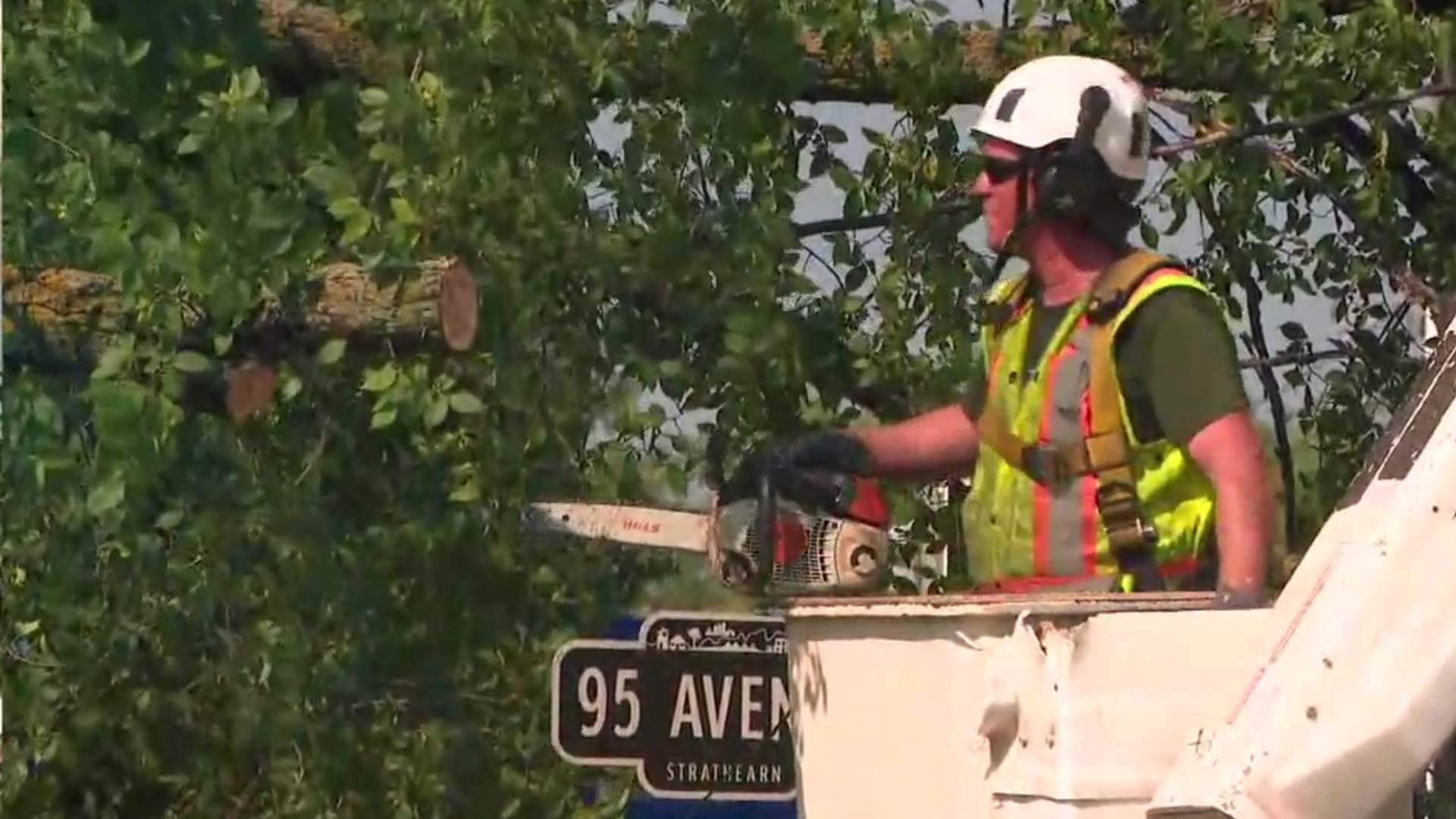
Imagine, for a moment, a single municipal operations yard at four o'clock in the morning. (This is a hypothetical lens to view a very real mechanical ballet.) Floodlights cut through the pre-dawn dark, reflecting off the yellow hoods of heavy front-end loaders, wood chippers, and vacuum trucks. Crews that have not slept in thirty-six hours are swallowing stale coffee and checking chainsaws.
Every snapped branch, every waterlogged mattress hauled from a flooded basement, every shattered pane of glass at a municipal transit hub requires human hands to clear.
Edmonton’s estimated repair bill is not a random bureaucratic guess. It is the cumulative math of overtime pay for drainage workers. It is the cost of fuel for endless fleets of garbage trucks repurposed for debris hauling. It is asphalt patching, traffic light recalibration, and emergency structural assessments for community centers whose roofs surrendered to the deluge.
When a storm hits with this kind of localized fury, city infrastructure behaves less like concrete and steel and more like an old body under sudden stress. Small weaknesses turn into massive failures. A storm sewer clogged with wind-blown leaves backs up a neighborhood intersection. Suddenly, commuters are stranded in three feet of rainwater, and emergency dispatchers are fielding calls faster than operators can pour coffee.
The Invisible Ledger
Money in municipal governance is a zero-sum game. When twenty to thirty million dollars vanish into storm recovery, that cash has to be pulled from somewhere else.
Pothole repairs scheduled for residential crescents in the autumn get delayed. Library book acquisition budgets tighten. Community league grant applications sit longer in bureaucratic limbo. This is the invisible cost of extreme weather. It does not appear on the front page of the newspaper, but it slowly degrades the quality of everyday life in the neighborhoods affected.
We tend to view natural disasters as cinematic events. We watch the footage on the evening news: drone shots of brown floodwaters swirling around suburban cul-de-sacs, cars half-submerged under overpasses, lightning branching across the horizon like cracked porcelain. We feel a momentary jolt of empathy. Then the segment ends, the anchor pivots to sports, and we go back to checking our email.
We forget that the storm leaves long after the clouds do.
For Elena, the storm meant three days without power, spoiled groceries rotting in a dark refrigerator, and a basement wall that now leaks whenever a heavy mist rolls in. Her homeowner insurance deductible is steep, and the local adjuster warned her that storm surge coverage has limits. She is left staring at a repair estimate that feels insurmountable on a fixed income.
Multiply Elena’s basement by thousands across the city. Multiply her stress by the small business owner whose storefront window caved in, or the transit operator who had to navigate flooded tracks while passengers panicked in the dark.
Suddenly, twenty million dollars feels entirely too small. It is a mathematical floor, not a ceiling.
The New Normal
We are living through a shifting atmospheric baseline. Weather patterns that used to arrive once a generation now show up with unsettling regularity. The atmosphere holds more moisture as global temperatures creep upward, turning standard summer thunderstorms into localized firehoses of water and wind.
Cities like Edmonton were built for a different climate reality. Their drainage trunks, zoning laws, and emergency reserves were engineered for a historical average that no longer exists. Every time the sky breaks like this, it exposes the friction between the city we designed and the environment we now inhabit.
Fixing a road is easy. Puring new asphalt takes chemistry and muscle. Rebuilding public trust in the resilience of urban infrastructure is infinitely harder.
When the bills are finally tallied, the council meetings adjourn, and the emergency funds are drained, the physical debris will be gone. The streets will be swept clean. The uprooted elms will be replaced by young saplings staked securely into the boulevard dirt.
Yet the fundamental question remains hanging in the humid summer air.
How many storms can a city absorb before the ledger finally breaks?
The next forecast is already loading on the screen. The radar map shows green turning to angry yellow, then deep, bruised red, moving slowly across the horizon toward the river valley.
The coffee is poured. The windows are locked.
We wait.