The travel writing complex loves a good eco-romance. For decades, journalists have swooned over Alaska, Hawaii, Maine, and Vermont because these four states banned roadside billboards. The narrative is always the same: by purging outdoor advertising, these utopias preserved their pristine vistas, protected drivers from corporate brainwashing, and created a pure, uncommercialized paradise.
It is a beautiful story. It is also completely wrong.
The lazy consensus ignores economic reality. Banning billboards did not save these states; it created a country-club economy that punishes small, local businesses while giving massive corporate chains a monopoly on consumer attention.
I have spent fifteen years analyzing regional economic development and commercial real estate. I have watched mom-and-pop operators go under because state bureaucrats decided a standard 14-by-48-foot steel structure was a moral failure. The anti-billboard movement is not environmentalism. It is aesthetic redlining.
The Class Warfare Hidden in the Grass
When Vermont passed Act 333 in 1968, followed by Hawaii, Maine, and Alaska, the goal was framed as conservation. But let's look at who actually benefited.
Banning billboards instantly froze the physical map in favor of incumbent corporations. If you are a massive, multi-billion-dollar hotel chain or a national fast-food franchise, you do not need a billboard. You have a $50 million national television budget. You have search engine optimization dominance. You have a recognizable 50-foot glowing logo that qualifies as "on-premise signage," which conveniently escapes most state bans.
Now look at the independent diner, the family-owned orchard, or the roadside motel three miles off the highway. They rely on impulse traffic. They need to tell a driver right now that clean beds and hot food are available at Exit 14.
By stripping away off-premise advertising, these four states effectively cut the vocal cords of the local entrepreneur.
"We saw a 35% drop in weekend foot traffic the year the local sign ordinances tightened up," a third-generation campground owner in New England told me. "The tourists don't know we're here, and Google Maps doesn't highlight us unless we pay for ads. But we couldn't afford the digital ad pivot."
The result? The wealthy get their uninterrupted view of the mountains on their way to their luxury summer homes, while the rural working class loses its economic engine. It is environmentalism for the elite, paid for by the local business owner.
The Logo Sign Monopoly
Proponents of the ban point to the Highway Beautification Act of 1965 and the subsequent rise of State Logo Sign programs—those blue "Food, Gas, Lodging" signs near exit ramps. They claim these signs solve the discovery problem safely and cleanly.
This is a corporate welfare scheme disguised as a compromise.
To get your logo on those official state blue signs, you must meet strict, rigid criteria. In many jurisdictions, you must be open six or seven days a week, offer specific minimum hours, and, most importantly, pay exorbitant annual fees to the state or its private contractor.
Who wins that bidding war? McDonald’s, Exxon, and Marriott.
The quirky local seafood shack that closes on Tuesdays because the fish market is shut cannot qualify. The boutique bed-and-breakfast with only four rooms cannot justify the flat-rate fee. The blue signs did not replace billboards; they gentrified roadside discovery. They created a closed loop where only the biggest players can buy their way into the driver's field of vision.
The Distraction Myth
Let's dismantle the safety argument that always gets dragged out during these debates. Anti-billboard advocates claim that roadside advertising causes accidents by distracting drivers.
The data tells a completely different story.
Modern highway safety research, including studies published by the Federal Highway Administration, shows that straight, monotonous highways with zero visual stimuli cause highway hypnosis. Drivers zone out. Their reaction times slow down.
A well-placed, well-lit digital billboard actually breaks the monotony of a long drive, keeping the brain engaged.
Furthermore, look at what replaced the billboard. When you ban physical signs, drivers do not just stare at the trees in blissful silence. They look down at their phones. They open Yelp, Apple Maps, or TripAdvisor to find out where to eat or get gas.
By removing the massive, safely positioned sign at eye level above the horizon, billboard bans actively incentivize drivers to look down at a five-inch screen in their laps while traveling at 70 miles per hour. It is a textbook case of unintended consequences.
The Digital Irony
The ultimate irony of the billboard ban is that it achieved the exact opposite of its intended goal. It did not stop advertising; it just moved the pollution into our pockets.
Outdoor advertising is the last remaining democratic medium. You cannot turn it off, you cannot fast-forward through it, and you do not need a $1,200 smartphone or a data plan to see it. It is accessible to every single person using the public infrastructure.
When a state eliminates this medium, it forces the entire economy into the digital ecosystem.
Imagine a scenario where a small tourist attraction in rural Maine wants to attract visitors. Under the billboard ban, they must pour their limited budget into Meta ads, Google AdWords, and programmatic programmatic display networks.
Where does that money go? It leaves the state. It goes directly to Silicon Valley.
When a business buys a billboard, that money stays in the local economy. It pays rent to the local farmer who leases the land for the structure. It pays the local sign installation crew. It pays local property taxes.
The billboard ban is a massive wealth transfer from rural landowners and small business owners to Big Tech monopolies.
The Nuance of Managed Growth
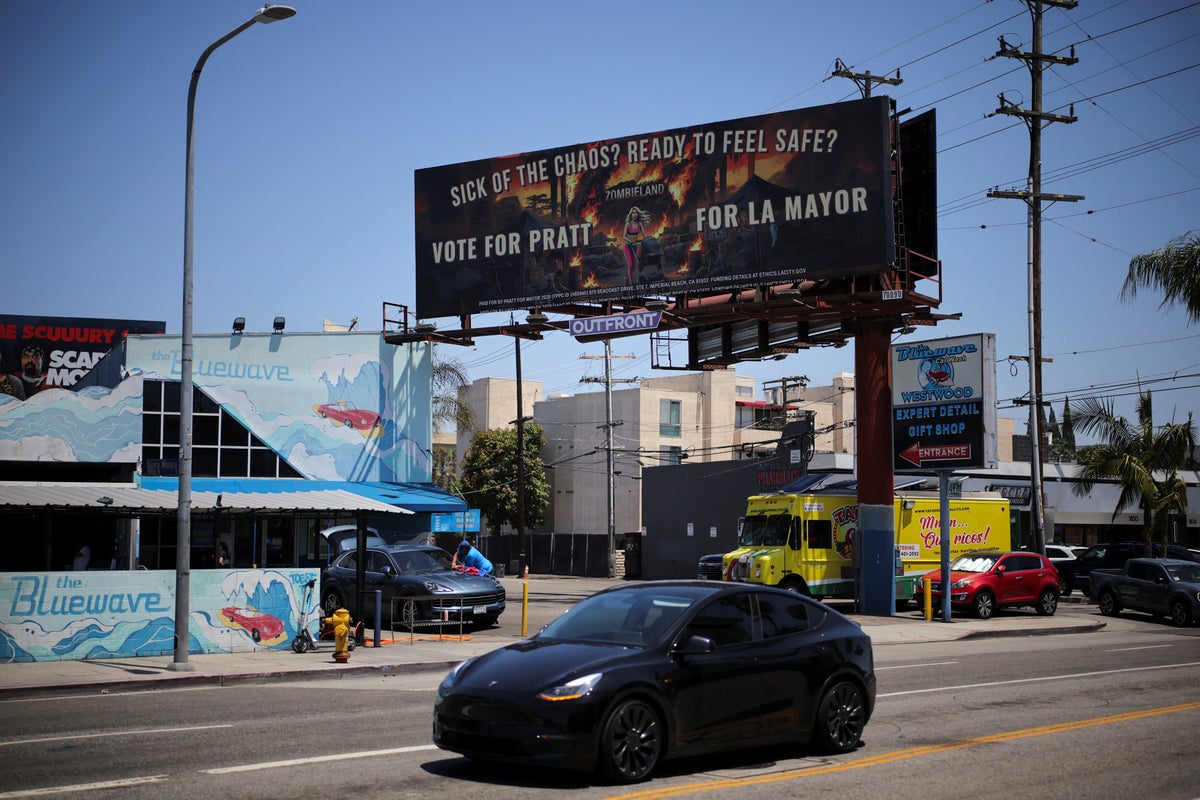
Am I arguing for an unregulated wild west where neon signs block out the sun? No. Houston, Texas, is often cited as the nightmare scenario of unregulated signage, and fair enough—nobody wants a chaotic jungle of overlapping vinyl.
But there is a massive gulf between total anarchy and an outright ban.
Smart states use zoning, caps, and spacing rules to create balance. They allow billboards in industrial and commercial corridors while protecting true wilderness areas. They limit the density of signs so that every voice can be heard without creating visual clutter.
They understand that a vibrant economy requires commercial speech.
The four states that banned billboards did not solve a problem; they took the easy way out. They chose the lazy aesthetic fix over the harder work of balanced regulation. They traded local economic resilience for a postcard view that benefits a wealthy vacationing demographic while starving the people who actually live there year-round.
Stop praising the billboard ban as a triumph of progressive environmental policy. It is an exclusionary, anti-competitive relic of the late 20th century that crushes small businesses, funnels money to Silicon Valley, and forces drivers to look at their phones instead of the road.
If you want to support local economies, stop romanticizing the empty highway. Start demanding that small businesses have the right to scream their existence to the world.