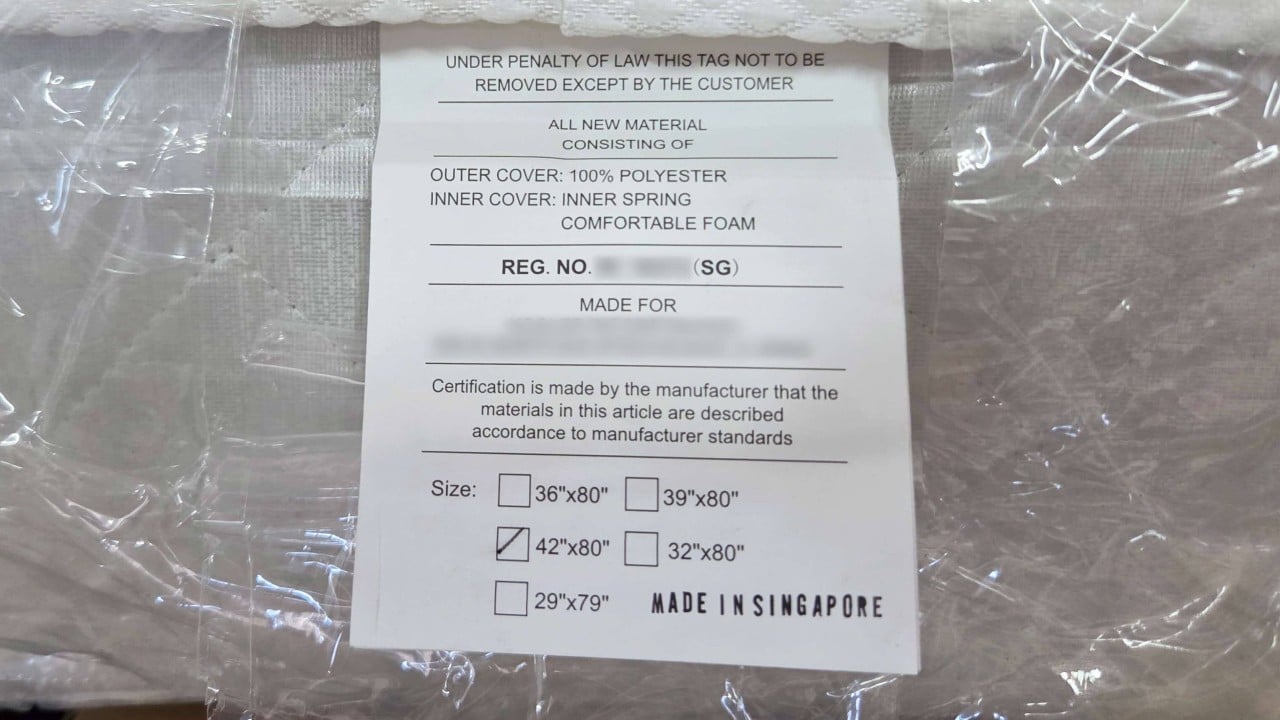
We spend a third of our lives entirely vulnerable. We close our eyes, surrender our consciousness, and trust that the patch of fabric and foam beneath us is exactly what it claims to be. For most of us, a mattress is an investment in health, a sanctuary bought with hard-earned money. We pay a premium for peace of mind. We buy the story of master craftsmanship, pristine factories across the ocean, and strict international standards.
Then the illusion shatters.
In Singapore, that sanctuary turned out to be a staging ground for a masterclass in deception. Three men stand accused of orchestrating an elaborate, multi-million-dollar architecture of fraud, spinning a web of premium labels out of thin air to siphon millions from unsuspecting households. This was not a minor case of exaggerated marketing. It was a calculated, systematic operation that turned the simple act of buying a good night's sleep into an eighteen-million-dollar trap.
The Anatomy of the Mirage
To understand how three individuals could pull off a heist of this scale without ever robbing a bank, you have to understand the psychology of the modern consumer. We are obsessed with origin. We believe that a piece of leather from Italy, a watch from Switzerland, or a mattress from a country renowned for its strict manufacturing laws possesses an inherent, almost magical quality.
The accused allegedly understood this vulnerability perfectly. They did not just sell mattresses; they sold a geographic fantasy.
According to prosecutors, the trio managed to manipulate supply chains and documentation to stamp ordinary products with fake countries of origin. They targeted premium tiers, knowing that the higher the price tag, the less likely a customer is to suspect a crude counterfeit. When a consumer pays thousands of dollars for a bed, they assume the price reflects the journey—the ethical sourcing, the European safety certifications, the import duties.
Instead, the reality was starkly ordinary. Imagine a family saving up for months, visiting a sleek showroom, and listening to a salesman drone on about the life-changing benefits of a specialized, imported mattress. The family signs the papers, anticipating a transformative shift in their daily well-being. The delivery truck arrives. The plastic is ripped away.
But beneath the crisp sheets lies a product born from deception, manufactured under entirely different conditions than promised, and marked up to an astronomical degree. The value was never in the coils or the latex. It was entirely in the ink on the label.
The Invisible Stakes of Supply Chain Fraud
When news of the legal charges broke, the public reaction followed a familiar pattern. First came the shock at the number—over US$18 million. Then came the inevitable question: how did nobody notice?
The answer lies in the terrifying complexity of modern global trade. It is remarkably easy for a product to change its identity in transit. A container ship leaves a port in one country, stops at a transshipment hub, exchanges paperwork, and suddenly emerges on the other side of the ocean with a clean bill of health and a brand-new pedigree.
This goes beyond mere corporate greed. It exposes a profound vulnerability in how we verify the things we bring into our homes. Consider the layers of trust required to move a single piece of furniture from a factory floor to a suburban bedroom:
- The Manufacturer: Bound by local laws to use safe, non-toxic materials.
- The Exporter: Responsible for declaring exactly what is inside the shipping container.
- The Customs Officials: Tasked with verifying thousands of high-volume shipments daily.
- The Retailer: The final gatekeeper, who consumers assume has done the due diligence.
When three determined individuals manipulate this chain, every single layer fails. The consumer stands at the very end of this long, broken line, utterly defenseless. They possess neither the chemical testing kits nor the industrial oversight required to dismantle a mattress and verify the density of its foam or the origin of its springs. They have only the label. And the label is a liar.
The Real Cost of a Fake Guarantee
The legal system measures this crime in currency. The court documents detail a staggering sum of money diverted from legitimate businesses and honest consumers into the pockets of fraudsters. But the financial metric misses the emotional fallout entirely.
A home is supposed to be a fortress against a chaotic world. The bedroom is the center of that fortress. When a scam of this magnitude penetrates the domestic space, it leaves behind a lingering sense of violation. Consumers who purchased these mattresses did not just lose money; they lost the agency to make informed choices about their own health and environment.
We live in an era where we are constantly told to be mindful of what we put into our bodies and what we bring into our living spaces. We worry about off-gassing, synthetic chemicals, and allergens. By faking the country of origin, the perpetrators did not just bypass customs duties—they bypassed the safety assurances that come with genuine regulatory oversight. They exposed thousands of sleeping people to completely unverified materials.
The three men now face the full weight of Singapore's legal framework, a system notoriously intolerant of commercial fraud. The investigation dragged the dark underbelly of luxury retail into the harsh light of the courtroom, exposing the vulnerabilities that exist when prestige becomes a commodity.
The sleek showrooms still stand, their lights gleaming through pristine glass windows, casting long shadows across perfectly made beds that promise a lifetime of rest. But the next time you run your hand over the stitching of a premium label, you might find yourself wondering about the long, silent journey it took to reach you, and whether the history you are buying was written by a craftsman, or invented by a criminal.