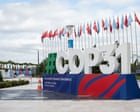
International climate summits do not fail or succeed based on the eloquence of plenary speeches; they are decided by structural leverage, procedural veto power, and capital allocation mechanics. Most coverage of the 31st Conference of the Parties (COP31) reduces the event to a superficial roster of heads of state and celebrity advocates. That framing obscures the actual decision-making machinery. Under the United Nations Framework Convention on Climate Change (UNFCCC), outcomes require consensus—a rule that grants disproportionate blocking power to specific geopolitical coalitions while forcing major emitters and capital providers into complex multi-variable trade-offs. Understanding who holds power at COP31 requires mapping the negotiation blocs, institutional gatekeepers, and non-state capital allocators according to their operational mandate and bargaining leverage.
The Institutional Gatekeepers and Procedural Control
Before examining national delegations, analysts must isolate the entities that control the agenda, draft the negotiating texts, and manage the physical and diplomatic choreography of the summit. In consensus-based multilateralism, the entity holding the pen dictates the baseline from which all compromises are measured.
The COP31 Presidency
The incoming COP Presidency—determined through the Western European and Others Group (WEOG) rotation, contested between Australia (in partnership with Pacific Island nations) and Turkey—serves as the chief executive of the diplomatic process. The Presidency does not hold a formal vote, yet its operational authority is immense.
The Presidency appoints the incoming COP President, who controls the plenary gavel, selects the co-chairs for ministerial consultations, and decides when to gavel a text through despite lingering objections. This procedural discretion is the primary mechanism used to break deadlocks in the final 48 hours of negotiations. If a Presidency miscalculates the red lines of a major bloc, the resulting plenary revolt can collapse the entire cover decision. Conversely, a disciplined Presidency uses bilateral "confessionals" to isolate holdout nations and extract concessions on finance or mitigation language.
The UNFCCC Secretariat
Headquartered in Bonn and led by the Executive Secretary (Simon Stiell, assuming continuity of term through the 2026 cycle), the Secretariat acts as the institutional memory and technical backbone of the process. While the Presidency changes annually, the Secretariat maintains continuity across negotiation tracks, including the Global Stocktake (GST) follow-up, the New Collective Quantified Goal (NCQG) implementation, and Article 6 carbon market operationalization.
The Secretariat’s power is administrative and technical. Its staff draft the initial compilation texts, track Nationally Determined Contributions (NDCs), and verify compliance with the Paris Agreement’s Enhanced Transparency Framework (ETF). When negotiations stall over technical definitions—such as what constitutes "abated" versus "unabated" fossil fuels or how to account for biodiversity co-benefits—the Secretariat's technical papers establish the legal and scientific parameters that constrain political spin.
The Subsidiary Bodies (SBSTA and SBI)
Often ignored by generalist media, the Chairs of the Subsidiary Body for Scientific and Technological Advice (SBSTA) and the Subsidiary Body for Implementation (SBI) manage the technical engine room during the first week of the conference.
- SBSTA translates scientific findings—primarily from the Intergovernmental Panel on Climate Change (IPCC)—into methodological guidelines for emissions accounting, technology transfer, and adaptation metrics.
- SBI assesses how the treaties are actually working on the ground, overseeing financial mechanisms, capacity building, and the review of national reports.
Text that fails to clear SBSTA or SBI during week one is kicked up to the political ministers in week two, creating a bottleneck that frequently forces trade-offs between unrelated issues, such as trading weaker fossil fuel phase-down language for stronger adaptation finance guarantees.
The Primary Sovereign Negotiation Blocs
Under the UNFCCC, individual nations rarely negotiate alone; they aggregate their diplomatic weight into formal and informal coalitions. Because UNFCCC decisions operate by consensus rather than majority vote, these coalitions function as mutual defense pacts designed to prevent any single member from being isolated and pressured into accepting unfavorable terms.
The European Union (EU)
The EU negotiates as a single unified bloc of 27 member states, represented by the European Commission and the rotating Presidency of the Council of the European Union. The EU's structural advantage is its regulatory first-mover status and institutional cohesion. Having already legislated binding domestic mechanisms like the Carbon Border Adjustment Mechanism (CBAM) and the Emissions Trading System (ETS), the EU arrives at COP31 seeking to internationalize its regulatory standards to prevent carbon leakage and protect domestic industrial competitiveness.
The EU's primary vulnerability is internal division over fiscal transfers. While the bloc pushes aggressively for stringent mitigation targets and rapid fossil fuel phase-outs, its finance ministers tightly guard the disbursement of public grant money, creating friction with developing nations that view ambitious mitigation demands without commensurate financial backing as an unfunded mandate.
The Umbrella Group
This loose coalition of non-EU developed nations includes the United States, Australia, Canada, Japan, New Zealand, Norway, and the United Kingdom. Unlike the EU, the Umbrella Group does not bind its members to a single negotiating position, operating instead as an information-sharing and strategic coordination network.
The operational weight of this bloc hinges heavily on the domestic political alignment of the United States. When the US executive branch prioritizes climate diplomacy, the Umbrella Group acts as a powerful engine for bilateral deals, technology partnerships, and private-sector mobilization. When US federal policy shifts toward deregulation or withdrawal, the remaining members—particularly the UK, Japan, and Australia—must recalibrate their strategies, often pivoting toward plurilateral sectoral alliances (such as methane reduction pledges or clean shipping corridors) to bypass US federal inaction.
BASIC (Brazil, South Africa, India, China)
Formed in 2009, BASIC represents the heavyweight emerging economies that simultaneously account for the largest share of current global greenhouse gas emissions growth and possess massive populations still requiring energy-intensive infrastructure development.
BASIC’s core doctrine is Common But Differentiated Responsibilities and Respective Capabilities (CBDR-RC). This principle holds that while all nations must address climate change, developed nations bear primary historical responsibility for cumulative atmospheric emissions and must therefore decarbonize faster while providing capital and technology to the Global South.
- China operates as the indispensable bilateral partner. As both the world’s largest annual emitter and the dominant manufacturer of solar panels, batteries, and electric vehicles, China wields dual leverage. It resists reclassification as a "developed" donor nation under UNFCCC annexes while simultaneously dominating global clean-tech supply chains.
- India anchors the bloc's equity arguments, demanding per-capita emissions accounting rather than absolute national totals, and insisting on the right to utilize domestic coal reserves until affordable grid-scale storage and concessional finance make rapid transition economically viable.
- Brazil leverages its stewardship of the Amazon basin and its role as the immediate predecessor (COP30 host in Belém) to bridge divides between forest nations, agricultural exporters, and industrialized powers.
The Like-Minded Developing Countries (LMDCs)
Comprising roughly 25 nations including China, India, Saudi Arabia, Bolivia, and Malaysia, the LMDCs represent the most rigid defensive line against prescriptive mitigation mandates. Within this group, fossil-fuel-exporting states—led by Saudi Arabia and the broader Arab Group—execute a highly disciplined procedural strategy.
Their objective is to ensure that the UNFCCC remains strictly focused on emissions rather than energy sources. By insisting on language that emphasizes "emissions abatement" and Carbon Capture, Utilization, and Storage (CCUS) rather than the direct phase-out of oil and gas production, the Arab Group protects the long-term asset value of state-owned hydrocarbons. They use procedural delays, line-by-line textual objections, and strict interpretations of CBDR-RC to slow down any mandate that threatens fossil fuel demand curves.
The Vulnerable Coalitions (AOSIS and LDCs)
The Alliance of Small Island States (AOSIS) and the Least Developed Countries (LDCs) represent roughly 90 nations that contribute negligible amounts to global emissions yet face existential physical and economic threats from sea-level rise, extreme weather, and agricultural collapse.
Lacking economic or geopolitical hard power, these blocs rely on moral authority, coalition discipline, and procedural disruption. AOSIS, in particular, is renowned for having some of the sharpest legal minds in the UNFCCC process. Because small island delegations cannot afford to lose the 1.5°C warming threshold, they use high-visibility walkouts, press briefings, and strategic alliances with the EU to shame major emitters into raising ambition. Their primary operational focus at COP31 centers on operationalizing the Loss and Damage fund, securing simplified access to grant-based adaptation finance, and ensuring that debt-distressed nations are not forced to take on commercial loans to pay for climate disasters.
The Financial Architecture and Non-State Allocators
While nation-states sign the cover decisions, sovereign budgets alone cannot finance the multi-trillion-dollar energy transition required globally. Consequently, a parallel tier of actors exerts decisive influence over whether COP31 pledges translate into deployed capital.
Multilateral Development Banks (MDBs)
The World Bank Group, the International Monetary Fund (IMF), and regional lenders (such as the Inter-American Development Bank and Asian Development Bank) are central to the climate finance equation. Following the push for the Bridgetown Initiative and systemic MDB reform, these institutions are under intense pressure from shareholders to stretch their balance sheets.
At COP31, MDB leadership focuses on risk-mitigation mechanisms—such as first-loss guarantees, political risk insurance, and foreign exchange hedging—designed to lower the cost of capital in emerging markets. The critical bottleneck is that private institutional investors require investment-grade risk profiles, while developing nations frequently carry sub-investment-grade sovereign credit ratings. MDBs act as the financial intermediary attempting to bridge this spread.
Sovereign Wealth Funds and Institutional Asset Managers
Managing tens of trillions of dollars, sovereign wealth funds (particularly from the Gulf Cooperation Council, Norway, and Singapore) alongside major private equity and infrastructure funds attend COP31 not as observers, but as dealmakers.
Their presence reflects a structural shift in the summit's function: COP has evolved into a global trade show for green industrial policy. When major asset managers engage with national delegations, they are evaluating regulatory certainty—specifically feed-in tariffs, carbon pricing stability, and permitting timelines. If a government’s NDC lacks an investable pipeline of bankable projects, institutional capital bypasses that jurisdiction regardless of its diplomatic rhetoric.
Corporate Fossil Fuel and Clean-Tech Lobbies
Industry representation at COP summits has expanded dramatically, splitting into two competing camps with distinct operational goals:
- Incumbent Oil, Gas, and Heavy Industry: Represented by national oil company executives and trade associations, this group lobbies for technology-neutral policies. Their primary objective is securing regulatory recognition and subsidies for blue hydrogen, CCUS, direct air capture, and voluntary carbon offsets, which extend the commercial viability of existing hydrocarbon infrastructure.
- Renewable, Grid, and Cleantech Developers: Comprising solar, wind, battery, and utility operators, this cohort lobbies for grid interconnection mandates, the elimination of fossil fuel consumption subsidies, and binding tripling-of-renewables targets. Their leverage is tied directly to falling levelized costs of electricity (LCOE), which allow them to argue that decarbonization is an economic competitiveness play rather than a fiscal burden.
The Core Friction Points Governing COP31
Mapping the actors only reveals half the system; predicting the outcome of COP31 requires understanding the structural collisions between these groups. Three specific bottlenecks dictate the negotiation dynamics.
1. The Mitigation-Finance Linkage
Developing blocs (BASIC, LMDCs, African Group) operate under a strict conditional logic: they will not submit to aggressive, economy-wide emissions reduction targets or accelerated fossil fuel phase-outs unless developed nations deliver predictable, grant-based public finance at scale. Developed nations (EU, Umbrella Group) counter that public budgets are fiscally constrained and that the trillions required can only come from mobilizing private capital—which in turn requires developing nations to enact domestic policy reforms and adopt higher mitigation ambition to create market certainty. This circular dependency is the primary cause of negotiation deadlocks.
2. The Definition of "Transition" and Abatement
Following the COP28 consensus to "transition away from fossil fuels in energy systems," the battleground shifted to semantics and timelines. Fossil-fuel-aligned blocs push for broad loopholes around "transitional fuels" (natural gas) and "abated" fossil fuels without strict definitions of what percentage of emissions must be captured to qualify as abated. High-ambition coalitions demand hard phase-out dates for unabated coal, oil, and gas, alongside strict lifecycle methane leakage limits. Every adjective inserted into the final text alters the valuation of trillions of dollars in stranded versus viable energy assets.
3. Carbon Market Integrity Under Article 6
Operationalizing the Paris Agreement’s carbon trading mechanisms (Article 6.2 for bilateral trades and Article 6.4 for a centralized UN-supervised market) pits host nations rich in nature-based solutions (tropical forest nations) against buyers seeking cheap offsets and integrity watchdogs demanding strict additionality and permanence rules. If Article 6 rules are overly lax, corporate and sovereign buyers can purchase low-quality credits to claim carbon neutrality without cutting actual emissions, undermining the entire atmospheric integrity of the Paris Agreement. If the rules are overly punitive, transaction costs spike and capital flows to conservation projects dry up.
Analytical Framework for Tracking COP31 Outcomes
To evaluate whether COP31 produces structural progress or diplomatic theater, ignore plenary speeches and monitor four specific indicators during the final 72 hours of the summit:
- The Cover Decision Verbs: Track the escalation or dilution of operational verbs. Words like "urges," "invites," and "notes" carry zero binding weight and signal a stalled consensus. Words like "decides," "requests," and "mandates"—paired with specific institutional deadlines—indicate genuine procedural progress.
- Concessional vs. Commercial Finance Ratios: Examine any headline finance figures to separate actual public grants and highly concessional loans from repurposed existing aid budgets or speculative private-sector mobilization estimates.
- NDC Ratchet Alignment: Assess whether major emitters commit to aligning their updated Nationally Determined Contributions with the 1.5°C pathway across all greenhouse gases (including methane and nitrous oxide), rather than relying solely on CO2 intensity targets tied to GDP growth.
- Article 6 Corresponding Adjustments: Verify whether bilateral carbon credit trades enforce strict "corresponding adjustments"—an accounting mechanism ensuring that when a host country sells a carbon credit to a buyer country, the host country deducts that reduction from its own national inventory to prevent double-counting.
The trajectory of COP31 will ultimately be determined by whether the Presidency can force a convergence between the EU’s regulatory export strategy, the BASIC bloc’s industrial development demands, and the capital-allocation thresholds of institutional finance. Any outcome that fails to align public risk-mitigation capital with enforceable domestic industrial policies in emerging markets will leave the underlying emissions trajectory unchanged, regardless of the consensus text gaveled through in the final plenary.