Pixels do not bleed. They do not sweat under the heavy amber glare of summit lights, nor do they feel the cold burn of a diplomatic snub. Yet, in the silent operating rooms of modern statecraft, pixels are weapons. They are sliced, dragged, and erased with the clean, quiet efficiency of a surgical blade.
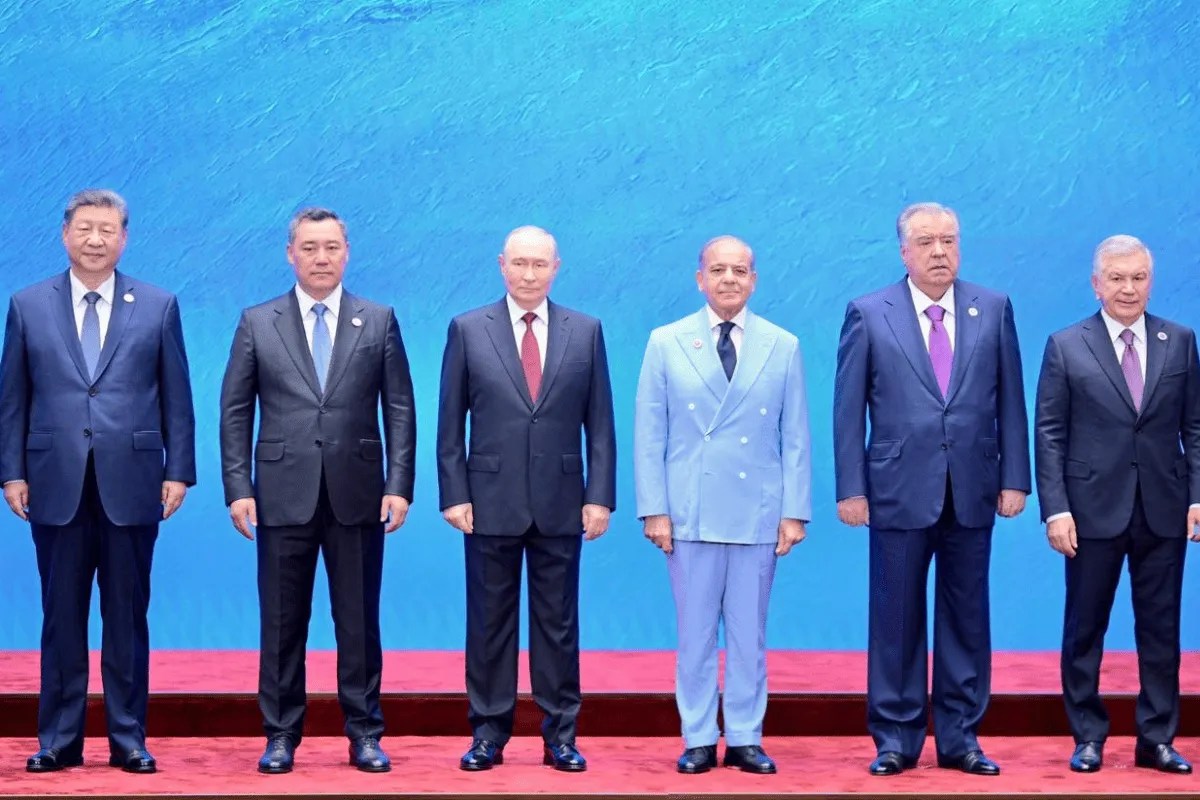
Picture a rectangular conference room. The air smells faintly of dry-cleaned wool, stale coffee, and the unique, sterile tension that only international diplomacy can manufacture. Dozens of men in identical dark suits sit around a polished wooden table that mirrors their strained expressions. This is the Shanghai Cooperation Organisation summit. It is a ritual of handshakes, tight smiles, and carefully choreographed choreography where every footstep is measured and every glance is recorded for domestic consumption back home.
Then comes the group photo.
For the average observer, a summit photograph is a harmless piece of archival wallpaper. It is something to be glanced at over morning toast and forgotten by noon. But to the digital architects sitting in ministry basements, that flat rectangular image is an ideological battleground. Every millimetre of real estate matters. Who stands at the center? Who is pushed to the fuzzy, out-of-focus periphery? And, most importantly, who disappears entirely?
Consider what happens next in the quiet editing suites of Islamabad.
The original frame captures a crowded stage of regional heavyweights. Prime Minister Shehbaz Sharif is there, of course, but so is his Indian counterpart, Narendra Modi, alongside a shifting cast of central Asian leaders. It is a messy, complicated portrait of uneasy neighbors forced into the same room by geography and mutual necessity. But a messy portrait does not sell a clean domestic narrative. A messy portrait leaves room for uncomfortable questions.
So, the digital scissors come out.
With a few precise keystrokes, Narendra Modi is excised. Other leaders fade into the digital ether. The empty spaces left behind are pinched closed, stitching the remaining figures back together with invisible seams. And right there, dead center in the newly minted reality, sits Shehbaz Sharif. He is no longer just a participant in a multilateral forum; in this pixel-perfect universe, he is the anchor, the axis around which the entire geopolitical room spins.
It is a masterclass in domestic optics.
Optics are everything when your economy is teetering on a knife-edge and your political survival depends on projecting unshakeable strength to a weary public. To the citizen sitting in a cramped Lahore apartment scrolling through their phone on a humid evening, the image tells a comforting story. It says our leader is central. It says we are not isolated. It whispers that we command the room.
Except, the world outside that edited frame refuses to stay cropped.
In the digital age, a doctored photograph has a very short shelf life. Within hours, the original, unvarnished frame surfaces from foreign news wires. The side-by-side comparisons begin to circulate on social media platforms, turning an intended triumph of state propaganda into a public relations embarrassment. The contrast is jarring. In one version, a crowded room of diverse actors; in the other, a lonely, heavily doctored isolation chamber where inconvenient faces have been scrubbed away by an anxious bureaucracy.
This is the tragedy of modern image-management. In trying to project absolute control, the state reveals its underlying insecurity.
When you have to digitally manufacture your own prominence, you are admitting that you do not possess it naturally. Real power does not need to airbrush its rivals out of the picture. True authority stands comfortably in a crowded room, secure in its own weight, unbothered by who else happens to be standing in the frame.
The edited photograph from the summit will eventually be buried deep in an archive folder, superseded by newer scandals and fresher edits. But the impulse that created it remains stubbornly alive. It is the human desire to rewrite reality when reality refuses to flatter us.
We look at the screen, and we see the ghosts of leaders who were erased with a keystroke. We see the blank spaces where uncomfortable truths used to stand. And we are reminded that in the theater of international politics, the most revealing thing about a nation is not always what it puts on display, but what it desperately tries to hide.
The lights in the summit hall go out. The leaders pack their bags and fly home to their respective capitals. The table is cleared. But the digital ghost towns we create behind our glowing screens linger long after the meeting is adjourned, waiting for the next time we decide reality is simply too crowded to bear.