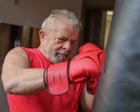
The physical vitality of an incumbent leader functions as a proxy for institutional stability. When Brazilian President Luiz Inácio Lula da Silva, entering his ninth decade, utilizes high-definition livestreams to broadcast rigorous exercise routines, he is not merely participating in a fitness trend. He is executing a calculated counter-offensive against the biological reality of senescence. In a high-stakes electoral environment against a significantly younger opponent, the objective is to neutralize the "longevity risk" premium that voters subconsciously apply to older candidates. This strategy rests on the premise that visible physical endurance can be converted into political capital, effectively decoupling the leader's chronological age from their perceived operational capacity.
The Biomechanical Signaling Framework
Political longevity requires the systematic management of three distinct variables: cognitive acuity, physical mobility, and aesthetic stamina. Lula’s livestreamed workouts target these variables through a specific set of visual cues designed to trigger positive voter heuristics.
- The Durability Heuristic: By performing repetitive, high-resistance movements (e.g., deadlifts or weighted squats), the candidate demonstrates skeletal and muscular integrity. This serves as a metaphor for the state’s ability to withstand external shocks.
- Cognitive Syncopation: Narrating a workout while performing it requires a high degree of neurological coordination. Maintaining a coherent policy monologue while under physical strain suggests a surplus of cognitive reserve, countering narratives of age-related mental decline.
- Translucency as Trust: The raw, unedited nature of a livestream creates a perception of medical transparency. It suggests that the candidate has nothing to hide regarding their health status, shifting the burden of proof onto the younger opponent to demonstrate equivalent discipline.
The Comparative Dynamics of the Age Gap
The central tension in the upcoming election is the 40-year age differential between the incumbent and his primary rival. In traditional political theory, youth is equated with innovation and energy, while age is equated with wisdom and experience. However, when the age gap exceeds a generational threshold, "wisdom" can be reframed by the opposition as "obsolescence."
To combat this, the Lula campaign utilizes a strategy of Aggressive Modernity. By leveraging digital platforms (livestreams, short-form vertical video) to showcase ancient physical activities (weightlifting, calisthenics), they bridge the gap between traditionalist bases and younger, digitally native demographics. The younger rival, by contrast, faces a unique constraint: if they emphasize their youth too heavily, they risk appearing unseasoned or impulsive. The incumbent's goal is to move the goalposts so that "fitness for office" is defined by discipline rather than birth year.
Physiological Performance as Policy Metric
In a polarized economy, the health of the president often serves as a leading indicator for the health of the national markets. Investors prize predictability. A sudden medical crisis in a centralized executive branch can lead to immediate capital flight and currency volatility.
- Risk Mitigation: The workout broadcasts serve as a form of non-verbal "forward guidance" for the markets. They signal that the risk of a mid-term succession crisis is statistically lower than the candidate’s chronological age would suggest.
- The Labor Metaphor: For the working-class base, the physical exertion of the president mirrors their own daily labor. It reframes the presidency from a desk-bound bureaucratic role to an active, grueling profession, reinforcing the "worker-president" identity that has been central to Lula's brand for decades.
Structural Constraints of the Fitness Pivot
While effective, the "athlete-statesman" pivot contains inherent structural risks that can backfire if the execution falters.
The first limitation is Performative Fragility. The more an octogenarian emphasizes physical prowess, the more catastrophic a minor injury becomes. A pulled muscle or a stumble during a broadcast would not be viewed as a common training setback, but as a confirmation of the opposition’s narrative of decline. This creates a high-stakes environment where the candidate must maintain a perfect record of physical competence; there is no room for a "bad day" in the gym.
The second bottleneck is Voter Cynicism. Over-production can lead to a perception of inauthenticity. If the workouts appear too staged—characterized by excessive editing or suspiciously light weights—the strategy shifts from "transparency" to "propaganda." To maintain the efficacy of this signaling, the campaign must ensure the workouts feel sufficiently taxing to be believable, yet controlled enough to be safe.
The Cost Function of Presidential Vitality
Maintaining this level of public performance requires a massive allocation of the most scarce presidential resource: time. A 60-minute workout broadcast represents a significant opportunity cost in terms of policy development or diplomatic engagement.
The campaign has determined that the ROI on this time allocation is positive because it solves a fundamental electoral bottleneck. If a voter believes a candidate will not survive their term, no amount of policy alignment will secure their vote. Therefore, the fitness routine is not a hobby; it is a critical component of the campaign’s risk-management infrastructure.
Strategic Forecast and Implementation
As the election cycle intensifies, expect the incumbent to escalate the complexity of these physical demonstrations. The goal is to reach a "velocity of vigor" that makes the opponent’s youth appear redundant. The strategy will likely shift from solo workouts to interactive physical events, involving the public or high-profile athletes, to further project an image of a leader who is not just surviving, but thriving.
The final strategic move for the incumbent is the integration of medical data into the narrative. By pairing the visual evidence of the workouts with selectively released, high-performance biometric data (resting heart rate, blood pressure, VO2 max), the campaign can move from subjective visual signaling to objective, data-driven authority. This creates a dual-track validation system that appeals to both the emotional instincts of the general electorate and the analytical requirements of the institutional elite. The younger rival is then forced into a reactive posture, where they must either ignore the incumbent’s vitality—allowing the narrative to take root—or attempt to out-compete a man twice their age in a arena of discipline, a contest where the underdog story ironically favors the octogenarian.