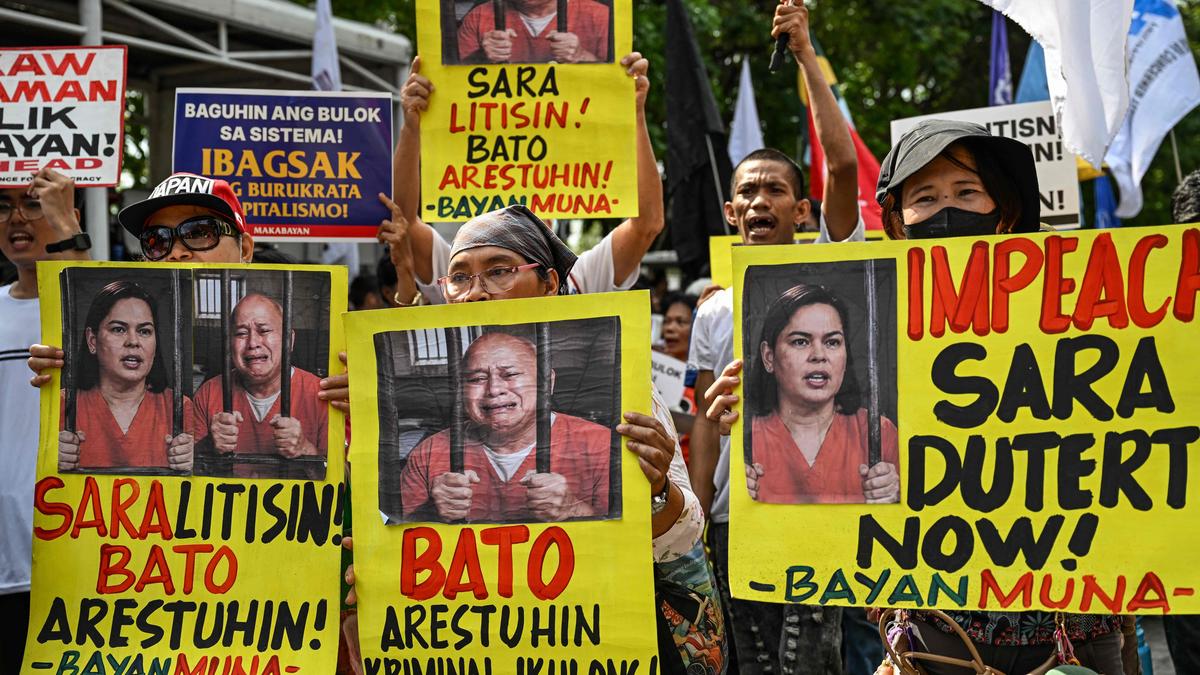
The mainstream media is treating the Philippine Supreme Court’s recent decision regarding the International Criminal Court (ICC) as a monumental shift in the global justice system. They want you to believe that by refusing to block an ICC arrest warrant for the architects of the drug war, the highest court in Manila just handed a massive victory to international accountability.
They are reading the script entirely wrong.
This decision isn’t a green light for global intervention. It is a masterful, strategic masterclass in judicial sovereignty that actually locks the ICC out, while pretending to leave the door open. The lazy consensus among human rights commentators is that the Philippine judiciary just blinked in the face of international pressure. The reality? The court just exposed the fundamental weakness of the Rome Statute and demonstrated how sovereign nations can completely neutralize global courts using their own legal architecture.
The Illusion of a Legal Open Door
To understand why the common narrative is completely backwards, you have to look at what the Supreme Court actually did, rather than what activist groups hoped they would do. The court dismissed a petition filed by government officials seeking to block the ICC's investigation into former President Rodrigo Duterte’s anti-drug campaign.
Mainstream analysis concludes that "no injunction equals green light for the ICC." This is a rookie error in constitutional law.
In the Philippines, as in any highly sophisticated legal system rooted in a mix of civil and common law traditions, courts do not issue advisory opinions or rule on hypothetical injuries. The court dismissed the petition because the ICC had not yet issued a formal, actionable arrest warrant that passed through the proper domestic channels.
I have spent years analyzing how states interact with international tribunals. Governments do not fight battles before they have to. By dismissing the petition on procedural grounds, the Supreme Court didn't endorse the ICC; they merely stated that the executive branch hadn't been forced to act yet. It is defensive legal aikido: use the opponent's momentum to slide past the blow entirely.
The Principle of Complementarity: The ICC's Fatal Flaw
Everyone cheering for an imminent ICC arrest in Manila fundamentally misunderstands Article 17 of the Rome Statute. The entire existence of the ICC hinges on the principle of complementarity. The international court is explicitly a court of last resort. It can only step in when a domestic legal system is "unwilling or unable" to carry out the investigation or prosecution.
By actively processing these high-profile petitions, issuing meticulous rulings, and keeping the domestic legal machinery visibly running, the Philippine legal system is systematically dismantling the ICC’s primary justification for intervention.
- The "Unable" Argument: The Philippine courts are fully functional, independent, and secure. There is no breakdown of civil order.
- The "Unwilling" Argument: The state has already prosecuted and convicted police officers involved in high-profile drug war killings, such as the landmark Kian delos Santos case.
When the Supreme Court routinely handles these cases, it demonstrates to the world that the domestic system is fully operational. Every time a local judge rules on a drug war matter, it strengthens the nation's argument that the ICC has zero jurisdiction. The ICC cannot legally force its way into a country that is actively managing its own legal affairs, even if international observers dislike the speed or the political optics of those domestic proceedings.
The Enforcement Mirage
Let’s talk about the elephant in the courtroom that international law professors love to ignore: enforcement.
Imagine a scenario where the ICC actually issues an arrest warrant for a high-ranking Philippine official or former president. Who executes it? The ICC has no police force. It has no marshals. It relies entirely on the executive branch of the target nation to handcuff its own people and hand them over to a plane bound for The Hague.
The Philippine government officially withdrew from the Rome Statute in 2019. While the ICC claims jurisdiction over crimes committed while the country was still a member, the practical reality of cooperation is dead. President Ferdinand Marcos Jr. has repeatedly stated that his administration views the ICC as a threat to national sovereignty and will not cooperate with its investigators.
Therefore, the Supreme Court’s refusal to issue an injunction changes absolutely nothing on the ground. The police report to the executive branch, not the judiciary. If the president says "do not enforce," the warrant is nothing more than an expensive piece of European stationery.
The Hypocrisy of Global Justice
The narrative surrounding this case perpetuates a dangerous myth: that international tribunals are neutral, objective arbiters of global morality. They are not. They are deeply political entities that select their targets based on geopolitical viability rather than pure justice.
Major global superpowers—the United States, China, and Russia—are not members of the ICC. They have explicitly shielded their citizens and military personnel from its reach. The United States went so far as to pass the American Service-Members' Protection Act, colloquially known as the "Hague Invasion Act," which authorizes the use of military force to liberate any American detained by the ICC.
When a developing nation like the Philippines navigates the ICC framework, it is dealing with a system that primarily prosecutes leaders from nations lacking the geopolitical muscle to resist. The Philippine Supreme Court knows this. Their legal maneuvering is designed to protect national sovereignty from a court that selectively applies global standards.
The Wrong Question to Ask
If you are asking, "When will the ICC arrest Duterte?" you are asking the wrong question. You are looking at a geopolitical chess match and focusing entirely on the pawns.
The real question is: "How long can international legal institutions maintain the illusion of authority when sovereign nations openly ignore them?"
The downside to this contrarian reality is uncomfortable. It means that victims of state-sponsored violence rarely find clean, cinematic justice in international forums. It means the process is slow, muddy, and deeply entangled with domestic political shifts rather than universal human rights declarations. But ignoring this reality in favor of a feel-good headline about a Supreme Court ruling is a disservice to anyone trying to understand how global power actually operates.
Stop waiting for a savior from The Hague. The fate of Philippine accountability will be decided in the halls of Manila, by local judges and domestic voters, exactly as the Supreme Court intended.