Silence.
That is the first thing you notice when a routine flight across the English Channel goes wrong, not the screaming engines or the flashing lights, just the sudden, suffocating drop in cabin pressure as the flight attendants stop rolling their carts and lock eyes with the cockpit door.
I have sat in seat 14A during a security diversion over central Europe. You do not hear an explosion. You hear the rhythmic click of a flight attendant’s seatbelt latching ten minutes too early, followed by a pilot’s voice that has been trained to sound like warm butter even when his heart rate is pushing one hundred and forty beats per minute. Outside the scratched acrylic window, the clouds look peaceful. Inside, three hundred strangers simultaneously realize they are trapped in a pressurized aluminum tube with zero control over their own survival.
When a fake bomb threat hits a European transport hub, the news ticker reduces the event to a sterile two-sentence blurb about "minor delays" and "precautionary evacuations." Those dry headlines miss the entire point. A hoax threat does not need a single ounce of C4 to detonate; it explodes inside the human nervous system, ripples outward through international airspace, and fractures the fragile trust that allows millions of people to cross borders every single day.
The Anatomy of an Invisible Panic
To understand what actually happens when an anonymous email or a scribbled note on a lavatory mirror triggers a European security protocol, consider a hypothetical passenger named Elena. She is a thirty-four-year-old architect from Madrid, flying into Brussels for a presentation that took six months to build, or perhaps she is standing on the promenade deck of a Mediterranean cruise liner docked outside Marseille, watching the harbor lights flicker across the water.
For Elena, the threat is entirely invisible until the machinery of state security slams down around her.
In aviation and maritime operations, there is no such thing as a "probable hoax." Every single warning must be treated as an active, lethal emergency until proven otherwise by men and women in heavy Kevlar suits. The moment a threat is logged against a flight over France or a cruise ship in the Baltic, an ancient, unforgiving domino chain begins to fall.
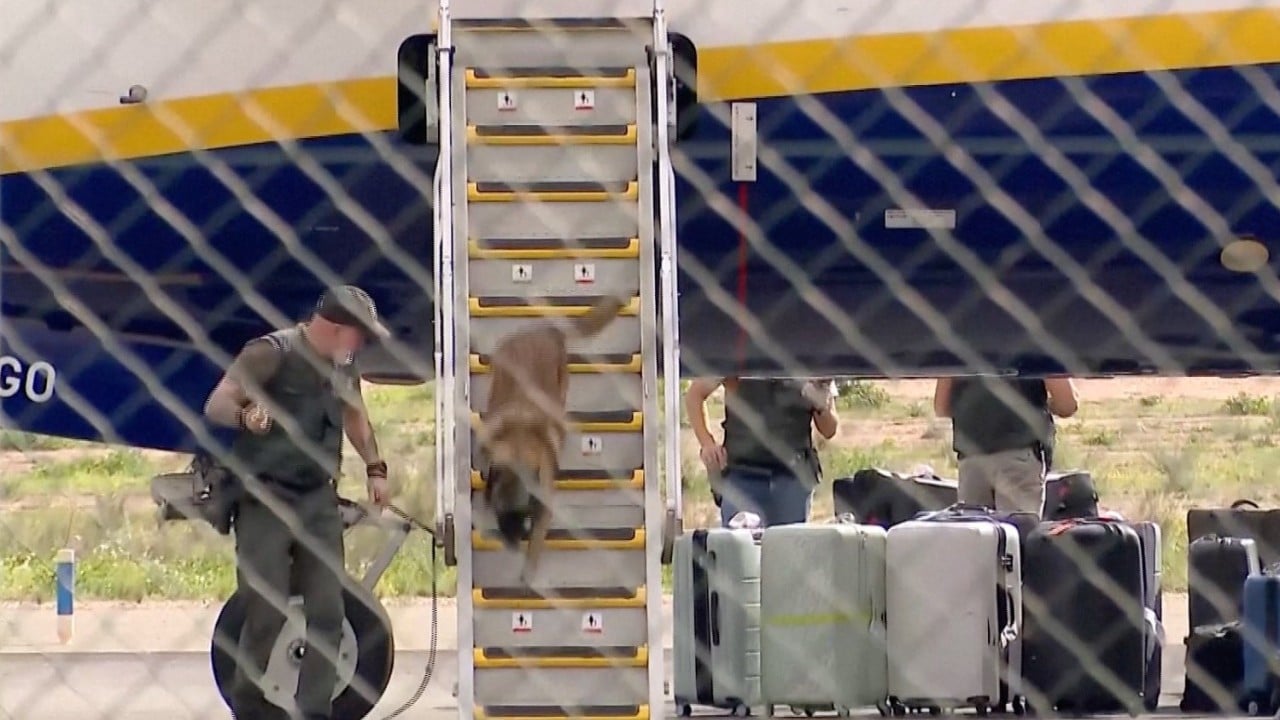
Air traffic controllers immediately clear a sterile corridor through some of the busiest skies on earth. Fighter jets—often Eurofighter Typhoons or Dassault Rafales—scramble from regional airbases, breaking the sound barrier to visually inspect the cockpit windows of a commercial airliner. Meanwhile, on the water, port authorities seal off entire terminals, trapping thousands of vacationers in a concrete purgatory while canine units sweep hull after hull.
Why European Infrastructure Bleeds So Easily
Think of European transit not as a series of independent train tracks, sea lanes, and flight paths, but as a single, hyper-tensioned spiderweb. Pluck one silk thread over Frankfurt or Barcelona, and the vibration travels all the way to Stockholm and Rome within twenty minutes.
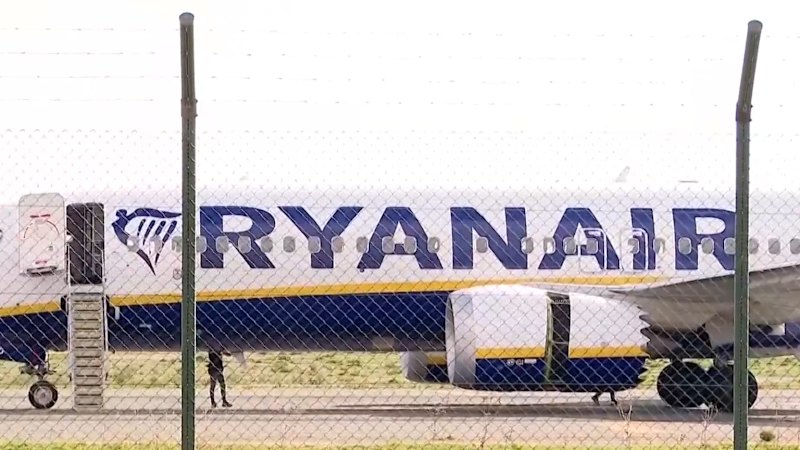
Europe’s greatest triumph—its seamless, borderless integration—is also its sharpest vulnerability. A single Boeing 737 forced down onto a remote tarmac in Belgium does not just inconvenience the one hundred and eighty people on board. That aircraft was scheduled to turn around in forty-five minutes, fly to Lisbon, pick up a fresh crew, and connect dozens of travelers to transatlantic flights bound for New York and São Paulo.
When that plane is towed to an isolation bay surrounded by fire engines with spinning amber beacons, the schedule collapses.
- The Airspace Bottleneck: Rerouting commercial traffic around a closed runway forces controllers to stack incoming flights in holding patterns, burning thousands of gallons of aviation fuel and pushing flight crews past their legally mandated duty hours.
- The Maritime Chokepoint: When a cruise ship carrying four thousand passengers is held at anchor due to a bomb scare, local port infrastructure—customs officers, bus fleets, medical responders—is completely paralyzed for up to twelve hours.
- The Psychological Aftershock: Long after the bomb disposal robots roll back into their vans, thousands of travelers carry a lingering hyper-vigilance into every terminal they enter for the rest of the year.
Consider what happens next in the terminal building. Gate agents, exhausted and stripped of real-time intelligence by police blackouts, face crowds of people missing weddings, funerals, cancer treatments, and final visa interviews. The perpetrators—often sitting safely behind encrypted virtual private networks thousands of miles away—never see the tears at Gate B12. They never hear the quiet panic of an elderly couple trying to ration insulin while their luggage sits locked inside a cargo hold five hundred yards away.
The Asymmetry of Modern Disruption
We tend to imagine threats to global travel as cinematic spectacles involving hijacked controls or smuggled devices. History tells a much quieter, far more frustrating story. Over the past decade, European aviation and maritime authorities have documented repeated waves of coordinated swatting campaigns—mass emails sent simultaneously to dozens of regional airports, schools, and port authorities.
The economics of this asymmetry are staggering.
An attacker spends zero euros and roughly four minutes drafting a threatening message routed through anonymous servers. In response, European governments and private carriers hemorrhage millions of euros in a single afternoon. Fuel burn alone on a diverted wide-body jet can exceed twenty thousand euros. Add the deployment of tactical police units, bomb-sniffing dogs, overtime pay for ground crews, hotel vouchers for stranded passengers, and statutory EU compensation claims, and a single keyboard stroke inflicts seven-figure damage.
Security experts call this friction warfare. You do not need to destroy the bridge if you can force the army to stop and inspect every pebble on the road.
I remember talking to a veteran air traffic controller in Amsterdam a few years back, a man whose voice carried the gravel of thirty years of night shifts. He told me that the hardest part of a security diversion isn't the radar work; it's the emotional bleed into the headset. "You hear the captain's cadence change," he said, staring down at his coffee cup. "You know he's looking at a cabin full of families, and you know you have to put him on the far side of the airfield where the ambulances are waiting, even if both of you suspect some teenager with a laptop caused the whole mess."
That admission stays with you. Even the professionals at the center of the storm live inside that terrible gray zone between statistical probability and catastrophic consequence.
Inside the Isolation Bay
Let us return to our hypothetical traveler, Elena, sitting on the tarmac in Brussels.
When the aircraft finally comes to a halt miles away from the main terminal, the engines spool down into an eerie, whistling quiet. Through the window, she sees blue flashing lights reflecting off the wet asphalt. The cabin temperature begins to climb because the auxiliary power unit has been shut off as a standard precaution against stray electrical sparks.
Then come the instructions. Leave everything behind.
Watch what happens to human beings when you tell them they must walk down an airstair without their coats, their laptops, their passports, or their medications. In that moment, the thin veneer of modern convenience evaporates. You realize how much of your identity, your livelihood, and your safety is stored inside a small nylon backpack sitting under the seat in front of you.
Passengers file down the metal steps into the biting European drizzle, hands raised or kept clearly visible as armed officers in balaclavas scan every face. Nobody is checking boarding passes. Nobody cares about priority status or frequent flyer tiers. On a cold tarmac surrounded by tactical police, a billionaire in first class and a backpacker in the last row share the exact same currency: vulnerability.
On a cruise ship, the experience is slower, heavier, and strangely claustrophobic. When a vessel like a massive Mediterranean liner receives a credible threat while in port, thousands of people are herded into muster stations—the very same spaces designed for lifeboat drills. Hours stretch into an agonizing limbo. Air conditioning hums loudly while rumors ricochet from table to table faster than official announcements can ever hope to catch them. Someone claims they saw divers under the hull; someone else insists a suspicious package was found near the engine room. By the time local authorities issue the all-clear, the vacation is psychologically over, even if the ship eventually sails.
How Europe Fights Ghosts
So how do you defend an open continent against an enemy made entirely of false alarms?
You cannot simply ignore warnings. The ghosts of Lockerbie, Madrid, and Brussels hang too heavily over European security architecture for any official to gamble with human lives. One missed warning would be an unforgivable moral failure.
Instead, intelligence agencies across Europol and national transport ministries have shifted their battleground from the tarmac to the digital ether. The real defense happens long before a pilot ever touches the radio microphone.
Modern threat assessment relies heavily on behavioral linguistics, metadata forensics, and cross-border intelligence sharing. When a bomb threat arrives at an airport in Lyon or a ferry terminal in Dover, specialized analysts dissect the syntax, routing protocols, and timing within seconds. They compare the digital fingerprints against known global harassment networks, state-sponsored disinformation campaigns, and lone-wolf extortionists.
Simultaneously, physical screening has evolved to shorten the window of paralysis. Advanced trace-detection scanners, behavioral detection officers trained to spot micro-expressions of genuine stress, and rapid-response canine teams allow authorities to clear a grounded aircraft in ninety minutes instead of six hours.
Yet technology has limits. No algorithm can completely eliminate the human pause—that agonizing stretch of minutes where everything stops while reality is verified.
The Quiet Resilience of the Crowd
What fascinates me most about these disruptions is not the cruelty of the people who trigger them, nor the cold efficiency of the state apparatus that responds. It is the quiet, unscripted grace that almost always emerges among the strangers caught in the middle.
When the initial surge of adrenaline fades inside a holding hall, something shifts. People begin sharing phone chargers. Strangers translate loudspeaker announcements for elderly travelers who do not speak English or French. Parents take turns entertaining exhausted toddlers on the linoleum floor while armored trucks idle just beyond the glass doors.
The architects of chaos always miscalculate one fundamental truth about human nature: fear isolates us for an hour, but shared inconvenience binds us together.
Every single day, roughly thirty thousand flights cross European airspace, and hundreds of passenger vessels navigate its coastlines. Almost all of them arrive without incident, carrying lovers, students, workers, and dreamers across invisible lines drawn on maps. The system works not because it is immune to disruption, but because millions of ordinary people refuse to let phantom threats keep them locked inside their own front doors.
Next time you sit in a departure lounge and watch the amber light blink beside a delayed flight number, look past the frustration on the departure board. Think of the invisible choreography unfolding miles away on a rainy strip of concrete—the dogs working the cargo hold, the controllers clearing the sky, and three hundred strangers waiting patiently in the dark for the quiet click of a door unlocking so they can finally go home.